A medical assistant renewing credentials, a parent learning CPR, and an ICU nurse preparing for a code do not need the same course. That is why ACLS vs BLS training matters. Both programs teach lifesaving response, but they serve different roles, different environments, and different levels of responsibility when a patient is in trouble.
If you are choosing between the two, the fastest answer is this: BLS covers core lifesaving skills for cardiac arrest, choking, and breathing emergencies, while ACLS builds on those basics for healthcare professionals managing complex cardiovascular emergencies. The right choice depends on what you are expected to do when seconds count.
ACLS vs BLS training: the core difference
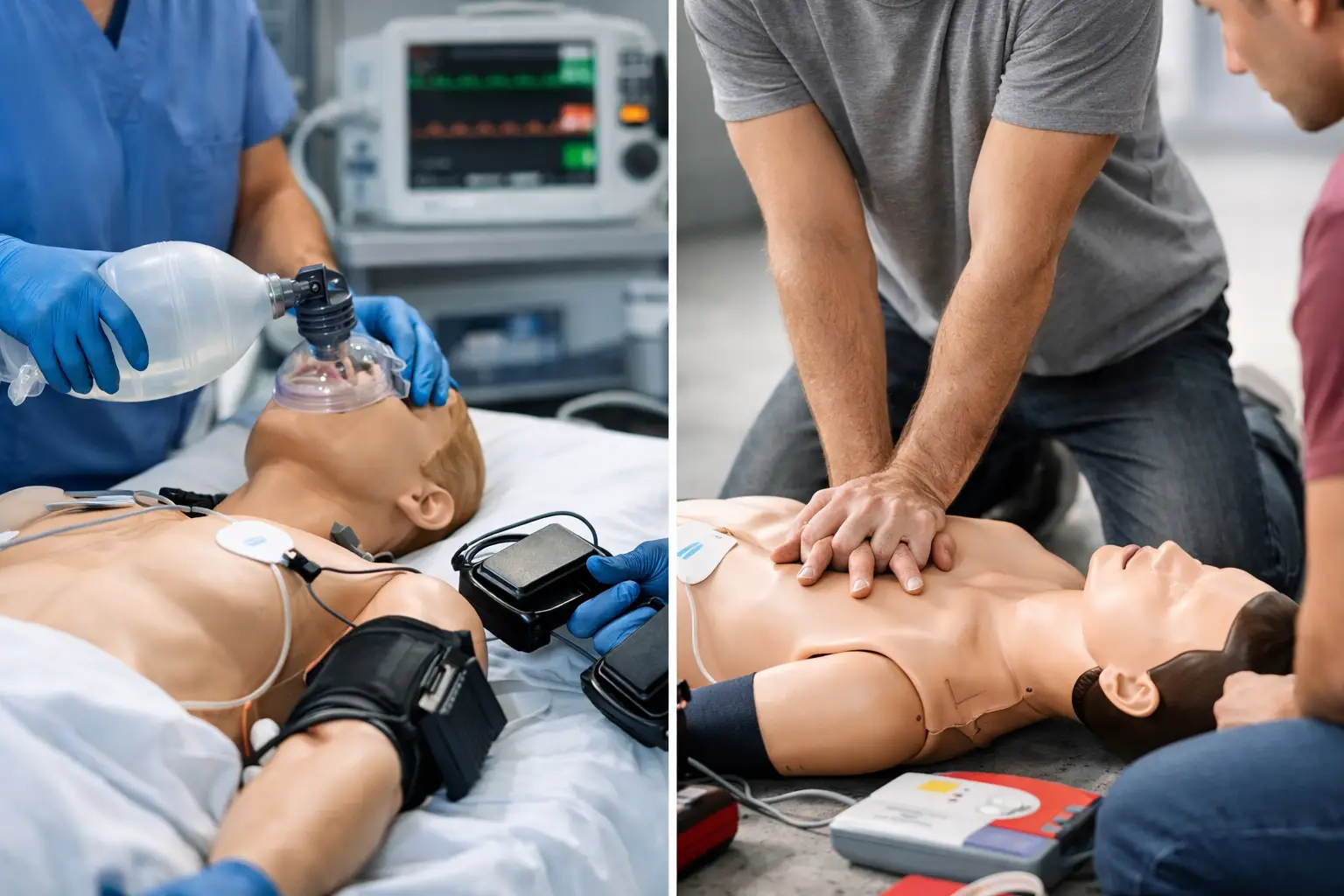
Basic Life Support, or BLS, is the foundation. It focuses on immediate recognition of emergencies, high-quality CPR, use of an AED, relief of choking, and team-based response for adults, children, and infants. The emphasis is direct and practical: identify the problem, start effective compressions, support breathing, and keep care moving until advanced help takes over.
Advanced Cardiovascular Life Support, or ACLS, goes further. It is designed for clinicians and trained responders who may direct or participate in the management of cardiac arrest, stroke, acute coronary syndromes, and other serious cardiovascular emergencies. ACLS includes rhythm recognition, airway considerations, pharmacology, team dynamics, and decision-making during high-pressure events.
In simple terms, BLS teaches you how to start lifesaving care. ACLS teaches qualified providers how to lead and manage more advanced care once that response is underway.
Who should take BLS and who needs ACLS?
BLS is appropriate for a wide range of people. Many healthcare workers need it, including nursing assistants, dental staff, medical assistants, EMTs, and outpatient personnel. It is also valuable for teachers, coaches, childcare providers, workplace safety teams, and adults who want to be ready at home or in the community.
ACLS is usually intended for licensed or clinical healthcare professionals who work in settings where advanced cardiac emergencies are a real possibility. That often includes physicians, nurses, paramedics, respiratory therapists, and staff in emergency departments, critical care units, telemetry, and procedural areas.
This is where confusion often starts. Some people assume ACLS is simply the “better” course because it is more advanced. That is not the right way to look at it. If your job or role only requires effective CPR, AED use, and basic team response, BLS may be exactly what you need. If you are expected to interpret rhythms, administer emergency medications, or coordinate care during a code, BLS alone is not enough.
Employer requirements also matter. Hospitals and clinics often specify exactly which certifications are required for each position. A front-desk healthcare employee may need BLS but not ACLS. A telemetry nurse may need both. Before enrolling, check the expectations tied to your job title, department, and licensing body.
What you learn in BLS
BLS training is centered on performance. It teaches how to recognize cardiac arrest quickly, activate emergency response, deliver high-quality chest compressions, provide ventilations, and use an AED without delay. It also covers choking relief and coordinated team response.
A strong BLS course does more than explain the steps. It builds muscle memory. That matters because CPR quality affects outcomes. Compression depth, rate, recoil, and minimizing interruptions are not small details. They are the difference between going through the motions and delivering effective care.
For non-clinical learners, BLS can feel more accessible because it stays focused on actions that can be taken immediately. For healthcare workers, it creates a shared response standard. In a real emergency, that consistency matters. Everyone on scene needs to know how to move fast, communicate clearly, and support the same priorities.
What you learn in ACLS
ACLS assumes you already know BLS-level care and can perform it under pressure. From there, the course adds advanced assessment and treatment pathways. Students learn to recognize and respond to cardiac arrest rhythms, bradycardia, tachycardia, stroke, and acute coronary syndromes. They also work through medication use, airway management concepts, and structured team communication.
The decision-making component is what separates ACLS most clearly from BLS. ACLS providers are not just performing skills. They are evaluating the patient’s condition, following evidence-based algorithms, and adjusting interventions as the situation changes.
That higher level of training is essential in many clinical settings, but it also means ACLS can be a poor fit for someone without the right background. If you do not work in a role where those decisions are part of your responsibility, the extra content may not improve your readiness in a meaningful way. More training is not automatically better training. Relevant training is better.
ACLS vs BLS training in real-world situations
Think about three common scenarios.
In a gym, a member collapses and stops breathing. A trained employee with BLS can recognize cardiac arrest, call 911, begin CPR, and use an AED. Those actions are immediate, appropriate, and lifesaving.
In a medical office, a patient becomes unresponsive while staff wait for EMS. Team members with BLS can begin resuscitation right away. If the office is equipped and staffed for higher-level response, ACLS-trained clinicians may take over advanced airway support, rhythm-based decisions, and medication protocols.
In a hospital unit, a patient develops an unstable arrhythmia. That is no longer just a CPR situation. It requires rhythm recognition, organized team leadership, and advanced intervention. This is where ACLS training becomes critical.
The point is not that one course matters more than the other. It is that each course prepares people for a specific part of the emergency response chain.
Certification goals, confidence, and compliance
Some learners come to training because they want confidence. Others come because they need a credential for work. Often, it is both.
BLS is often the minimum certification standard for clinical and caregiving roles. It supports compliance, but it also gives people a practical sense of what to do in the first minutes of an emergency. For many families, employees, and entry-level healthcare workers, that is the most useful place to start.
ACLS is more closely tied to advanced clinical practice and employer requirements in hospitals and acute care settings. If your position requires it, there is no substitute. If your position does not require it, taking ACLS may still be worthwhile in some cases, but only if the content matches your responsibilities and your background.
This is why training selection should not be based on assumptions or title alone. A course should fit the response decisions you may realistically face.
How to choose between ACLS and BLS training
Start with role, not ambition. Ask what you are expected to do during an emergency. Are you the person who must start CPR and use an AED until EMS arrives? BLS is likely the right fit. Are you expected to assess rhythms, manage advanced cardiovascular emergencies, and work within a clinical code team? You likely need ACLS in addition to BLS.
Then look at your setting. A school nurse, dental office employee, hospital float nurse, firefighter, and parent may all care deeply about preparedness, but their training needs are not identical. The emergency itself may look similar at first. The scope of response is not.
Finally, choose a training provider that treats certification as more than a checkbox. In high-stakes education, credibility matters. Skills practice matters. Clear instruction matters. Community Responders LLC serves both public learners and healthcare professionals because the need for competent response does not begin and end in hospitals. It shows up in homes, workplaces, schools, clinics, and public spaces every day.
A course card may satisfy a requirement, but real readiness comes from training that makes you faster, steadier, and more effective when the room changes in an instant.
If you are unsure which course fits, the safest next step is to match the training to the role you actually hold today. Build the foundation first, then advance when your responsibilities call for it. The right course is the one that prepares you to act well when someone else cannot wait.