A child chokes at a family cookout. A coworker collapses in the break room. A neighbor falls hard on the sidewalk and starts bleeding. In those first few minutes, before EMS arrives, your response can shape the outcome. That is what first aid training is for. If you have ever asked what is first aid training, the short answer is this: it is structured instruction that teaches people how to recognize an emergency, give immediate care, and stabilize the situation until professional help takes over.
First aid training is not about turning ordinary people into paramedics. It is about teaching practical, proven actions for the most common medical emergencies and injuries. Good training builds judgment as much as skill. You learn what to do, what not to do, and when the next step is calling 911 without delay.
What Is First Aid Training?
First aid training is a course of instruction that prepares people to respond to sudden illness or injury. Depending on the program, that may include bleeding control, burns, choking, allergic reactions, seizures, fractures, heat illness, shock, and basic scene safety. Many courses also include CPR and AED use, although first aid and CPR are not exactly the same thing.
The goal is immediate care. First aid fills the gap between the start of an emergency and the arrival of more advanced medical support. That gap may be a few minutes in a city setting or much longer in remote locations, on job sites, or during large public events. Training helps you use that time well.
A strong course also teaches assessment. Not every emergency looks dramatic at first. A person with chest pressure may still be talking. A child with an allergic reaction may start with mild swelling before symptoms escalate. First aid training helps you spot warning signs early and respond with more confidence.
What First Aid Training Usually Covers
The exact curriculum depends on the provider and audience, but most first aid training covers a core set of emergency response topics. You learn how to check the scene for hazards, evaluate the person, and decide whether the issue is life-threatening. From there, training moves into hands-on care.
Bleeding control is one of the most important modules because severe blood loss can become critical fast. You may learn direct pressure, wound dressing, and when tourniquet use is appropriate in more advanced or workplace-focused programs. Choking response is another key area, especially for parents, teachers, restaurant staff, and caregivers.
Courses often include burns, sprains, fractures, head injuries, diabetic emergencies, stroke recognition, and heart attack warning signs. Environmental emergencies matter too. In places with extreme summer heat, such as Phoenix, Mesa, or Las Vegas, heat exhaustion and heat stroke are not edge cases. They are real and recurring risks, and training should reflect that.
Some classes stay at the awareness-and-action level, while others go deeper. Workplace first aid may include OSHA-related considerations, incident response, and supplies. Healthcare-oriented training may connect first aid principles with BLS or more advanced certifications. The right depth depends on where you are likely to use the skill.
First Aid Training vs. CPR Training
People often use these terms together, and that makes sense, but they are not interchangeable. First aid training covers a wider range of injuries and sudden illnesses. CPR training is specifically focused on cardiac and breathing emergencies, including chest compressions, rescue breaths in some course formats, and AED use.
Many entry-level programs combine both because real emergencies do not arrive in categories. A person who falls from a ladder may need bleeding control. A person who suddenly becomes unresponsive may need CPR. Taking both together gives most community members a stronger base.
For healthcare professionals, the path is often more structured. Basic Life Support is built for clinical response and team-based care. ACLS and PALS go further into advanced emergency management. Those are not replacements for everyday first aid training, but they serve a different role for licensed providers and hospital or prehospital teams.
Who Needs First Aid Training?
The practical answer is simple: more people than you might think. Parents, grandparents, babysitters, teachers, coaches, church volunteers, office staff, warehouse teams, security personnel, and healthcare workers all benefit from training. Emergencies do not wait for the most qualified person in the room.
For families, training reduces hesitation. A parent who knows how to respond to choking, fever-related concerns, allergic reactions, or injuries at home is in a better position to act quickly and stay calm. For employers, first aid training supports workplace safety, reduces response time during incidents, and helps meet industry expectations for preparedness.
For medical professionals, the need is more formal. Certification may be required for hiring, credentialing, or compliance. But even outside a regulatory setting, there is a difference between holding a card and being ready to respond. Quality instruction should reinforce real performance, not just course completion.
Why First Aid Training Matters in Real Life
The value of first aid training is not theoretical. It matters because early action changes what happens next. Quick bleeding control can prevent a situation from becoming fatal. Fast recognition of stroke symptoms can shorten time to treatment. Immediate care for heat illness can stop a medical emergency from progressing.
Training also helps people avoid harmful mistakes. In an emergency, panic tends to create either freezing or overreaction. Both are problems. A trained responder is more likely to protect the scene, call for help promptly, and provide care that matches the situation instead of guessing.
There is also a community impact. When more people in a workplace, school, neighborhood, or family know first aid, emergency response becomes less dependent on luck. The person nearby may not be a nurse or physician, but they may still be the one who keeps the situation from getting worse.
What Happens in a First Aid Class?
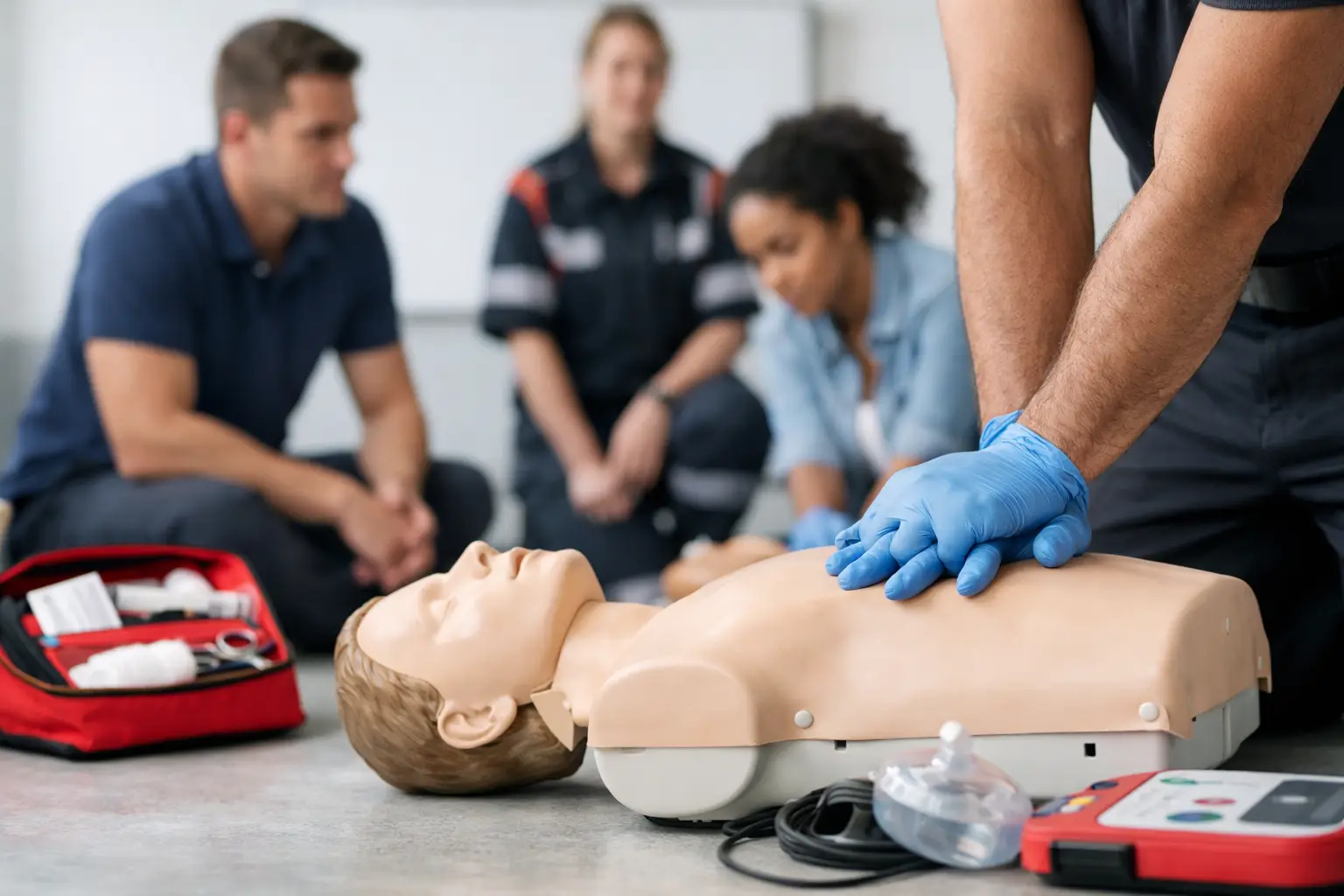
A good first aid class should be practical from the start. You can expect instruction on how to assess a scene, identify the problem, and respond step by step. In many courses, students work through realistic scenarios rather than just listening to a lecture.
Hands-on practice matters. It is one thing to hear how to control bleeding or help a choking victim. It is another to physically practice those skills under guidance. That repetition is what helps people act under pressure later.
You should also expect clear standards. Good instructors explain where first aid begins and where it stops. They teach when to monitor, when to intervene, and when a situation requires immediate EMS activation. The best classes build confidence without creating false confidence.
What to Look for in a Training Program
Not all first aid training is equally useful. Some programs are too passive, too generic, or too focused on checking a certification box. If your goal is real readiness, look for training that includes hands-on practice, current guidelines, and instruction that fits your environment.
That fit matters. A school employee, construction supervisor, parent of a toddler, and ER technician do not all need the same emphasis. The basics may overlap, but the likely emergencies differ. Training should reflect who you are, where you work, and what situations you are most likely to face.
Credibility matters too. Choose a provider with qualified instructors and a clear focus on skill performance, not just presentation. Community Responders LLC, for example, serves both public and professional audiences, which is useful when a household, employer, or clinical team wants training aligned with real response demands rather than generic information.
What First Aid Training Does Not Do
It helps to be clear about the limits. First aid training does not replace emergency medical care. It does not authorize someone to diagnose complex conditions or perform beyond the scope of their training. It also does not make every emergency manageable without outside help.
What it does is make you more useful in the first critical minutes. That may mean recognizing a severe allergic reaction and using an epinephrine auto-injector if available. It may mean placing someone in a recovery position, controlling bleeding, assisting with choking, or staying with a person until EMS arrives. Those actions are not minor. They are often the difference between chaos and an organized response.
If you have been putting off training because you are worried about doing something wrong, that is exactly why training exists. The point is not perfection. The point is readiness. When an emergency happens, the best response is not panic or guesswork. It is informed action, delivered quickly, calmly, and with care.