A nurse switching into pediatrics, a paramedic expanding scope, or a parent working in a school health office may all ask the same question: PALS vs ACLS certification - which one do I actually need? The answer depends less on which course sounds more advanced and more on who you treat, what emergencies you face, and whether your role requires pediatric, adult, or both types of resuscitation training.
Both certifications are built for high-stakes response. Both focus on recognizing deterioration early, organizing a team response, and improving outcomes when a patient is in serious trouble. But they are not interchangeable. Choosing the wrong course can leave a real gap in preparedness, even if you already have strong basic life support skills.
PALS vs ACLS certification at a glance
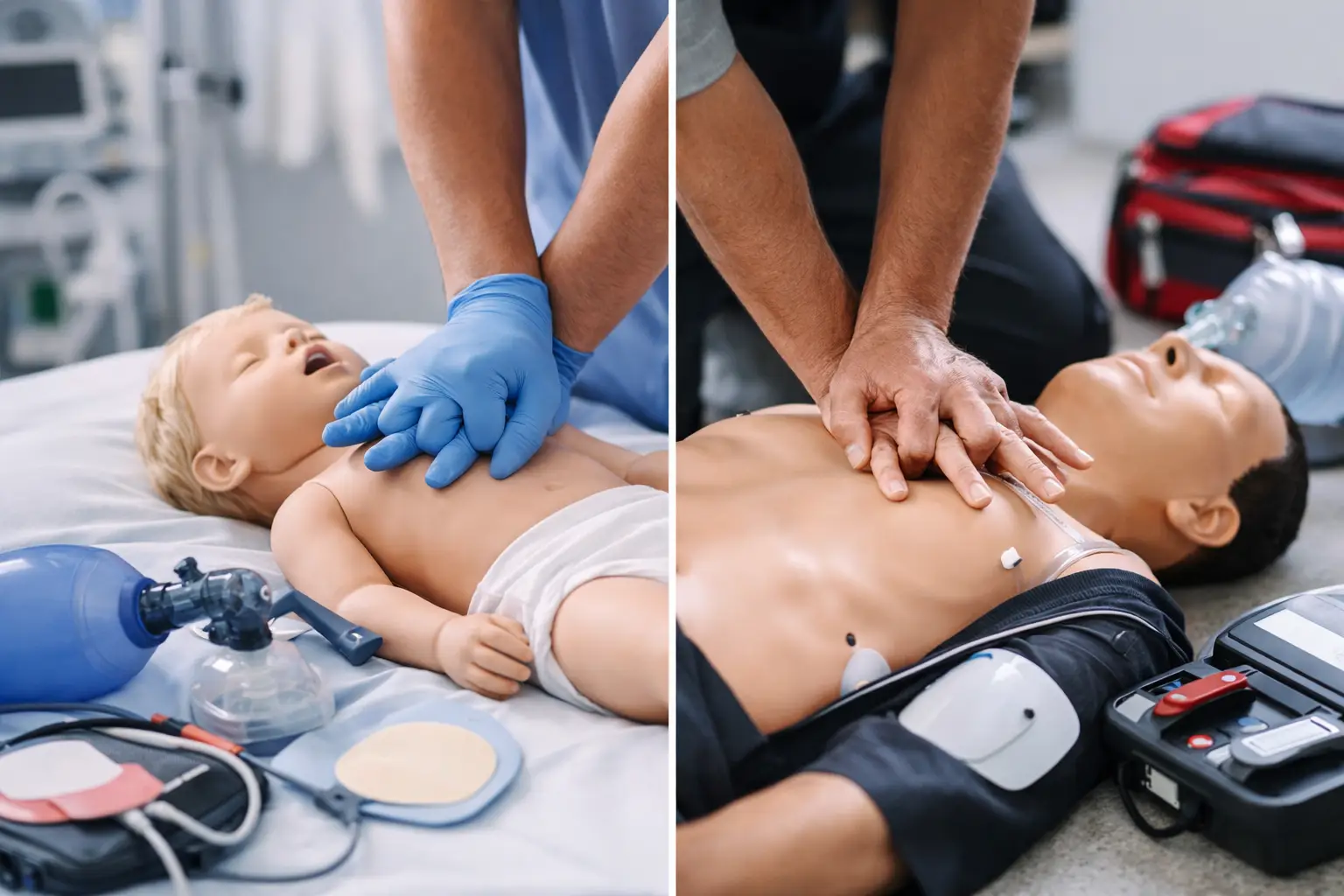
The simplest difference is patient population. ACLS stands for Advanced Cardiovascular Life Support and centers on adult patients with cardiovascular and respiratory emergencies. PALS stands for Pediatric Advanced Life Support and focuses on infants and children, where the causes of arrest, the assessment process, and the treatment priorities are often different.
That distinction matters in practice. Adult cardiac arrest is often tied to primary cardiac causes. Pediatric arrest is more commonly linked to respiratory failure or shock that worsens over time. Because of that, the provider mindset changes. ACLS teaches clinicians to recognize and manage adult cardiac rhythms, stroke, acute coronary syndromes, and post-cardiac arrest care. PALS teaches providers to identify pediatric respiratory distress, respiratory failure, compensated and hypotensive shock, and age-specific arrest patterns before the child crashes.
If your work centers on adult emergency care, ACLS is usually the better fit. If you care for infants and children, PALS is often the required course. If your role crosses both populations, you may need both.
What ACLS certification is designed to teach
ACLS is intended for healthcare professionals who manage or participate in adult resuscitation and other cardiovascular emergencies. The course goes beyond CPR. It covers rhythm recognition, high-performance team dynamics, airway management concepts, pharmacology used in resuscitation, and decision-making during time-sensitive events.
In practical terms, ACLS prepares a provider to respond when an adult patient develops symptomatic bradycardia, unstable tachycardia, acute coronary syndrome, stroke symptoms, or cardiac arrest. It emphasizes organized assessment and treatment under pressure. That includes reading the situation quickly, using algorithms correctly, and working within a coordinated team.
This is why ACLS is common for emergency department staff, ICU clinicians, anesthesia teams, paramedics, telemetry nurses, and others involved in acute adult care. Some roles require it for credentialing. Others may not formally require it, but strongly prefer it because the provider may still be first to respond during a crisis.
What PALS certification is designed to teach
PALS addresses a different clinical reality. Children are not small adults, and pediatric emergencies do not unfold the same way. Heart rates, respiratory rates, medication dosing, normal vital signs, and signs of compensation all shift by age. A provider who knows adult algorithms well can still miss early pediatric deterioration without PALS-specific training.
PALS teaches a structured approach to pediatric assessment and intervention. Providers learn to evaluate appearance, work of breathing, circulation, and mental status. They train to recognize respiratory compromise early, because in pediatrics, waiting until arrest means the situation has already become far more dangerous.
The course is especially relevant for pediatric nurses, pediatricians, emergency clinicians, PICU staff, respiratory therapists, EMS professionals, and providers in urgent care or family practice settings where children may present in distress. It can also be important for school-based or community healthcare roles depending on responsibilities, patient exposure, and employer requirements.
PALS vs ACLS certification: the biggest differences
The biggest difference is not difficulty. It is clinical focus.
ACLS is built around adult cardiovascular emergencies and adult resuscitation algorithms. PALS is built around pediatric assessment, respiratory emergencies, shock, and age-based intervention. Both require fast thinking and disciplined response, but the patient presentation, treatment priorities, and expected provider decisions are different.
There is also a difference in how deterioration usually appears. In adult cases, sudden dysrhythmias and primary cardiac events are a major focus. In pediatric cases, providers are trained to watch for a child who is compensating until that compensation fails. That changes what you look for first and how quickly you intervene.
Medication use and equipment considerations also differ. Pediatric care often requires weight-based dosing and size-appropriate equipment selection. That adds a layer of complexity that PALS specifically addresses. ACLS, while still demanding, generally works from adult standards and protocols.
Who typically needs ACLS, PALS, or both
For many learners, the right course is tied directly to job duties. Adult hospital staff in emergency, critical care, perioperative, and cardiac settings often need ACLS. Pediatric hospital staff and clinicians working regularly with children often need PALS. EMS professionals may need both because they respond to patients across the lifespan.
There are also gray areas. A family practice provider may see mostly routine visits, but still treat both adults and children. An urgent care center may primarily handle lower-acuity cases, yet occasionally receive a seriously ill child or unstable adult before transfer. In these settings, employer policy often decides the certification path.
Non-hospital roles can be less obvious. A school nurse, camp medical provider, dental sedation team, or outpatient specialty clinic may need pediatric training, adult training, or both depending on patient mix and the level of emergency response expected on site. That is why the safest move is to verify requirements with your employer, medical director, licensing board, or credentialing office before enrolling.
If you already have BLS, do you still need ACLS or PALS?
Usually, yes, if your role requires advanced response.
BLS builds the foundation. It teaches high-quality CPR, AED use, and basic team response for adults, children, and infants. That training is essential, but it does not replace ACLS or PALS for providers expected to interpret rhythms, manage advanced algorithms, recognize shock states, or lead organized resuscitation efforts.
Think of BLS as baseline readiness and ACLS or PALS as role-specific advanced preparation. A provider can be excellent at basic resuscitation and still need additional training to manage complex adult or pediatric emergencies appropriately.
How to decide which certification is right for you
Start with patient age. If you treat adults in settings where serious cardiovascular or respiratory emergencies may occur, ACLS is likely the right choice. If you treat infants and children, especially in acute care, transport, or pediatric-focused settings, PALS is likely the right choice.
Then look at the real risk profile of your job. Not every setting with adult patients needs ACLS, and not every setting with pediatric patients needs PALS. The key question is whether you are expected to recognize and respond to advanced emergencies before a higher-level team takes over.
Finally, check formal requirements. Hospitals, EMS agencies, surgery centers, and specialty practices often specify exactly which certifications they accept. If you are changing specialties, moving into a new city, or applying across systems in markets like Phoenix, Las Vegas, or Seattle, requirements can vary by employer even when the role title looks the same.
Renewal, confidence, and real-world readiness
Both ACLS and PALS generally require renewal on a regular cycle, and that matters for more than compliance. Skills fade. Algorithms get rusty. Team communication slips when it is not practiced.
Recertification is not just a box to check. It is a way to keep your response sharp when seconds count. For clinicians, that means maintaining professional credibility and bedside readiness. For community-based medical roles, it means being prepared to act decisively in the first critical minutes before additional help arrives.
The best training experience does more than review content. It reinforces pattern recognition, communication, and practical judgment under stress. That is where a strong course earns its value.
If you are weighing PALS vs ACLS certification, do not choose based on whichever credential seems more impressive on paper. Choose the one that matches the patients you serve and the emergencies you are responsible for managing. When the right training matches the real demands of your role, confidence tends to follow - and that confidence is what helps people act when action matters most.