When a patient loses a pulse, the room changes fast. Roles tighten, communication matters more, and every decision has consequences. ACLS certification is built for that moment. It prepares healthcare professionals to recognize cardiovascular emergencies early, follow evidence-based algorithms, and work as a coordinated team when seconds count.
What ACLS certification actually covers
Advanced Cardiovascular Life Support goes beyond basic CPR. It focuses on the assessment and management of adult patients experiencing serious cardiac and respiratory events, including cardiac arrest, stroke, acute coronary syndromes, and other peri-arrest conditions. The goal is not just to memorize steps. The goal is to respond in a structured, disciplined way under pressure.
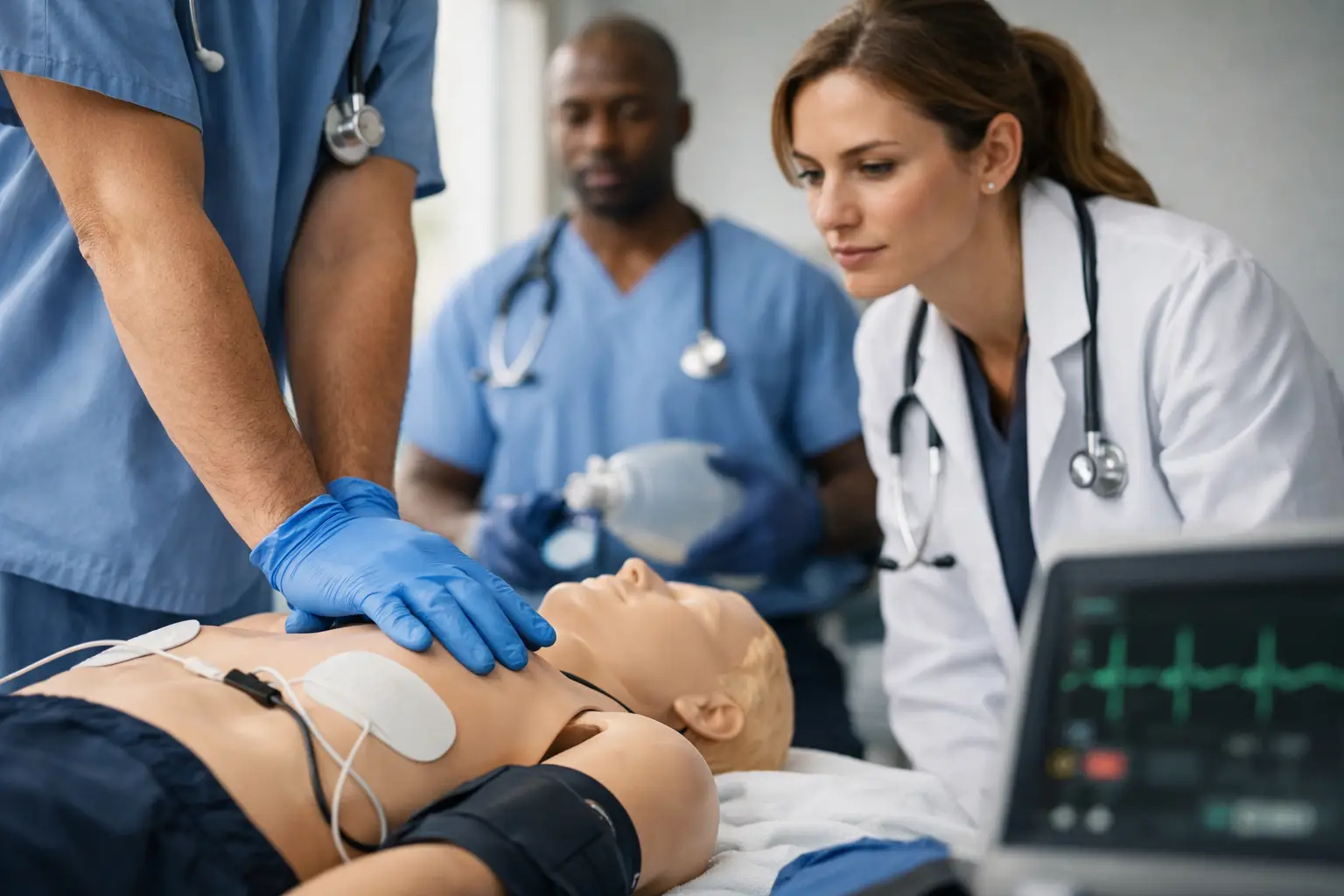
A strong ACLS course teaches rhythm recognition, airway management concepts, high-quality CPR integration, defibrillation, medication use within current guidelines, and team dynamics. Just as important, it trains providers to communicate clearly, assign tasks, and avoid the hesitation that can cost time during a resuscitation.
That is why ACLS certification is usually expected in professional settings where staff may need to manage critical events directly. The training is designed for licensed healthcare providers and clinical personnel who need more than general emergency response knowledge.
Who typically needs ACLS certification
ACLS is most often required for professionals working in environments where cardiovascular emergencies are possible or expected. That includes nurses, physicians, paramedics, respiratory therapists, emergency department staff, ICU teams, and many providers in urgent care, surgery, telemetry, and hospital-based care.
Some employers require ACLS certification before a role starts. Others allow new hires a short window to complete it after onboarding. In some cases, the requirement depends on the unit. A medical assistant in one setting may not need ACLS, while a nurse in a step-down or procedural area almost certainly will.
This is where confusion happens. People often assume ACLS is useful for anyone in healthcare. Sometimes it is, but useful and required are not the same. If your work does not involve advanced response, medication administration in emergencies, or participation in code teams, another course may fit your role better. BLS is the baseline for many healthcare jobs, while ACLS is aimed at providers who need advanced clinical decision-making in emergencies.
Why employers place so much value on ACLS
Employers are not looking for a certificate alone. They are looking for readiness they can trust during a high-risk event. ACLS matters because it gives teams a common language and a shared response framework.
In a real emergency, clinical knowledge is only part of the picture. Team performance matters just as much. Providers need to recognize a deteriorating patient, start the right interventions, communicate the rhythm, prepare medications correctly, and coordinate defibrillation without confusion. ACLS training supports that process by standardizing how trained responders think and act.
It also supports professional credibility. Hospitals, surgery centers, and emergency services organizations need staff who meet credentialing standards and can demonstrate current competency. For individual providers, maintaining ACLS certification can strengthen job eligibility, support advancement, and reduce gaps in emergency preparedness.
What to expect during ACLS training
Most learners come into ACLS expecting a written test and a checklist. There is more to it than that. A quality course combines cognitive knowledge with practical performance. You should expect pre-course study, review of current algorithms, rhythm interpretation, scenario-based practice, and skills testing that reflects real clinical pressure.
The most effective training does not treat algorithms like trivia. It puts providers in realistic situations where they must assess, decide, communicate, and act. That means running megacode scenarios, recognizing when a rhythm is shockable or non-shockable, managing the sequence of interventions, and leading or participating in a team response.
For many experienced clinicians, the challenge is not learning new material. It is tightening performance. Even providers with years in the field benefit from revisiting timing, medication order, communication habits, and leadership under stress. For newer professionals, the challenge is often confidence. ACLS helps turn fragmented knowledge into a more reliable response pattern.
Initial ACLS certification vs renewal
There is a real difference between taking ACLS for the first time and renewing it. Initial courses usually require more time because learners are building the framework from the ground up. Renewal courses move faster and assume the provider already understands core concepts, even if some review is needed.
That said, renewal should never be treated like a formality. Guidelines change. Skills fade. People get rusty with rhythms they do not see often, and communication habits can slip if they are not reinforced. A good renewal course sharpens both knowledge and execution.
If your certification is close to expiring, do not wait until the last minute. Employers may have strict deadlines, and course availability can tighten during hiring cycles or compliance periods. Leaving renewal too late creates unnecessary risk for your schedule and your credential status.
How to choose the right ACLS course
Not every course delivers the same value. If you need ACLS certification for work, start by confirming your employer's expectations. Some organizations have clear standards about accepted training formats, renewal timelines, and prerequisite certifications such as current BLS.
After that, look at the quality of instruction. A strong course should be led by qualified instructors who can teach beyond the slides and connect the material to real patient care. Scenario practice matters. Clear feedback matters. So does an organized training process that respects your time while still holding a high standard.
Format also matters, but the best option depends on your situation. Some providers learn well with a blended format that combines online coursework with an in-person skills session. Others prefer a fully instructor-led classroom because it gives them more direct interaction and immediate correction. Convenience matters, but not more than competence. If a course is easy but leaves you uncertain in a code situation, it is not the right course.
For healthcare teams and employers, training consistency is another factor. Working with a provider that can support group instruction, recurring renewals, and practical scheduling can make compliance easier without lowering standards. That is one reason organizations across cities such as Phoenix, Las Vegas, and Seattle often look for training partners that understand both certification requirements and operational realities.
Common misconceptions about ACLS certification
One of the biggest misconceptions is that ACLS is just advanced CPR. CPR is part of it, but ACLS includes much more - rhythm analysis, medication algorithms, post-cardiac arrest care concepts, team leadership, and recognition of conditions that can lead to arrest.
Another misconception is that passing the course means you are fully prepared for every emergency. Training improves readiness, but it does not replace clinical judgment, local protocols, or ongoing practice. Real competence comes from repetition, feedback, and applying guideline-based thinking in actual care environments.
There is also a tendency to assume ACLS is only for hospital staff. Hospitals are a major setting for ACLS-trained providers, but not the only one. Outpatient surgery, specialty clinics, transport services, and other higher-acuity environments may also require it.
Why ACLS matters beyond compliance
Compliance gets people in the door. Capability is what protects patients. That is the real value of ACLS certification.
When providers train well, they respond earlier to warning signs, communicate more clearly during crises, and make fewer preventable errors in the first critical minutes. Those improvements are hard to measure in a simple checklist, but they show up where it matters most - in patient care, team coordination, and confidence under pressure.
For individual clinicians, ACLS can reduce the fear that comes from uncertainty. For employers, it supports a safer, more credible workforce. For patients and families, it means the people at the bedside are better prepared to act when the situation turns critical.
Community Responders LLC approaches this training the way emergency education should be approached - as a practical responsibility, not a box to check. If ACLS is part of your role, choose a course that treats the standard seriously and prepares you to do the same.
The best time to build a reliable response is before you need one.