A child falls hard on a playground. A coworker collapses in the break room. An older parent suddenly becomes confused, pale, and short of breath at home. In each case, the first few minutes matter, which is exactly why first aid training is essential. Before EMS arrives, before a physician evaluates the patient, and before the situation is fully understood, someone nearby has to decide whether to act.
That moment is where training makes the difference. First aid instruction does more than teach a checklist. It gives people a clear framework for recognizing emergencies, protecting the scene, providing immediate care, and avoiding the hesitation that costs time. For families, employers, and healthcare teams, that readiness is not optional. It is part of responsible care.
Why first aid training is essential in real emergencies
Most emergencies do not happen in controlled settings. They happen at home, at work, at school, in public spaces, and during ordinary routines. The person on scene is rarely a physician. More often, it is a parent, teacher, manager, coach, caregiver, or coworker.
First aid training prepares people for those realities. It teaches how to assess a situation quickly, identify immediate threats, and take appropriate action while waiting for advanced care. That can mean controlling severe bleeding, responding to choking, recognizing signs of stroke, supporting someone who may be having a heart attack, or helping a person through a seizure or heat-related illness.
Without training, people often freeze or second-guess themselves. They worry about doing the wrong thing, making the injury worse, or overreacting. Those concerns are understandable, but they can lead to dangerous delays. Training replaces panic with process. It does not guarantee perfection, but it does improve the chances of a fast and useful response.
First aid training builds confidence, not just knowledge
A common mistake is to think first aid is only about memorizing steps. In practice, the real value is confidence under pressure. Emergencies are noisy, stressful, and often confusing. A person may know, in theory, that bleeding should be controlled or that emergency services should be called, but stress changes performance.
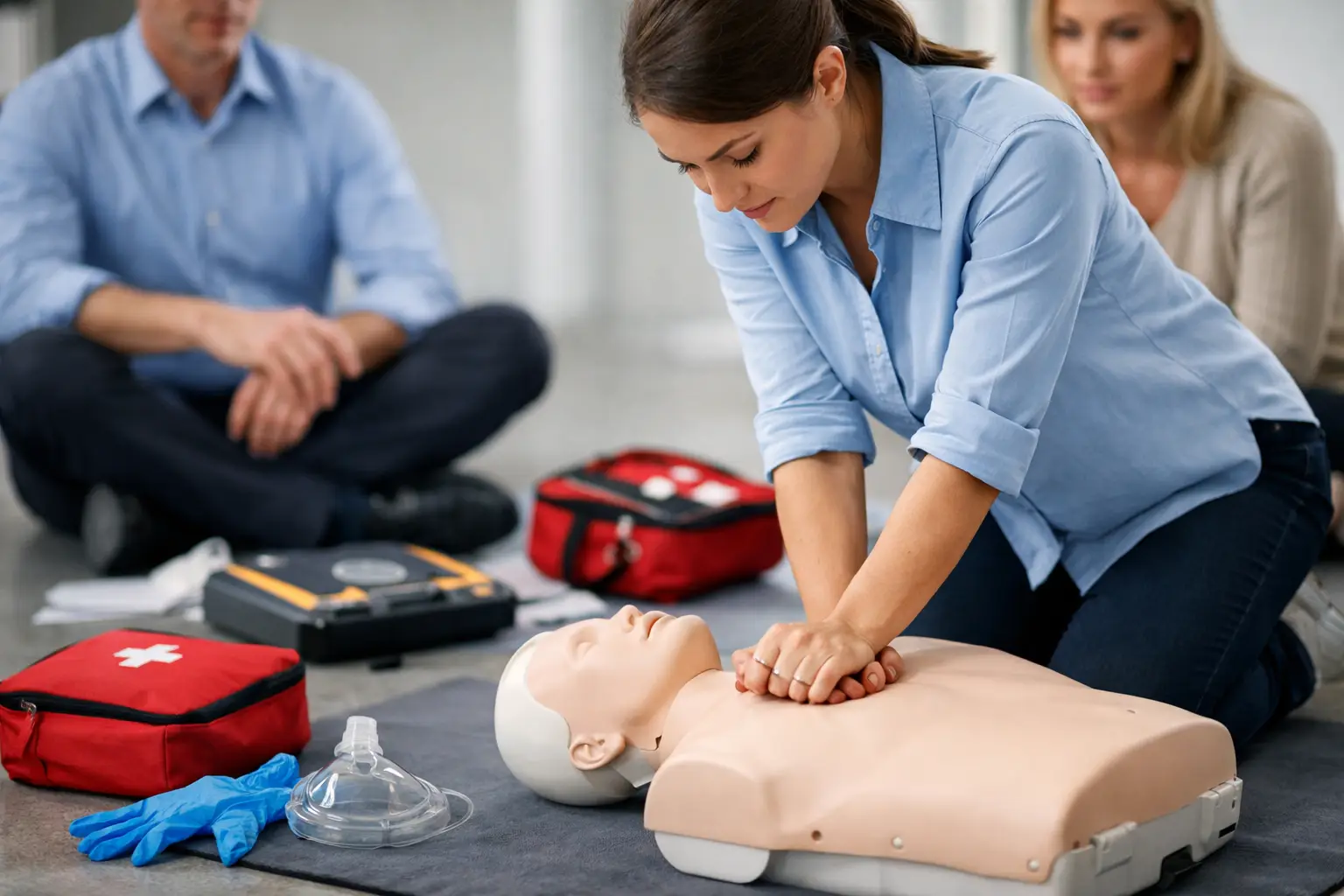
Good training closes that gap by giving people a chance to learn, practice, and respond in a structured environment. Repetition matters. So does realistic instruction. When someone has already worked through scenarios in training, they are more likely to act decisively in real life.
That confidence matters across all audiences. Parents need it when a child is injured at home. Employers need it when a worker is hurt on site. Healthcare professionals need it because their response carries clinical and ethical weight. The setting changes, but the need is the same - calm, capable action when seconds count.
Confidence reduces harmful hesitation
Hesitation is one of the biggest barriers in emergency response. People pause because they are unsure whether the problem is serious enough, unsure who should take charge, or unsure what to do first. First aid training helps reduce that delay by teaching priorities.
The first priority is scene safety. The second is recognizing life-threatening conditions. The third is taking immediate, appropriate action and activating additional help. That sequence sounds simple, but under stress, simple systems are exactly what people need.
Why first aid training is essential for families
For many households, emergency response starts long before professional help arrives. Children fall, burn themselves, choke on food, develop allergic reactions, or suffer injuries during sports and play. Older adults may experience falls, medication-related issues, breathing problems, or sudden medical changes at home.
Families with first aid training are better prepared to manage those early moments. They can make safer decisions about when to monitor, when to seek urgent care, and when to call 911 immediately. They are also more likely to protect the injured person from further harm while help is on the way.
Training is especially valuable in homes with young children, seniors, or family members with known medical risks. Pediatric emergencies, in particular, can escalate quickly. A caregiver who understands choking response, bleeding control, and when symptoms suggest a more serious problem is in a far stronger position than someone relying on guesswork.
That said, first aid training is not a substitute for medical care. It is the bridge between the onset of an emergency and the arrival of professionals. Knowing that boundary is part of being well trained.
Workplaces benefit from faster, safer response
In the workplace, first aid training supports both safety culture and operational readiness. Not every incident is dramatic. Some involve cuts, strains, burns, falls, heat stress, or sudden illness. Others are critical events where immediate intervention can affect survival.
When employees are trained, the workplace is better positioned to respond before the situation worsens. A team member who can recognize shock, help manage a choking incident, or respond appropriately to a medical emergency is an asset to the entire organization.
There is also a practical business case. Prepared teams can reduce response delays, support incident management, and reinforce a culture where safety is taken seriously. In some environments, training also supports compliance requirements or internal risk management goals. The exact standard depends on the industry, workforce size, and hazard level, so employers should match training to their actual exposure rather than treating it as a box to check.
Training should fit the job
A small office and a construction site do not need the same level of preparation. A school, fitness facility, warehouse, clinic, and restaurant each face different risks. Effective training reflects that reality.
This is where professionally delivered instruction matters. People retain more when examples match their environment and when the course is built around realistic scenarios rather than generic slides. The goal is not simply certification. The goal is usable skill.
For healthcare professionals, the standard is higher
Healthcare staff operate in settings where emergency response is part of the job, not a rare event. That changes the expectations. First aid knowledge remains essential, but clinical teams may also require BLS, ACLS, or PALS depending on their roles.
Even so, the core principle stays the same. Early recognition and immediate action protect outcomes. A nurse, medical assistant, therapist, dental professional, or technician may be the first to identify a patient in distress. Their ability to assess, intervene within scope, and escalate appropriately has direct consequences.
Professional audiences also face a different kind of pressure. They are expected to respond competently while maintaining patient safety, following protocol, and documenting care appropriately. That is why refresher training matters. Skills that are not practiced can fade, even for experienced professionals.
Training improves judgment, not just response speed
One overlooked reason why first aid training is essential is that it helps people make better decisions. Not every emergency calls for the same response. Some situations require immediate intervention. Others require monitoring, reassurance, or prompt referral for medical evaluation.
Training helps people distinguish between minor injury and warning signs of serious deterioration. It teaches when movement could make an injury worse, when bleeding control should be prioritized, when heat illness becomes an emergency, and when changes in breathing or mental status should trigger immediate action.
That judgment matters because speed alone is not enough. Fast action that is inappropriate can create new risks. Effective training combines urgency with discipline.
The strongest programs teach real-world readiness
Not all first aid training is equal. A strong course is practical, current, and skills-based. It gives learners more than terminology. It teaches what to look for, what to do first, and how to keep responding when the situation changes.
For community learners, that means training that feels accessible and relevant to home, school, and public settings. For employers, it means instruction that reflects job hazards and clear emergency roles. For clinicians, it means a standard that supports both competency and credentialing.
Community Responders LLC operates in cities including Phoenix, Las Vegas, Seattle, Denver, Chicago, Dallas, and Miami, serving both everyday learners and professional audiences with that same focus on immediate, competent action. The audience may vary, but the expectation is consistent - training must hold up in real situations.
Prepared people strengthen the whole community
First aid training has an individual benefit, but it also has a community effect. A trained bystander can support a stranger in a store, a coach can stabilize an athlete until EMS arrives, and a workplace team can protect one another before advanced care takes over. That kind of readiness makes communities safer.
It also changes culture. When more people are trained, emergency response becomes less dependent on chance. People are more likely to step forward, communicate clearly, and support professional responders effectively. That does not remove fear from emergencies, but it gives fear less control.
The value of first aid training is not measured only by certificates on a wall. It is measured in the moment someone knows what to do, does it quickly, and gives another person a better chance at recovery. If you are responsible for a family, a team, a classroom, a patient population, or simply the people around you, preparation is part of that responsibility. The best time to build that readiness is before you ever need it.