If you are asking where to get BLS certified, the real question is usually bigger than location. You are trying to find training that will be accepted by an employer, respected in a clinical setting, and useful when someone in front of you stops breathing or loses a pulse. That means the right course is not just convenient. It has to be credible, current, and hands-on enough to prepare you to act under pressure.
Basic Life Support certification is commonly required for nurses, medical assistants, EMTs, dental professionals, physical therapists, and many other healthcare roles. It is also valuable for students entering clinical programs and for non-clinical staff who work around patient care environments. In every case, the stakes are the same. A card alone is not the goal. Competence is.
Where to get BLS certified depends on your goal
The best place to get certified depends on why you need BLS in the first place. If you need it for a hospital job, nursing school, or another healthcare setting, start by checking the exact certification standard your employer or program requires. Many organizations will only accept BLS from specific nationally recognized providers, and some will reject courses that are fully online with no in-person skills check.
That detail matters more than many people realize. Someone may sign up for the fastest or cheapest option they find, only to learn later that their certification is not accepted for onboarding or compliance. Before you register, verify three things: who issues the certification, whether there is a live skills evaluation, and whether the course is designed for healthcare providers rather than the general public.
If your goal is workplace preparedness or personal readiness, you may have more flexibility. Even then, quality still matters. In an emergency, confidence comes from repetition, feedback, and training that reflects real response conditions.
What a credible BLS course should include
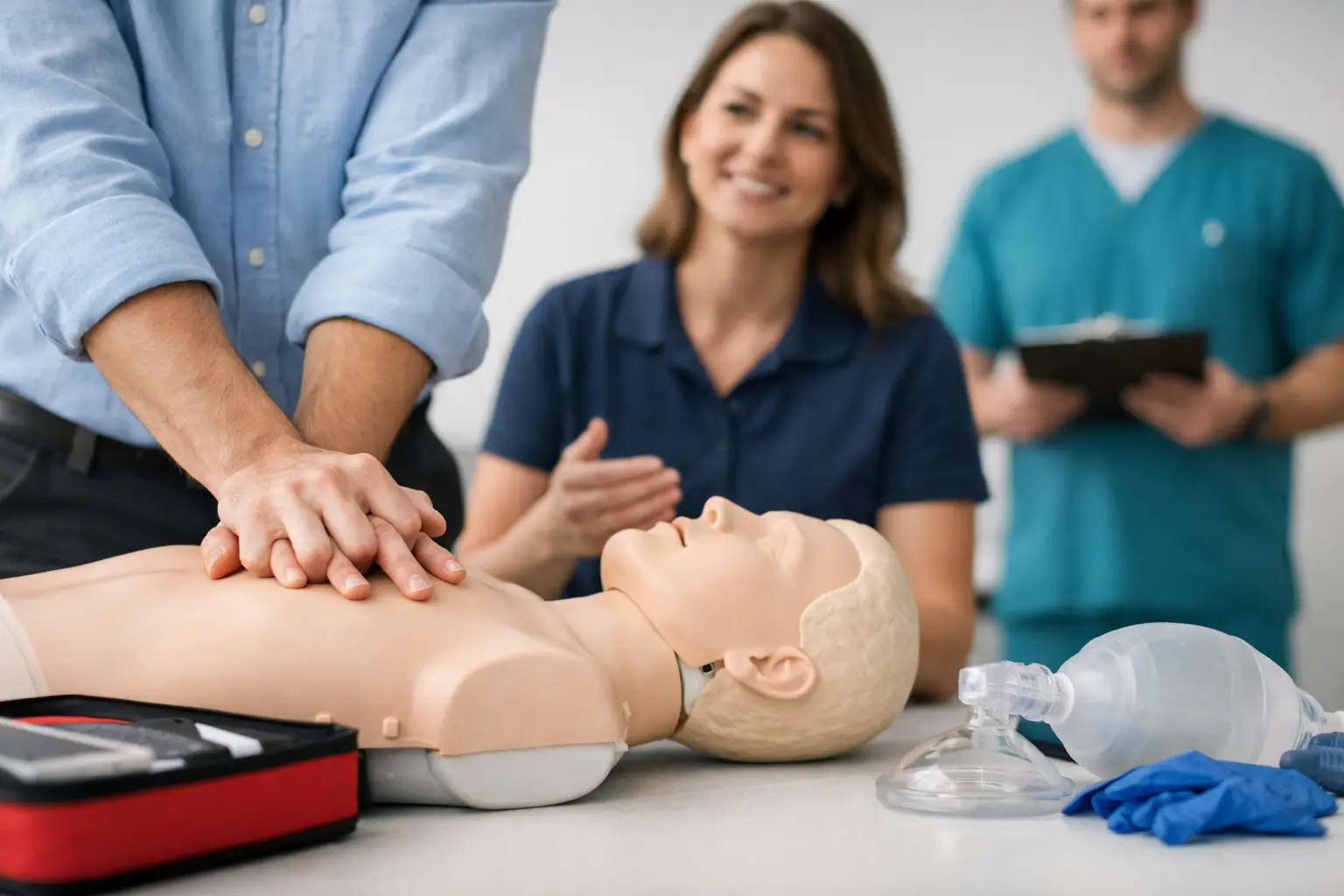
A legitimate BLS course is more than a short video and a quiz. It should cover adult, child, and infant CPR, use of an AED, relief of choking, and team-based response in healthcare settings. It should also include high-quality chest compressions, rescue breathing, bag-mask use, and rapid recognition of cardiac arrest.
For healthcare professionals, the team component is especially important. BLS in a clinical environment is not just about knowing the sequence. It is about performing effectively with others, communicating clearly, and minimizing delays when seconds count. A strong course builds those habits through guided practice, not just passive instruction.
Hands-on skills testing is another marker of a serious program. You need an instructor who can correct technique in real time - compression depth, rate, recoil, ventilation timing, and AED use are all easier to misunderstand than people expect. Small errors in training can become bigger problems in a real emergency.
Common places people get BLS certified
Most people get BLS certified through a recognized training center, a healthcare education company, an employer-sponsored course, or a hospital-based education department. Each option has advantages.
A dedicated training company is often the most accessible choice. These providers tend to offer more scheduling flexibility, faster enrollment, and courses for both individuals and groups. For working adults, that can make the difference between getting certified on time and missing a job deadline.
Employer-sponsored training can be efficient if you are already hired. The main advantage is alignment. If your hospital, clinic, or care facility arranges the course, there is less guesswork about whether the certification meets policy requirements. The downside is limited scheduling control, and new hires may still need certification before they start.
Hospital or academic training departments can be a strong option for students and current staff. These courses are often structured around healthcare workflows, but availability may be limited to internal participants or tied to specific enrollment windows.
Community-based health and safety training companies can also serve a wide range of learners well, especially when they offer both public classes and professional-level certification. That kind of training environment can be useful for households, employers, and clinicians alike because it keeps the focus on practical response, not just paperwork.
How to tell if a BLS class is worth your time
Not every course advertised as BLS delivers the same value. Some are built for speed, while others are built for retention and real response. The difference shows up quickly if you know what to look for.
Start with the instructor. A qualified instructor should be able to explain why each step matters, correct technique clearly, and answer scenario-based questions without vague language. BLS training is procedural, but it is not mechanical. People remember better when the instruction connects skills to actual emergencies.
Then look at course format. Blended learning can work well if it combines online coursework with an in-person skills session. Fully in-person classes can be even stronger for learners who want direct coaching from the start. What matters is that the course does not skip meaningful practice.
Class size matters too. In a crowded class, learners may not get enough time on the manikin or enough feedback to fix technique. A smaller, well-run class usually leads to better performance and better recall.
Finally, consider whether the training provider understands your use case. A healthcare worker renewing BLS for hospital compliance has different needs than a parent taking a first emergency response class. Good providers know the difference and place learners in the right course.
Where to get BLS certified for healthcare jobs
If you need BLS for employment, choose a provider with a clear track record of training healthcare professionals. That means courses designed specifically for clinical requirements, not general CPR awareness. It also means documentation should be straightforward, current, and easy to present during hiring, credentialing, or school placement.
Ask direct questions before enrolling. Is this BLS course intended for healthcare providers? Is the certification widely accepted by hospitals and medical employers? Does it include an in-person skills assessment? How long is the certification valid? If the provider cannot answer clearly, keep looking.
In larger metro areas such as Phoenix, Las Vegas, Denver, Chicago, or Dallas, you may have multiple options nearby. That can be helpful, but it also means quality varies. Convenience should matter, but not more than acceptance and instruction quality. The wrong course can cost more in delays than the right course costs upfront.
Online, in person, or blended - which is best?
This is one of the most common points of confusion when people search where to get BLS certified. The best format depends on both employer requirements and how you learn best.
Online-only options may seem efficient, but they are often the weakest choice for anyone who needs certification for clinical work. Without live skills practice and evaluation, many learners overestimate how prepared they are. In emergency care, technique is not a minor detail.
Blended courses are often a practical middle ground. You complete the knowledge portion online, then attend an in-person session to demonstrate skills. For busy professionals, this format can save time while still preserving accountability and hands-on coaching.
In-person classes remain the strongest fit for many first-time learners and anyone who wants more direct feedback. They can also reduce the risk of misunderstanding key steps, especially in team response, airway support, and infant or child resuscitation.
The cheapest option is not always the right one
Cost matters, especially for students, job seekers, and families managing multiple training needs. But with BLS, low price can come with trade-offs. A bargain course may cut practice time, crowd too many students into one session, or leave out the kind of coaching that makes a skill usable under pressure.
The better question is whether the course is worth the cost. If it is accepted by your employer, teaches the right material, gives you hands-on repetition, and leaves you more prepared to respond, that is a better value than a cheaper course you have to replace.
This is where a focused training partner can make a difference. Community Responders LLC serves both professional and community audiences with practical, skills-based instruction built around real emergency response, which is exactly what BLS training should be.
What to do before you book a class
Before registering, take five minutes to confirm the course meets your needs. Check your employer or school requirements, verify the certification type, confirm the format, and ask whether skills testing is included. Also make sure the class schedule gives you enough time before any onboarding or renewal deadline.
That small step can prevent the most common problems: enrolling in the wrong course, missing a required hands-on session, or ending up with a certification that does not fit your role.
When you choose where to get BLS certified, think beyond the card. You are choosing how well prepared you will be when someone needs immediate help. The right class should leave you with more than proof of completion. It should leave you ready to respond with calm, skill, and purpose.