A childcare job offer, a hospital onboarding packet, or a workplace safety requirement can turn one simple question into an urgent one: is online CPR accepted? The short answer is yes - sometimes. The longer answer is that acceptance depends on who is asking for the certification, what role you hold, and whether the course includes a hands-on skills check.
That distinction matters because CPR is not just a box to check. It is a physical response performed under pressure. Reading steps on a screen and actually delivering compressions at the right depth and rate are not the same thing. For some learners, an online course is enough. For others, especially healthcare professionals, online-only training may fall short of employer, licensing, or credentialing standards.
Is online CPR accepted for jobs and certifications?
Online CPR is accepted in many settings, but not universally. If you are taking CPR for general knowledge, personal preparedness, or a low-risk workplace requirement, a fully online course may be accepted. If you need CPR for a clinical role, patient-facing position, or regulated industry, acceptance is often tied to whether the training includes an in-person skills evaluation.
This is where people get tripped up. They assume that if a course issues a certificate, the certificate will satisfy any requirement. That is not how most employers or boards evaluate CPR training. They look at the training format, the issuing organization, the type of credential, and whether practical skills were verified.
A school district may accept a blended CPR course with online learning plus a live skills session. A hospital may require BLS from a specific recognized provider and reject a generic online-only certificate. A fitness center or office employer may be more flexible, especially if the training meets internal policy standards. The point is simple: acceptance is not determined by the internet format alone. It is determined by the requirement behind it.
Why acceptance depends on the training format
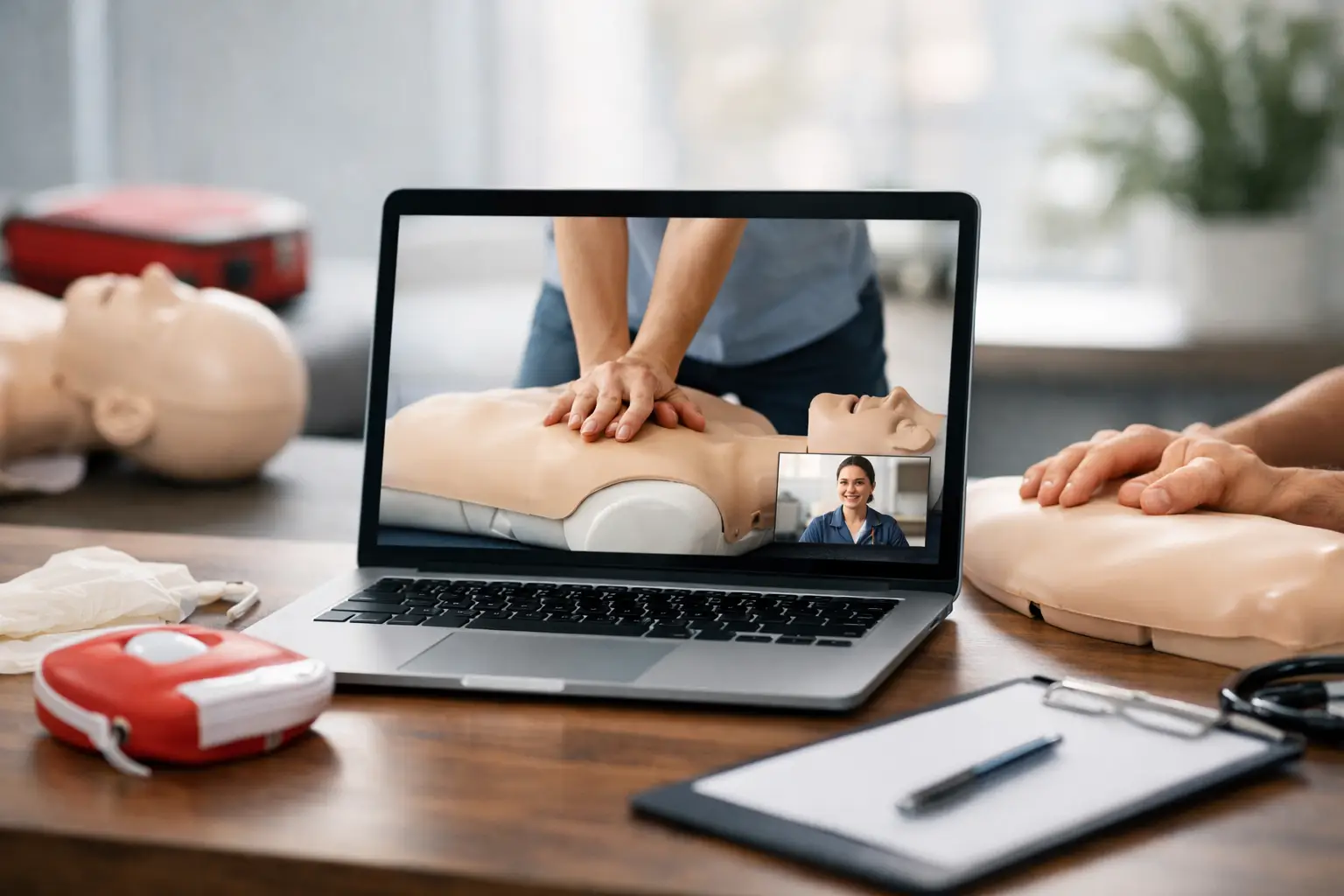
CPR training generally falls into three categories. The first is fully online training, where all instruction and testing happen on a computer. The second is blended learning, where the knowledge portion is completed online and the skills are tested in person. The third is fully in-person training, where both instruction and skills practice happen live.
For basic awareness, online learning can be useful. It is accessible, flexible, and often easier for busy parents, employees, and community members to complete. It can teach the sequence of care, how to recognize cardiac arrest, when to call 911, and how to use an AED.
But employers and healthcare organizations often want more than knowledge recall. They want proof that you can perform chest compressions, use a bag-mask device if appropriate, and respond in a structured way during a real emergency. That is why blended and in-person formats are often treated differently from online-only courses.
A practical skill cannot be judged well by a multiple-choice quiz. Compression depth, recoil, hand placement, and rescue breathing technique need observation and correction. In high-stakes settings, that standard is reasonable.
Who usually accepts online CPR and who may not
For the general public, families, babysitters, coaches, and some workplace teams, online CPR may be enough if there is no formal hands-on requirement. People in these groups often need readiness and confidence more than regulatory compliance. A well-designed online course can still provide valuable instruction and improve willingness to act.
For healthcare professionals, the standard is usually tighter. Nurses, medical assistants, EMTs, dental staff, therapists, and other clinical workers are more likely to need a course with a live skills component. Hospitals, clinics, long-term care facilities, and ambulance services frequently require BLS or other credentials that verify hands-on competence.
Childcare providers, teachers, foster or adoptive parents, and workplace safety designees fall somewhere in the middle. Some organizations accept blended training. Others want a fully in-person course. State agencies, licensing boards, and employers do not always align, so one answer does not cover every case.
If your job, license, or program has real consequences attached to CPR compliance, do not guess. Ask before you enroll.
How to tell whether your online CPR course will count
Start with the requirement, not the course advertisement. Before registering, find out exactly what the employer, agency, or school requires. Ask whether they accept online-only CPR, blended learning, or only in-person classes. Ask whether they require BLS rather than general CPR. Ask whether they require training from a specific provider.
Then look closely at the course details. A credible training program should clearly state the audience, course type, certification outcome, expiration period, and whether a hands-on skills session is included. If the website is vague about any of those points, that is a warning sign.
You should also pay attention to the name of the course. CPR for the community is not the same as BLS for healthcare providers. ACLS and PALS are advanced professional courses with their own prerequisites and practical expectations. A certificate that says CPR may still be the wrong training for your role.
The safest approach is to confirm three things in advance: whether the issuing organization is recognized by your employer or board, whether the format meets the stated requirement, and whether skills testing is mandatory.
Online CPR can be useful - but it has limits
There is real value in online education. For many adults, online CPR removes scheduling barriers that would otherwise delay training. It can help parents learn what to do before EMS arrives. It can help office teams understand emergency response basics. It can also serve as a strong knowledge foundation before an in-person skills session.
That said, convenience should not be confused with full readiness. CPR is stressful, physical, and time-sensitive. People often overestimate how prepared they are until they practice on a manikin, work through scenarios, and receive correction from an instructor.
This is especially true for infant CPR, team-based resuscitation, AED use, and healthcare settings where role clarity matters. The best training does not just tell you what to do. It conditions you to do it quickly, correctly, and without freezing.
That is why many learners choose blended or in-person training even when online CPR is technically accepted. They want more than a certificate. They want the confidence that comes from practice.
When blended learning is the better answer
For many people, blended learning solves the acceptance problem. It offers the flexibility of online coursework while preserving the credibility of a live skills check. That balance works well for employers who want convenience but still need documented hands-on verification.
It is also a practical option for busy professionals in cities with demanding schedules, including healthcare and workplace teams in places like Phoenix, Las Vegas, and Denver where timing and access can affect course completion. A blended model can reduce time away from work without lowering the standard of training.
For organizations like Community Responders LLC that focus on real-world readiness, this matters. The goal is not simply to move people through a class. The goal is to prepare them to respond when a person collapses, a child chokes, or a coworker stops breathing.
Questions to ask before you enroll
Before choosing any CPR course, ask who accepts the certificate, whether there is a required skills test, and whether the course matches your actual role. If you are in healthcare, ask whether you need BLS, ACLS, or PALS rather than basic CPR. If you are taking training for childcare or employment, ask whether state or employer-specific rules apply.
Also ask yourself what kind of preparedness you want. If your only goal is introductory awareness, online-only training may serve that purpose. If you may need to act in front of patients, children, coworkers, or the public, hands-on practice is usually worth it even when it is not strictly required.
The right question is not only is online CPR accepted. The better question is whether the training will stand up when someone is counting on you. Acceptance matters for paperwork. Skill matters when seconds count.
Choose the course that satisfies both.