If your card is close to expiring, this is not something to leave for next month. Knowing how to renew BLS certification before a deadline protects more than a credential. It protects your job status, your clinical readiness, and your ability to respond correctly when a real emergency happens.
For many healthcare workers, BLS renewal feels routine until a manager asks for an updated card or a shift assignment depends on current credentials. For parents, coaches, and workplace responders, the pressure looks different, but the reason is the same. Skills fade when they are not practiced. Renewal is not just an administrative step. It is a check on performance under pressure.
How to renew BLS certification
In most cases, renewing BLS certification starts with one question: are you still within your current certification period? Most BLS credentials are valid for two years, but the right time to renew is before the expiration date, not after it. Waiting too long can create gaps that affect employment, onboarding, clinical privileges, or workplace compliance.
The process is usually straightforward. Confirm your expiration date, verify which training provider your employer or licensing body accepts, register for a renewal course, complete the required instruction and skills testing, and keep your updated certification accessible. That sounds simple, but details matter. The wrong course format or the wrong provider can waste time and money.
If you work in a hospital, clinic, dental practice, EMS setting, or long-term care environment, check requirements before enrolling. Some employers accept blended learning with an online cognitive portion followed by an in-person skills session. Others want a fully instructor-led class. If you are renewing for personal preparedness or a workplace role outside direct patient care, you may have more flexibility, but credible instruction still matters.
Start with your expiration date and employer requirements
The fastest way to create problems is to assume all BLS courses are interchangeable. They are not. Before you book anything, review your current card and confirm the expiration date. Then verify exactly what your employer, school, agency, or credentialing office requires.
This is especially important for healthcare professionals. A course that sounds similar to BLS may not meet job standards if it is not issued by an accepted training organization or if it lacks the required skills evaluation. If your position involves direct patient care, airway management, team response, or resuscitation duties, your employer may be specific about both curriculum and delivery method.
If your card is already expired, do not guess about next steps. Some providers still allow you to take a renewal-style course, while some employers may require a full initial course once the credential lapses. It depends on local policy and workplace expectations.
Choose the right course format
There is no single best format for every learner. The right choice depends on your schedule, your learning style, and the acceptance standards tied to your role.
Instructor-led classes work well for learners who want direct feedback, structured pacing, and hands-on practice from the start. This format can be especially helpful if you do not use BLS skills often or if you want more confidence with compressions, ventilation, and team dynamics.
Blended learning can be a strong option for busy professionals. You complete the knowledge portion online and then attend an in-person skills check. This often gives more scheduling flexibility while still verifying hands-on performance. The trade-off is that online learning demands self-discipline. If you rush through the coursework, the skills session may feel harder than expected.
For community learners and workplace teams, convenience matters, but realism matters more. A good renewal course should reinforce recognition of cardiac arrest, high-quality CPR, AED use, bag-mask ventilation, and team response principles in a way that feels usable, not theoretical.
What happens in a BLS renewal course
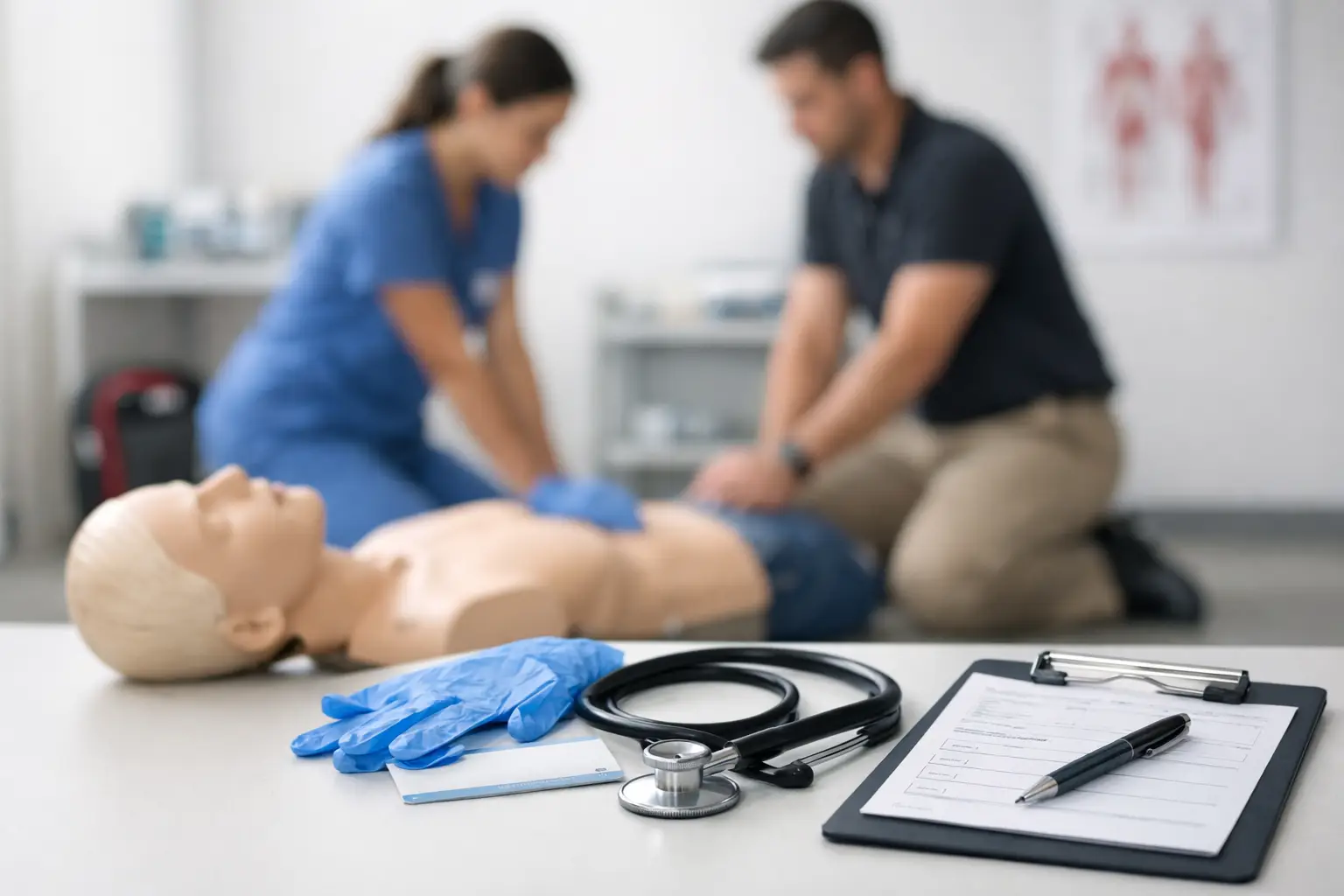
A proper renewal course is not just a repeat slideshow. It should revisit the core actions that save time and improve outcomes during cardiac and breathing emergencies. That typically includes adult, child, and infant BLS concepts, CPR quality, AED use, relief of choking, and coordinated response in a team setting.
Healthcare-focused BLS renewal often places added emphasis on rapid assessment, role clarity, and minimizing interruptions in compressions. Those details matter. Small performance issues, like delayed compressions or ineffective ventilations, can reduce the quality of care in a real event.
Expect a combination of knowledge review and hands-on testing. Even if you have been certified before, you still need to demonstrate the skill standard. Renewal should confirm competence, not assume it.
Common mistakes that delay renewal
Most renewal problems are avoidable. People run into trouble when they wait until the last week, choose a course before checking employer requirements, or confuse CPR training with healthcare-provider BLS training.
Another common issue is underestimating scheduling. A blended course may look faster on paper, but if in-person skills sessions are booked out, it may not help you meet a deadline. The same is true in larger metro areas where healthcare training demand can spike around hiring seasons. In cities such as Phoenix, Las Vegas, or Seattle, planning ahead can save you from scrambling for an open seat.
Documentation also matters. Once you renew, store your updated card where you can access it quickly. Many professionals need to upload proof to HR systems, staffing agencies, compliance platforms, or licensing files. A current certification does not help much if you cannot produce it when requested.
When to renew BLS certification
The best time to renew BLS certification is before you are close to expiration. A practical window is several weeks in advance, especially if your work schedule is unpredictable or your employer has strict documentation deadlines.
Early renewal reduces risk. If a class is canceled, a skills session fills up, or your employer rejects a course format, you still have time to fix it. It also gives you space to actually absorb the training instead of treating it like a box to check.
There is another reason not to wait. BLS is performance based. If it has been two years since you practiced with feedback, a last-minute class can expose rust you did not expect. Giving yourself time makes it easier to refresh both knowledge and execution.
If your certification already expired
An expired card is not the end of the road, but it does change the urgency. Start by checking what your employer will accept. Some workplaces may allow immediate renewal if you complete training right away. Others may treat an expired card as noncompliance until updated documentation is submitted.
If you are between jobs, in school, or returning to a patient care role, do not assume a lapse is minor. Hiring teams often review certifications closely. A valid BLS card signals readiness and professionalism. An expired one can slow onboarding, delay start dates, or require extra administrative follow-up.
The practical answer is simple: register as soon as possible and make sure the course matches your intended use.
Why renewal matters beyond compliance
People often talk about BLS renewal as a job requirement, and sometimes it is. But that framing is too narrow. BLS exists for moments when someone collapses, stops breathing normally, or needs immediate intervention before advanced care takes over.
In those moments, confidence comes from repetition. Renewal keeps the sequence familiar. It sharpens recognition, reinforces priorities, and helps responders act without wasting time. That matters for a nurse in a hospital room, a dental professional during a procedure, a teacher on campus, or a parent at a youth sports event.
Good training should leave you with more than a fresh card. It should leave you faster, steadier, and more prepared to work as part of a response.
For learners who want that kind of practical readiness, the training environment matters. Community Responders LLC focuses on skill-based instruction built for real emergencies, which is exactly what BLS renewal should support.
If your certification is coming due, treat renewal like what it is - maintenance on a lifesaving skill set. The right class, taken on time, keeps you ready when someone else cannot afford your hesitation.