A child falls hard on the playground. A coworker cuts a hand on broken glass. A family member suddenly struggles to breathe. In those first seconds, knowing how to give first aid matters because hesitation can cost time, and time changes outcomes.
First aid is not advanced medical care. It is the immediate help given to an injured or ill person until the situation improves or emergency professionals take over. That distinction matters. Your job is to keep the person as safe and stable as possible, not to diagnose everything or fix every problem on the spot.
How to give first aid without making the situation worse
The first rule is scene safety. Before you rush in, look for hazards such as traffic, fire, exposed wires, leaking gas, aggressive behavior, or unsafe structures. If the scene is dangerous, do not put yourself at risk. Call 911 and wait for trained responders if you cannot safely approach.
If the area is safe, check the person for responsiveness. Speak clearly. Ask if they can hear you and what happened. If they are unresponsive, not breathing, or only gasping, call 911 immediately or direct a specific person to call. If an AED is available, send someone to get it.
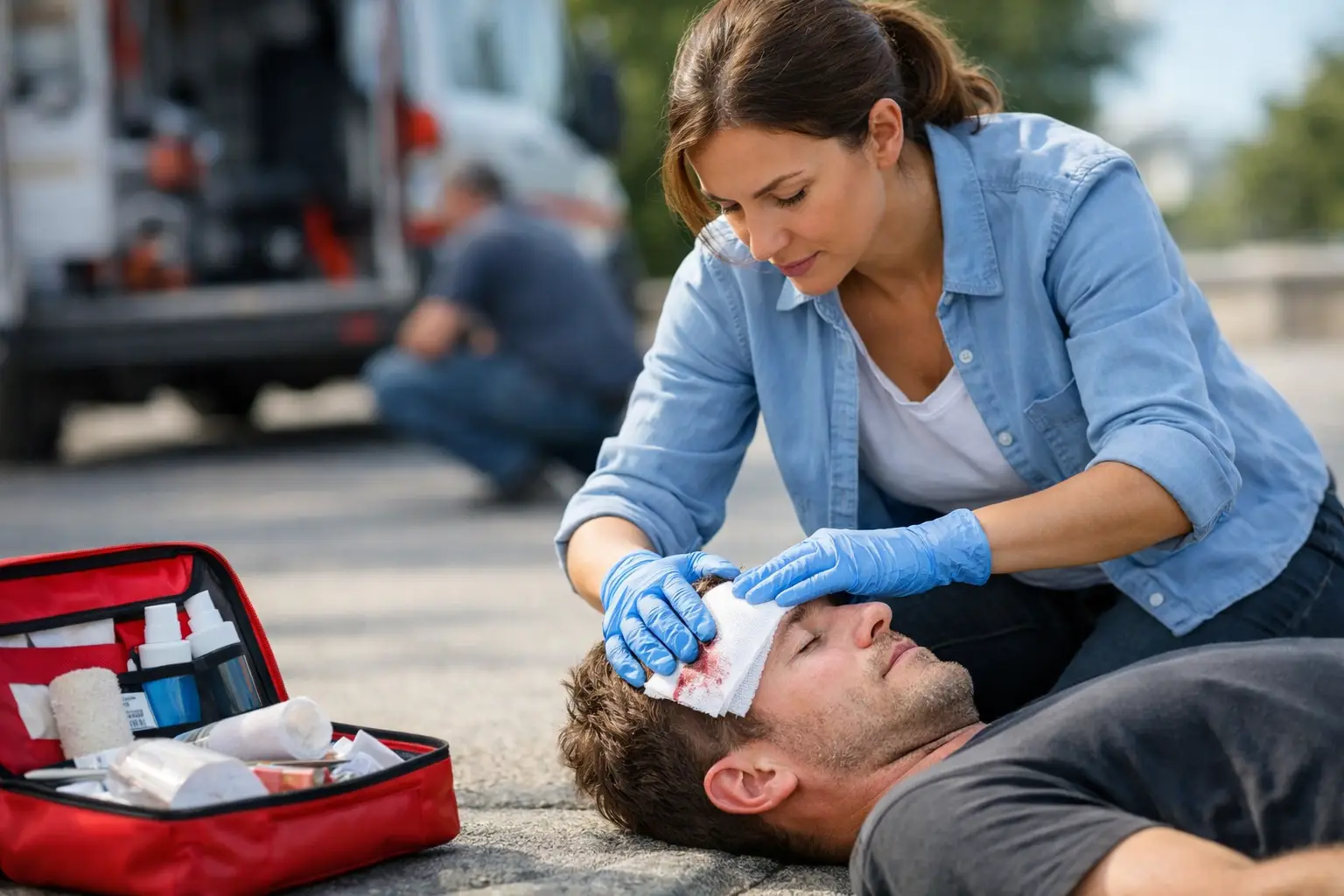
Then focus on the life threats first. In practical terms, that means airway, breathing, and severe bleeding. If the person is not breathing normally, begin CPR if you are trained and use an AED as soon as it arrives. If there is heavy bleeding, apply firm direct pressure with a clean cloth, dressing, or gloved hand if gloves are available. The priority is simple - keep oxygen moving and keep blood in the body.
When the emergency is less severe, first aid still follows the same logic. Stay calm, identify the main problem, and give the least complicated care that protects the person from getting worse.
Start with the basics: call, protect, assess, help
In most emergencies, four actions keep your response organized.
Call for help early. If there is any sign of chest pain, trouble breathing, severe bleeding, stroke symptoms, seizure, serious burns, head injury, loss of consciousness, or possible poisoning, involve emergency services right away. People often wait too long because they hope things will improve. In a true emergency, early activation helps.
Protect yourself and the patient. Use gloves if available. Wash hands when you can. Avoid direct contact with blood or bodily fluids. If the person may have a neck, back, or leg injury, avoid moving them unless there is immediate danger.
Assess what you see. Look for obvious injuries, changes in skin color, breathing difficulty, swelling, bleeding, or confusion. Ask simple questions if the person is awake. What hurts? Do you have allergies? Do you take medication? What happened?
Help within your level of training. That last point is where good judgment matters. There is a difference between useful action and overstepping. You do not need to improvise advanced care to be effective.
Bleeding and wounds
For most external bleeding, apply direct pressure and keep it steady. If blood soaks through, add more dressing on top rather than removing the first layer. Elevation may help in some cases, but pressure is still the main intervention. If bleeding is severe and does not stop, call 911 if you have not already.
Small cuts should be cleaned with water once the bleeding is controlled. Cover them with a clean bandage. Deep wounds, embedded objects, large gaping cuts, or bleeding that will not stop need medical evaluation. Do not remove an object stuck in a wound if it is deeply embedded. Stabilize it as best you can and wait for advanced care.
Burns
Cool minor burns with cool running water for at least 10 minutes. Do not use ice, butter, ointments, or home remedies. Remove rings or tight items before swelling starts, but do not pull off clothing that is stuck to the burn.
Cover the area loosely with a clean, dry dressing. Burns on the face, hands, feet, genitals, major joints, or large body areas deserve urgent medical attention. So do electrical and chemical burns, even when the surface injury looks limited.
Choking
If a person can cough or speak, encourage them to keep coughing. If they cannot breathe, talk, or make sound, treat it as a severe airway obstruction. Give abdominal thrusts if you are trained to do so. For infants, the response is different and uses back slaps and chest thrusts, which is one reason formal training matters.
If the person becomes unresponsive, call 911 and begin CPR. Each time you open the airway, look for a visible object in the mouth. Do not perform blind finger sweeps.
Fainting, heat illness, and dehydration
If someone feels faint, help them sit or lie down. If they lose consciousness, check breathing right away. If they are breathing and there is no major trauma, place them on their side to help keep the airway clear.
Heat exhaustion often shows up as heavy sweating, weakness, headache, nausea, and dizziness. Move the person to a cooler place, loosen clothing, and give cool fluids if they are awake and not vomiting. If the person becomes confused, stops sweating, has a high body temperature, or loses consciousness, call 911. Heat stroke is a medical emergency.
Suspected heart attack or stroke
These are situations where speed matters more than perfect certainty. If someone has chest pressure, pain spreading to the arm, jaw, or back, shortness of breath, nausea, or sudden sweating, call 911. Keep them at rest and monitor breathing.
For stroke, think FAST - face drooping, arm weakness, speech difficulty, time to call 911. Do not drive the person yourself unless emergency care is truly unavailable. Rapid treatment can reduce long-term damage.
How to give first aid when the person is unconscious
An unconscious person needs immediate attention because airway and breathing problems can develop fast. First, check for responsiveness and normal breathing. If there is no normal breathing, call 911, start CPR, and use an AED as soon as possible.
If the person is breathing normally and there is no reason to suspect major spinal trauma, place them on their side in a recovery position. This can help keep the airway open and reduce the risk of choking on vomit or fluids. Continue watching their breathing until help arrives.
Do not give food, drink, or medication to someone who is unconscious or not fully alert. Even water can create a choking risk.
What first aid does not include
People often freeze because they assume first aid requires advanced knowledge. In reality, good first aid is disciplined, not flashy. It does not include guessing about medications, forcing a person to stand or walk after a collapse, moving someone with possible spinal injury without cause, or delaying emergency care while searching online for answers.
It also does not mean doing nothing because you are afraid of being imperfect. If the scene is safe and the need is clear, simple actions like calling 911, applying pressure to bleeding, starting CPR, or cooling a burn can make a measurable difference.
Training changes how you respond
Reading about first aid helps, but hands-on practice is what builds real confidence. Skills such as CPR, AED use, choking response, bleeding control, and patient assessment are easier to perform when you have practiced them under instruction. That is true for parents and workplace teams, and it is just as true for licensed professionals who need to keep high-stakes skills sharp.
This is where structured training stands apart from general advice. In a class, you learn what to do, what not to do, and how to make decisions under pressure. Community Responders trains both everyday learners and professional responders with that same goal - competent action when seconds count.
You do not need to become a clinician to be useful in an emergency. You need a clear sequence, steady judgment, and the willingness to act. The best time to learn first aid is before you need it, because emergencies rarely wait for confidence to catch up.