When someone collapses, there is no pause button. You do not get extra time to look up instructions or guess your way through chest compressions. That is why people search for cpr training near me in person - not just to check a box, but to build the kind of hands-on readiness that matters when seconds count.
Online education has its place, but CPR is a physical skill. Depth of compressions, hand placement, rescue breaths, AED use, and team response all improve when you practice them in a real room with real equipment and a qualified instructor watching your technique. If your goal is confidence, competence, and in many cases a valid certification, in-person training is often the better choice.
Why in-person CPR training still matters
CPR is not just information. It is performance under pressure. You can watch a video on chest compressions, but that does not tell you whether you are pressing deep enough, moving fast enough, or allowing full chest recoil. Those details affect outcomes.
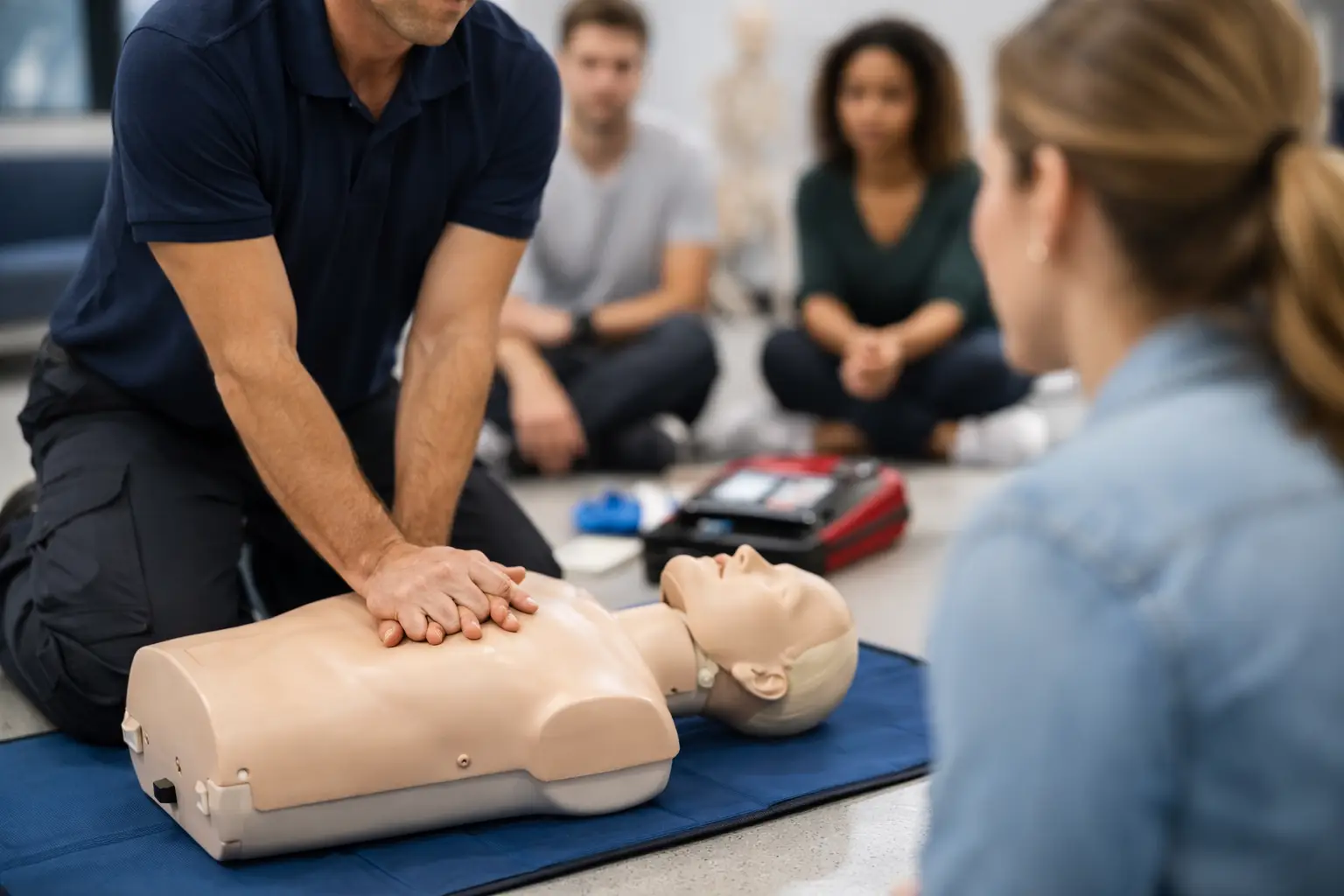
In-person classes give you immediate correction. An instructor can adjust your hand position, coach your pacing, and help you use an AED trainer the right way. That feedback is difficult to replace in a fully online format.
There is also the issue of stress. Emergencies are loud, fast, and disorienting. Practicing in a classroom, even in a controlled setting, helps narrow the gap between learning the material and using it in real life. For parents, teachers, coaches, workplace teams, and healthcare professionals, that difference is significant.
What to look for when searching for CPR training near me in person
Not all classes meet the same need. Before you register, be clear about why you need training.
If you are a parent, babysitter, coach, or general community member, a CPR and first aid course may be the right fit. If you work in healthcare or need job-related credentials, you may need BLS rather than a basic CPR course. For advanced clinical roles, ACLS or PALS may be required instead. A good training provider will make these distinctions clear rather than pushing everyone into the same class.
The instructor matters just as much as the course title. Look for training led by experienced professionals who teach to performance, not just completion. A strong class should cover the required material, but it should also prepare you to respond in an actual emergency. That means hands-on practice, scenario-based instruction, and clear standards for skill evaluation.
Class structure matters too. Some learners do best in a traditional classroom with full instructor-led teaching. Others prefer a blended format where they complete part of the coursework online and then attend an in-person skills session. That can be a practical option for busy professionals, but only if the final skills check is thorough and recognized by the employer or licensing body involved.
Certification is not all the same
One of the most common mistakes people make is assuming any CPR card will work for any job. It will not.
Some employers require a specific type of certification from a specific training framework. Hospitals, clinics, dental offices, surgery centers, and EMS employers often need BLS for Healthcare Providers or another role-specific credential. Childcare settings may require pediatric-focused CPR and first aid. Workplace compliance standards may call for adult CPR, AED, and first aid training for designated staff.
Before booking a class, confirm what your employer, school, state board, or facility accepts. If you are taking the course for personal preparedness rather than employment, you have more flexibility. Even then, it is worth choosing a program that is widely recognized and taught to a high standard.
The signs of a quality CPR class
A strong CPR course is practical from the moment it starts. You should know what skills are being taught, how long the class will take, whether there is a written assessment, and whether hands-on testing is required.
Good classes use current training materials and equipment. Manikins should allow realistic compression practice. AED trainers should be part of the session, not an afterthought. Instructors should explain not just what to do, but why each step matters.
Smaller class sizes can be a real advantage, especially for first-time learners. More individual coaching usually means better skill retention. Larger classes are not automatically a problem, but if students spend most of the time watching instead of practicing, the training may fall short where it counts.
A quality provider should also be transparent about certification timelines, renewal periods, and whether the course satisfies workplace or professional requirements. Clear communication is a sign of a serious training operation.
Who benefits most from in-person CPR training
The short answer is almost everyone, but the reason varies.
For families, CPR training creates a safer home. Parents and grandparents often take class because of concerns about infants, children, older relatives, or medical conditions in the household. The value is not hypothetical. Cardiac events, choking incidents, drowning emergencies, and falls can happen in everyday settings.
For employers, in-person training supports readiness and reduces hesitation during emergencies. Offices, warehouses, schools, gyms, construction sites, and hospitality businesses all benefit when staff know how to respond before EMS arrives. Hands-on drills can also improve team coordination, which matters in crowded or high-risk environments.
For healthcare professionals, there is no substitute for credible, skills-based instruction. BLS, ACLS, and PALS are tied to patient safety, clinical expectations, and credentialing. Professionals need training that respects the seriousness of the role and reinforces performance standards, not just course completion.
Questions to ask before you register
A quick phone call or registration review can save you time and frustration. Ask whether the course is fully in person or blended, whether the certification meets your specific requirement, and how much hands-on practice is included.
It also helps to ask who the class is designed for. A community CPR course and a healthcare provider BLS course may cover overlapping concepts, but they are not interchangeable. If you are unsure, a reputable provider should point you to the right option without guesswork.
You may also want to ask about group training. For workplaces, schools, and community organizations, on-site CPR instruction can make training more efficient and more relevant to the environment where an emergency might happen.
Timing, convenience, and the trade-offs that matter
Most people start with convenience. They want a class close to home or work, offered at a manageable time, with a straightforward registration process. That makes sense. If the course is too hard to attend, you may keep postponing it.
Still, convenience should not be your only filter. The nearest class is not always the best class. A low-cost session with minimal practice may be less useful than a slightly longer drive to a provider known for solid instruction and clear certification standards.
This is especially true in large service areas where options vary widely. Someone looking in Phoenix, Las Vegas, or Seattle may find multiple CPR classes nearby, but the details can differ sharply in quality, class type, and instructor experience. The right choice depends on whether you need basic community training, workplace readiness, or professional certification.
What good training feels like
By the end of a strong in-person course, you should not feel like you sat through a lecture. You should feel more prepared to act.
That does not mean you leave believing emergencies are easy. They are not. Good training does something more realistic and more valuable - it reduces hesitation. You know how to assess the scene, call for help, begin compressions, use an AED, and continue care until higher-level help arrives. If the course includes first aid, you should also understand how to respond to common injuries and medical events with more control and less panic.
That shift matters. In an emergency, people rarely rise to the level of intention alone. They fall back on what they have practiced.
For learners who want practical, hands-on instruction across community and professional courses, providers such as Community Responders LLC are built around that reality. The focus is not just on issuing a card. It is on preparing people to respond when immediate action can change an outcome.
If you are searching for CPR training, choose a class that treats the skill with the seriousness it deserves. The best course is not simply nearby. It is the one that leaves you ready to step forward when someone needs help most.