A cardiac emergency does not wait for a convenient moment. It happens at home, in a gym, at work, in a church lobby, or on the sidelines of a youth game. That is why people look for CPR classes in Phoenix when they want more than a certificate - they want the ability to act without freezing when someone needs help.
The right class can give you that. The wrong one can leave you with a card, but very little confidence. If you are comparing options, the real question is not simply who offers CPR training. It is which course matches your responsibility, your environment, and the kind of emergency you may actually face.
What makes CPR classes in Phoenix worth taking
Phoenix is a large, fast-moving metro area with families, schools, job sites, medical offices, fitness centers, and care facilities all operating at full pace. In that setting, emergencies are not rare enough to treat training as optional. CPR instruction matters because bystander action in the first few minutes can change the outcome before EMS arrives.
That applies to very different people. A parent may want to respond to choking or sudden collapse at home. An employer may need staff trained for workplace readiness and compliance. A nurse, dental assistant, or medical technician may need a provider-level course that meets credentialing requirements. The training goal is different in each case, so the best course is not always the longest or the most advanced. It is the one that prepares you for your real role.
Start with the type of CPR training you actually need
One of the biggest mistakes people make is signing up for a class based on the course title alone. CPR training is not one-size-fits-all.
For many community members, a CPR and first aid class is the right fit. This usually covers adult, child, and infant CPR, AED use, and relief of choking. It is practical, direct, and designed for people who may be the first person on scene at home, at school events, or in public settings.
For healthcare professionals and clinical staff, Basic Life Support is often the appropriate path. BLS is more structured around professional response and team-based care. It typically includes high-quality CPR, AED use, bag-mask techniques, and response priorities for healthcare settings. If your employer, licensing body, or clinical role specifies BLS, a general CPR class is usually not enough.
Some learners need more advanced training, such as ACLS or PALS, but those are not entry-level substitutes for CPR. They are intended for providers working in settings where advanced cardiac or pediatric emergency response is part of the job. If you are not sure which course you need, the safest move is to confirm the exact requirement before enrolling.
What to look for in a CPR training provider
Not every training experience delivers the same level of readiness. A credible provider should be clear about what the course covers, who it is for, whether it includes hands-on skills practice, and what certification is issued at the end.
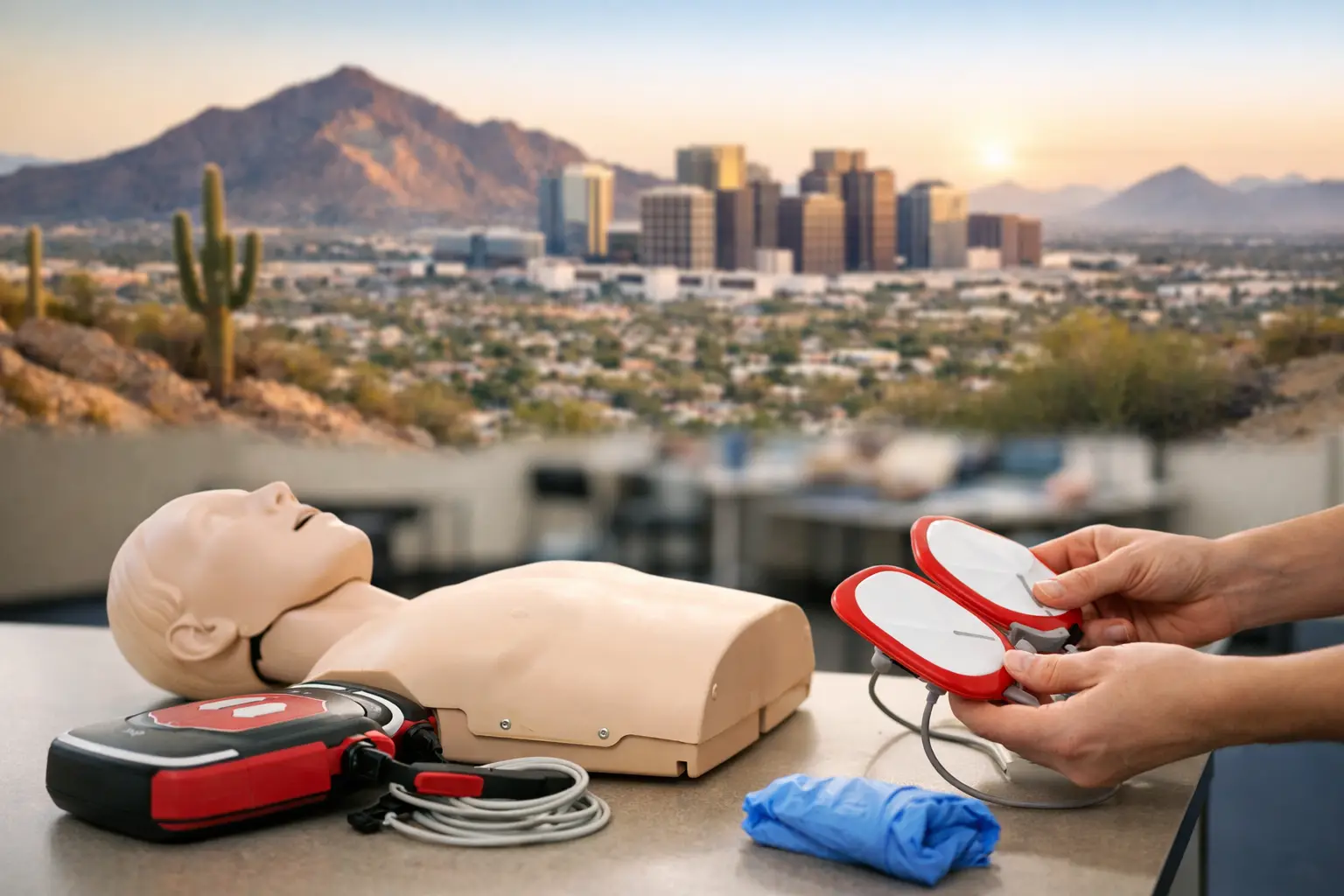
Hands-on instruction matters. CPR is physical and procedural. You need to practice compressions, ventilation steps if applicable, AED use, and scene response in a way that feels realistic enough to hold under stress. Watching material online can help with concepts, but it does not always build timing, body mechanics, or confidence.
You should also look at instructor quality. Instructors need more than subject knowledge. They need to correct technique, answer scenario-based questions, and teach in a way that reflects actual response conditions. That is especially important for workplace teams and healthcare learners, where mistakes in training can carry into real events.
Scheduling and accessibility matter too, but they should not outweigh course quality. A class that fits your calendar is useful. A class that prepares you to respond correctly is essential.
In-person, blended, or group training?
This depends on your reason for taking the course.
In-person classes are often the strongest option for people who want direct coaching and immediate feedback. If you are new to CPR, nervous about doing it wrong, or training for a role where response quality matters, face-to-face instruction can be the most effective path.
Blended learning can work well for busy adults and professionals who want to complete part of the coursework online and then attend an in-person skills session. This format can save time without removing the practical component. It is a good option when the certification standard allows it and when the training provider runs the skills portion with enough rigor.
Group or onsite workplace training makes sense for employers who want a consistent response standard across a team. It can also improve participation because staff train together in a setting tied to their actual work environment. For offices, schools, childcare teams, fitness staff, or industrial crews, that practical connection matters.
There is no universally best format. If your priority is convenience, blended learning may be enough. If your priority is skill confidence under pressure, in-person training often has the advantage.
Questions to ask before you register
Before choosing among CPR classes in Phoenix, ask a few basic questions that can prevent wasted time and the wrong certification.
First, ask whether the course is intended for the general public or healthcare providers. Those are not interchangeable. Next, confirm whether first aid is included or offered separately. For many families and workplace teams, CPR alone may not cover the situations they are most likely to encounter.
You should also ask how much of the course is hands-on, whether the certification meets your employer or licensing requirement, and how long the credential remains valid. If you are taking the class for a job, do not assume any CPR card will be accepted.
Finally, ask how the class handles real-world scenarios. Good training connects the steps to actual decision-making - when to call 911, how to use an AED quickly, how to manage panic, and how to respond when the victim is an infant, child, or adult.
Who benefits most from CPR training
CPR education is often framed as something for healthcare workers, but the need is broader than that. Parents, grandparents, teachers, coaches, security staff, church volunteers, office managers, construction supervisors, and caregivers all face situations where immediate action may be required.
For families, the value is straightforward. Emergencies happen at home, and the first person present is rarely a clinician. Knowing how to recognize cardiac arrest, begin compressions, and respond to choking can close the gap until professional help arrives.
For employers, training supports both preparedness and duty of care. A trained team can respond faster, coordinate better, and reduce hesitation in critical moments. Depending on the workplace, it may also help satisfy internal policies, industry expectations, or safety planning goals.
For healthcare professionals, quality CPR training is part of clinical readiness. Credentials matter, but so does performance. When a code or collapse happens, there is no time to second-guess sequence, compression quality, or team roles.
Why confidence is part of the training outcome
Many people delay CPR training for the same reason - they are afraid they will not remember what to do. That fear is reasonable, but it is also exactly why training matters.
Good instruction does not pretend emergencies are easy. It teaches a repeatable response. You learn how to assess the scene, identify the emergency, activate help, start care, and use an AED without waiting for perfect conditions. The goal is not to make people fearless. It is to make them capable.
That is where a serious training partner can make a difference. Community Responders LLC reflects that approach by treating lifesaving education as a practical responsibility, not a box to check. For learners in Phoenix, that mindset matters as much as the course calendar.
The best CPR class is the one you will use
A class should leave you with more than completion paperwork. It should leave you able to step forward, follow the process, and help someone through the first critical minutes of an emergency.
If you are comparing CPR classes in Phoenix, choose the course that fits your actual role, includes hands-on practice, and comes from a provider that takes skill performance seriously. When the moment comes, clear training is what turns urgency into action.
The best time to build that ability is before anyone around you needs it.