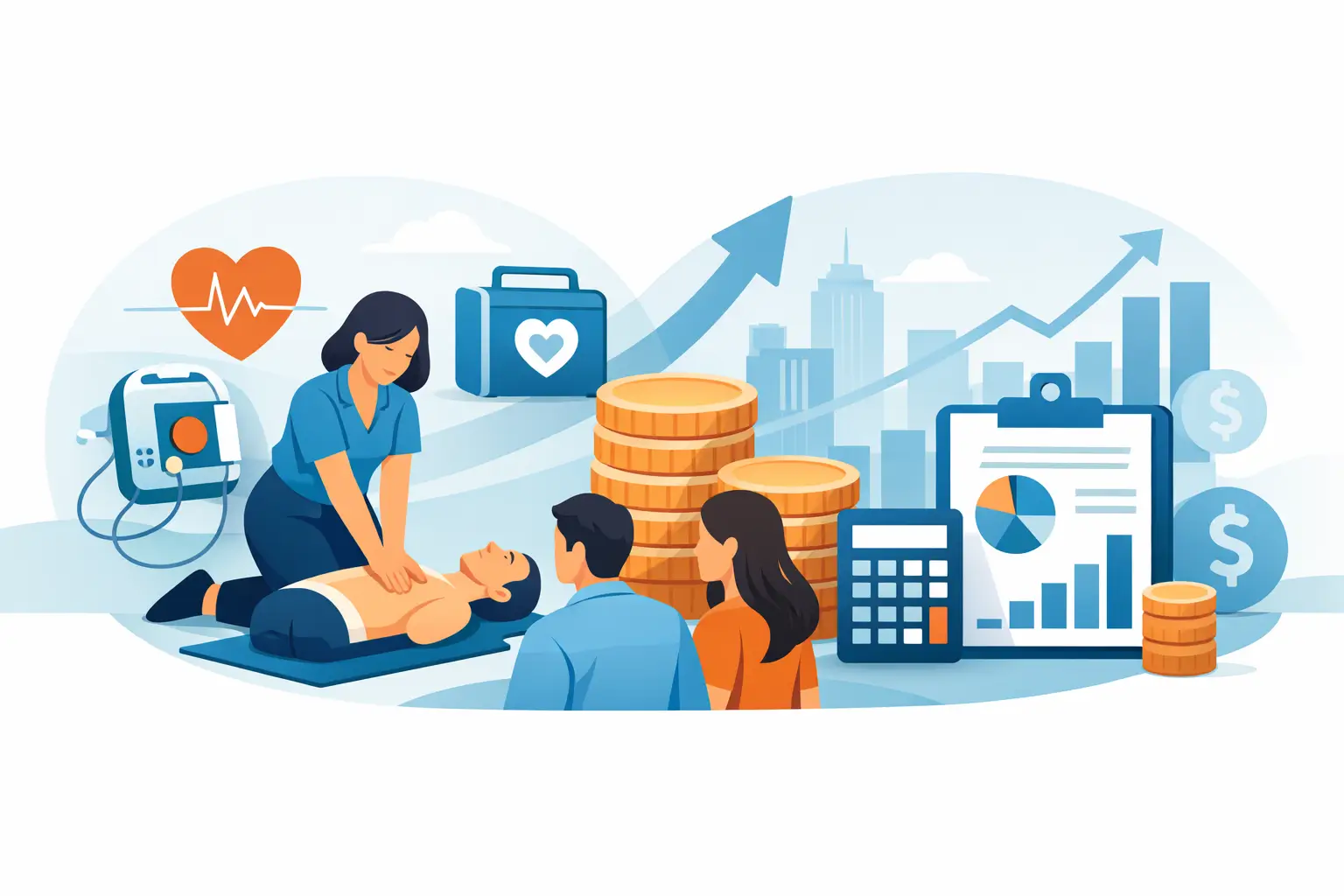
A $25 online class and a $150 hands-on certification may both be labeled CPR training, but they do not deliver the same outcome. If you are asking how much CPR training cost, the real answer depends on who needs the training, whether certification is required, and how much real practice is included.
For a parent, a babysitter, an office team, or a nurse renewing credentials, the right class is not always the cheapest one. In emergency response, price matters, but so does readiness. A lower-cost course can make sense in some situations. In others, it can leave gaps that only become obvious when someone collapses and every second counts.
How much CPR training cost for most people?
Most CPR training falls into a fairly clear range. A basic awareness or community CPR class may cost around $25 to $60 per person, especially if it is online only or offered in a short-format setting. A standard CPR and first aid class with instructor guidance and skills practice often runs about $60 to $100.
For healthcare providers, the cost usually rises. BLS classes commonly range from about $70 to $120, depending on format and location. ACLS and PALS courses can run from roughly $150 to $300 or more because they cover more advanced material, require more class time, and are designed for licensed or clinical professionals.
Those ranges are useful, but they are not the whole story. The same course title can be priced differently based on what is actually included.
What changes the cost of CPR training?
The biggest price factor is the level of training. A basic CPR class for the general public is usually less expensive than BLS for healthcare workers, and far less than ACLS or PALS. More advanced courses involve more instruction, more evaluation, and higher certification expectations.
The course format also matters. Online-only options are often cheaper because they reduce instructor time and facility use. That lower price can be attractive, especially for someone with a limited budget or a tight schedule. But online-only training may not meet employer requirements, and it does not always build the same physical confidence with compressions, AED use, and rescue skills.
Instructor-led classes usually cost more because they include live teaching, feedback, and hands-on practice. That added cost often pays for itself in skill retention. CPR is not just information. It is a response skill, and response skills improve with repetition and correction.
Location can also shift pricing. Classes in major metro areas may cost more than those in smaller communities. On-site workplace training may be priced per group instead of per person, which can make it more cost-effective for employers training multiple staff members at once.
Certification is another variable. Some low-cost courses are educational only and do not provide a recognized certification card. Others include a credential that meets workplace or healthcare compliance standards. If your job, license, or employer requires certification, the cheapest course may not be the right course.
Online, blended, and in-person training are priced differently
When people compare CPR prices, they often compare formats that are not equivalent.
Online CPR courses tend to be the least expensive. They can work well for general knowledge, refreshers in some settings, or learners who need flexibility. But there is a trade-off. Without in-person skills testing, some employers and healthcare systems will not accept the certification.
Blended learning usually sits in the middle on price. This format combines online coursework with an in-person skills session. For many learners, it offers a strong balance of convenience and hands-on verification. It can be especially useful for busy professionals who need recognized certification without spending a full day in a classroom.
Fully in-person classes are often the most expensive, but they are also the most direct. You practice with an instructor, ask questions in real time, and get immediate feedback on compression depth, pace, and AED steps. For first-time learners, parents, childcare providers, and many workplace teams, that live practice often adds real value.
How much CPR training cost for families and everyday learners?
If you are training for home, childcare, coaching, or general preparedness, expect most CPR classes to fall between $40 and $100. If first aid is included, the cost may be slightly higher. Infant and child CPR classes can also carry a premium when they include choking response and family-focused emergency scenarios.
For many households, the best value is not the lowest sticker price. It is the class that leaves you confident enough to act. Parents, grandparents, and caregivers often benefit from hands-on sessions because pediatric emergencies are high stress, and people remember physical practice better than slides alone.
A short, low-cost online class may be enough if your goal is general awareness. If your goal is to be ready for a choking infant, an unresponsive child, or a cardiac emergency at home, hands-on instruction is usually the stronger investment.
CPR costs for employers and workplace teams
Workplace CPR training is priced differently because the buyer is often training several people at once. Some providers charge per person. Others offer a flat group rate for on-site instruction. In many cases, group training lowers the cost per employee, especially for offices, schools, gyms, construction teams, manufacturing sites, and community organizations.
Typical workplace pricing may range from a few hundred dollars for a small on-site session to more for larger teams, specialized courses, or bundled CPR and first aid training. The exact number depends on class size, travel, certification type, and whether manikins, AED trainers, and course materials are included.
Employers should look beyond the invoice total. Training that fits the work environment, addresses likely emergencies, and meets compliance needs is usually the better business decision. A cheaper class that fails to meet OSHA-related expectations or internal policy requirements can create more cost later.
Healthcare-level CPR training costs more for a reason
BLS, ACLS, and PALS are not priced like community CPR classes because they are built for different stakes and different responsibilities.
BLS is generally intended for healthcare providers and trained responders who need CPR skills aligned with clinical practice. ACLS adds advanced algorithms, team dynamics, rhythm recognition, and pharmacology-related decision support. PALS focuses on pediatric emergencies, where assessment and intervention differ significantly from adult care.
These courses cost more because they demand more from the learner and the instructor. They also tend to include stricter skills validation. For a hospital employee, EMT, dental professional, or clinic staff member, choosing a recognized, high-quality course is less about saving money and more about protecting competence and credential status.
What should be included in the price?
A fair CPR training price should reflect more than seat time. Before enrolling, check whether the course includes instruction, skills practice, testing, course materials, and a certification card if one is promised. Also ask how long the certification remains valid and whether the training follows current guidelines.
If the course is noticeably cheaper than others in your area, ask why. Sometimes that lower price is legitimate. It may be a shorter class, a community event, or a non-certification course. Other times, the class may exclude skills testing, charge extra for the card, or provide limited instructor support.
That does not mean expensive always equals better. Some learners pay for advanced training they do not need. A parent does not need ACLS. A nurse usually cannot rely on a basic community CPR course for credentialing. The right fit matters as much as the price.
How to choose the right CPR class for your budget
Start with the outcome you need. If your employer, licensing board, or school requires a specific certification, that should narrow the options immediately. If you are learning for family safety or personal preparedness, focus on practical instruction and comfort level rather than certification alone.
Then compare format, recognition, and hands-on time. A lower-cost online option may be enough for awareness. A blended or in-person course is usually the better choice when confidence, compliance, or real-world response is the goal.
It also helps to think about value over time. CPR certification often lasts two years, so even a class that costs $80 to $120 may be a reasonable investment spread across that period. For many people, that is a small cost compared with the value of knowing what to do before EMS arrives.
Training providers such as Community Responders LLC serve a wide range of learners, from families to clinical teams, which is useful when your training needs may change over time. The best provider is one that teaches clearly, verifies skills properly, and prepares you to respond without hesitation.
When you ask how much CPR training cost, you are really asking what it takes to be ready when someone needs help now, not later. That answer is rarely just about price. It is about whether the training gives you the skill and confidence to step in when it matters most.