A child falls hard on a playground. A coworker collapses without warning. A parent cuts a hand badly in the kitchen. These are all emergencies, but they do not call for the same response. Understanding first aid vs CPR matters because the right action in the first few minutes can stabilize a person, protect the airway, and in some cases keep blood and oxygen moving until advanced help arrives.
Many people use the terms as if they mean the same thing. They do not. First aid is a broad set of immediate care skills used for injuries and sudden illness. CPR is one specific emergency technique used when a person is in cardiac arrest or is not breathing normally. One covers a wide range of situations. The other is reserved for the most critical moments.
First aid vs CPR: the core difference
The simplest way to separate first aid vs CPR is this: first aid addresses many types of medical problems, while CPR is designed for a life-threatening loss of breathing and circulation.
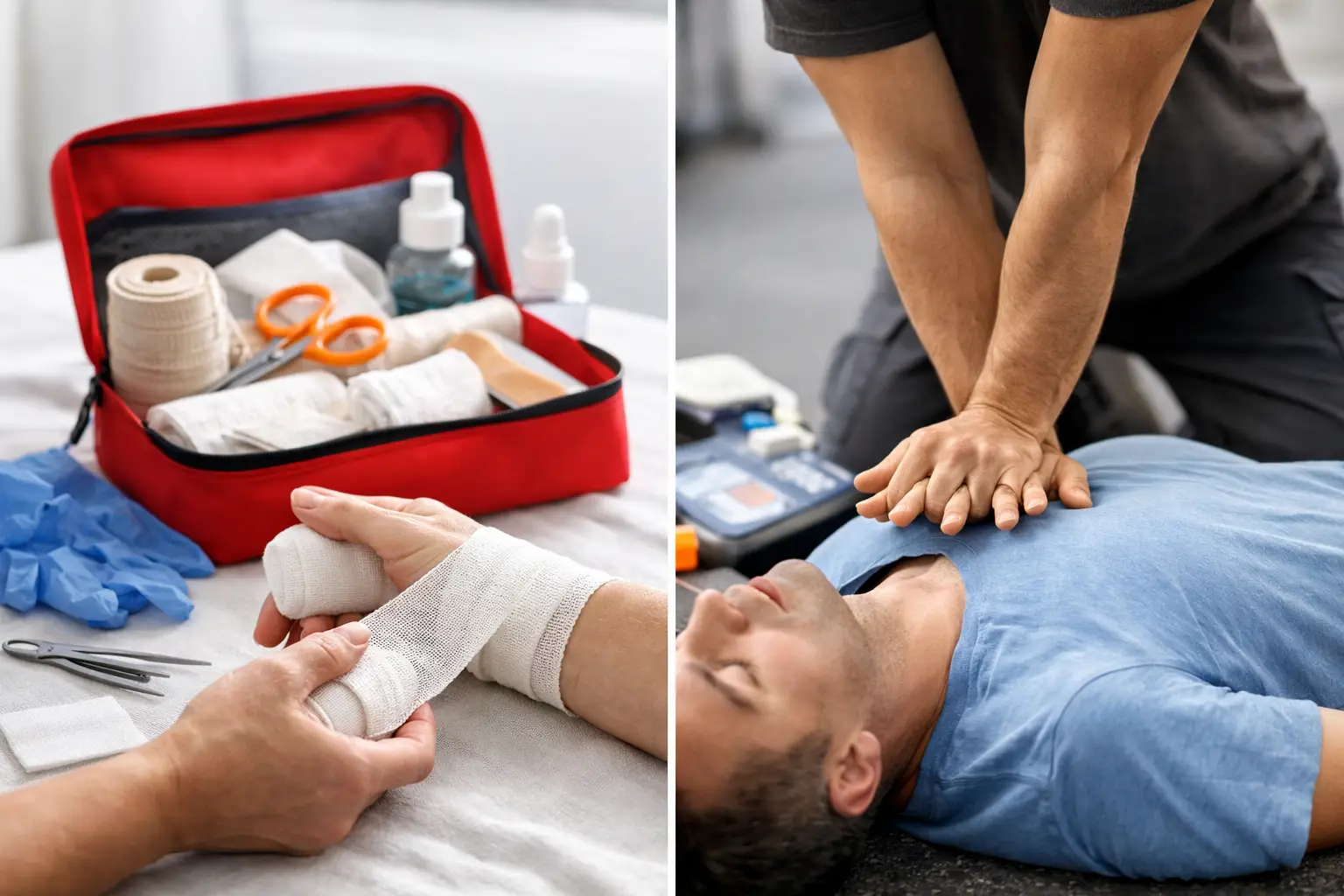
First aid can include caring for burns, controlling bleeding, helping someone with a possible fracture, responding to choking, assisting during a seizure, or recognizing stroke symptoms. In many cases, first aid is about preventing the situation from getting worse while waiting for EMS or arranging further medical care.
CPR, or cardiopulmonary resuscitation, is much narrower and much more urgent. It is used when someone is unresponsive and not breathing normally, or only gasping. Chest compressions are the center of CPR because they help move blood to the brain and other vital organs when the heart has stopped pumping effectively.
That distinction matters. If someone has a deep cut, you do not start CPR. If someone collapses, is unresponsive, and is not breathing normally, you do not stop at basic first aid. You call 911, begin CPR, and use an AED if one is available.
What first aid includes
First aid is often the first layer of response in homes, workplaces, schools, athletic settings, and public spaces. It covers both minor injuries and serious incidents that need professional care.
For example, first aid may involve applying direct pressure to severe bleeding, cooling a burn with water, helping someone stay still after a fall, or monitoring a person having an allergic reaction while waiting for emergency responders. It can also include recognizing warning signs that require immediate escalation, such as chest pain, confusion, trouble breathing, or sudden weakness on one side of the body.
The range is wide, which is why first aid training is useful for almost everyone. Parents, teachers, supervisors, coaches, and frontline employees all encounter situations where immediate care can reduce harm before help arrives.
That said, first aid is not the same as diagnosis or treatment. It is a bridge. The goal is to preserve safety, support the person, and make sound decisions under pressure.
What CPR is designed to do
CPR has a more specific purpose. It is performed when the heart is no longer effectively circulating blood, usually because of cardiac arrest. In those moments, oxygen delivery to the brain drops fast. Without action, survival chances fall by the minute.
Chest compressions manually push blood through the body. Rescue breaths may also be part of CPR, depending on the training level, the situation, and whether the rescuer is able to provide them. An AED is a critical companion to CPR because some cardiac arrests are caused by shockable heart rhythms, and defibrillation may restore an effective rhythm.
CPR is physically demanding and highly time-sensitive. It is not a comfort measure and not a general response to every emergency. It is a lifesaving intervention for a very specific condition.
When first aid is enough, and when it is not
This is where many people hesitate. They worry about overreacting, or worse, doing the wrong thing. In reality, emergency response often starts with a fast assessment.
If a person is awake, breathing, and responsive, first aid is usually the starting point. A nosebleed, a sprained ankle, a burn from a stovetop, or a fainting episode followed by recovery may require first aid and medical follow-up, but not CPR.
If a person is unresponsive and not breathing normally, the situation has changed. CPR is no longer optional. You activate EMS, start compressions, and send someone for an AED.
There are also situations where first aid and CPR overlap. Choking is a good example. If a choking adult can no longer cough or speak, you respond with choking care. If that person becomes unresponsive, the emergency escalates and CPR becomes part of the response. The same can happen after drowning, overdose, electrocution, or severe trauma.
So the real-world answer is not just first aid or CPR. Sometimes it is first aid first, then CPR if the person stops breathing or loses circulation.
First aid vs CPR in common emergencies
At home, first aid is more likely to be used day to day. Cuts, burns, falls, allergic reactions, heat illness, and choking episodes happen far more often than cardiac arrest. Families benefit from knowing how to control bleeding, identify signs of serious illness, and decide when to call 911.
In workplaces, both matter. First aid helps employees respond to injuries from tools, slips, strains, and environmental exposure. CPR becomes essential when a worker, customer, or visitor suffers sudden cardiac arrest. In offices, warehouses, schools, gyms, and job sites, trained responders can make the difference before EMS arrives.
For healthcare professionals, the line is even more critical. They need to recognize deterioration early, provide high-quality CPR, and integrate airway support, team response, and advanced protocols when appropriate. That is why entry-level first aid training and professional courses such as BLS serve different but connected needs.
Why people confuse the two
Part of the confusion comes from how training is marketed. First aid and CPR are often taught together, which makes sense because many people need both. But being taught together does not mean they are interchangeable.
Another reason is stress. In a real emergency, people may only remember that they once took a safety class. They know they should help, but they may not clearly recall where first aid ends and CPR begins.
That is why hands-on practice matters. Good training does more than define terms. It helps people recognize breathing problems, assess responsiveness, control panic, and follow a clear sequence of actions.
Which training do you actually need?
It depends on your role and the level of responsibility you carry.
If you are a parent, caregiver, teacher, coach, or general community member, a combined first aid and CPR course is often the best fit. It prepares you for the broad mix of incidents you are most likely to see.
If you supervise teams or manage a workplace, training should match your environment. Offices may focus on sudden illness, falls, and AED readiness. Construction, industrial, or outdoor settings may need stronger emphasis on bleeding, heat illness, and trauma-related first aid alongside CPR.
If you work in healthcare or direct patient care, you likely need a professional-level course such as BLS, and in some roles ACLS or PALS. Those programs go beyond community response and focus on coordinated clinical action.
For many people, the mistake is assuming one skill is enough. Knowing CPR without first aid leaves gaps in common emergencies. Knowing first aid without CPR leaves you unprepared for cardiac arrest.
The real benefit of learning both
The strongest responders are not the ones who memorize the most terms. They are the ones who can identify what is happening and act without delay.
That is the practical value in understanding first aid vs CPR. You do not waste time guessing. You know when to control bleeding, when to monitor breathing, when to call 911, when to start compressions, and when to use an AED.
That confidence matters in every setting, from a kitchen to a classroom to a patient care floor. It also builds stronger communities. A trained bystander is not replacing emergency medical services, but they are closing the gap between collapse and care.
Community Responders LLC trains both everyday responders and professionals because emergency readiness is not one-size-fits-all. The needs are different, but the principle is the same: when seconds count, trained action beats uncertainty.
If you have ever wondered whether first aid and CPR are separate skills or two parts of the same responsibility, the answer is both. They are different tools, used for different emergencies, and together they make you far more prepared to help when someone needs you most.