A medical emergency rarely starts with a warning. It starts with a fall in the kitchen, a choking child at a birthday party, a workplace injury on a normal shift, or a patient whose condition changes faster than expected. That is why first aid training 2026 matters more than a calendar update. The real question is whether training helps people respond correctly under pressure, not whether they can simply pass a course.
Training expectations are changing because emergencies are changing too. Workplaces are managing more varied risks. Families are caring for children, older adults, and relatives with chronic health concerns. Healthcare teams are working in fast-moving settings where early action can change outcomes before advanced care arrives. Across all of those settings, the standard is higher now. People do not just need information. They need usable skill.
What first aid training 2026 should actually deliver
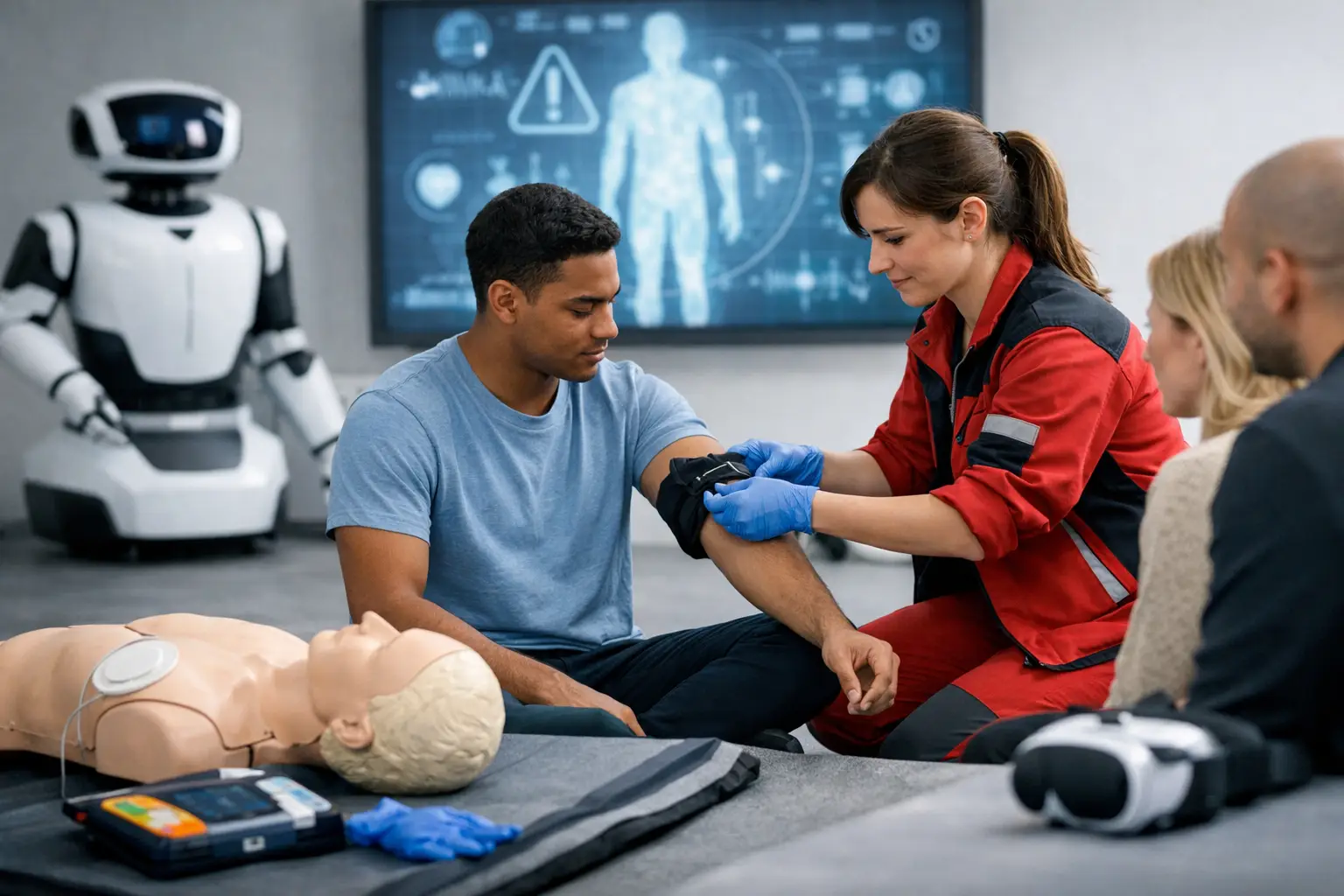
A strong first aid course in 2026 should be built around performance. That means learners practice assessment, decision-making, and hands-on response in realistic scenarios. Reading a slide deck about burns, bleeding, shock, or sudden illness is not enough if the learner freezes when faced with a real person in distress.
For community learners, that often means confidence with the first few critical minutes. Can you recognize when a situation is life-threatening? Can you control bleeding, respond to choking, position someone safely, and activate emergency services without wasting time? For many families and workplace teams, those are the moments that matter most.
For professional audiences, the standard is even more demanding. Clinical staff, care teams, and those with regulatory requirements need training that supports both certification and real-world performance. A valid card matters, but a provider who can identify deterioration and act quickly matters more. Good training closes that gap.
The shift from certification to readiness
Certification is still important. Employers need it. Licensing bodies may require it. Healthcare roles often depend on current credentials. But there is a growing difference between training that checks a box and training that prepares someone to act.
That difference usually comes down to course design. If a class is rushed, overly passive, or disconnected from realistic scenarios, retention drops fast. Learners may leave with paperwork but very little practical confidence. On the other hand, when instruction includes repetition, feedback, and situation-based practice, people are far more likely to intervene effectively.
This is one of the biggest issues to watch in first aid training 2026. A shorter, cheaper course may look attractive, especially for busy teams or individuals trying to meet a deadline. But convenience has a trade-off. If the format saves time by removing hands-on practice or meaningful instructor feedback, the learner may be less prepared when seconds count.
Who needs first aid training now
The short answer is more people than ever. The better answer depends on responsibility and setting.
Parents, grandparents, and caregivers benefit from training because emergencies at home do not wait for professionals to arrive. Choking, falls, allergic reactions, burns, and sudden illness are common enough that basic response skills are worth having before there is a crisis.
Employers need trained staff because workplace incidents can escalate quickly. Offices, schools, warehouses, retail settings, hospitality operations, and job sites all have different risk profiles, but none are risk-free. In many workplaces, first aid training also supports a stronger safety culture. Employees are more likely to report hazards and respond decisively when they know what to do.
Healthcare professionals need more than general familiarity. They need current, credible instruction that matches the demands of their role. Depending on the position, that may mean first aid alongside BLS, ACLS, or PALS. The key is alignment. Training should reflect the level of care the learner is expected to provide.
What to look for in a course
Not all first aid classes are equal, even when they cover similar topics. The strongest programs are clear about what the learner will practice, who the course is designed for, and whether the training meets workplace or professional requirements.
Start with relevance. A family-focused class should address common home and childcare emergencies in a way that feels practical, not overly clinical. A workplace course should connect training to likely job-site risks, reporting expectations, and team response. A healthcare-oriented course should move at a professional pace and reflect the level of urgency providers face.
Then look at the teaching method. Hands-on practice matters. So does instructor quality. Learners need correction in real time, especially for skills that require speed, sequence, and physical technique. If a provider cannot explain how practice happens, or if the course is mostly passive content, that is worth questioning.
Credibility also matters. For some learners, especially professionals, training must meet employer, credentialing, or compliance expectations. For others, the issue is less formal but just as important. They want instruction they can trust. Community Responders LLC operates in both spaces, which is useful for organizations and families looking for practical instruction backed by professional standards.
Why blended and in-person formats both have a place
A common question heading into 2026 is whether online learning is enough. Sometimes it is part of the answer, but rarely the whole answer.
Blended learning can be efficient. It allows learners to complete the knowledge portion on their own schedule and spend in-person time on hands-on skills. For busy professionals and employers managing staff schedules, that can be a strong option.
Still, some subjects lose too much when they move too far from live instruction. First aid is physical, situational, and time-sensitive. Learners need to practice not just what to do, but how to do it with urgency and control. For many people, especially first-time learners, in-person instruction builds confidence faster because they can ask questions, make mistakes, and correct them on the spot.
The best format depends on the audience. A seasoned healthcare worker renewing training may benefit from a more streamlined path than a new parent taking a first class. The point is not that one format is always better. The point is that the format should support performance, not just completion.
Training should reflect where emergencies happen
National standards matter, but local context matters too. A workplace team in Phoenix may need to think about heat-related emergencies differently than an office in Seattle. A community class for families in Los Angeles may benefit from different scenario examples than a training group in Denver. Good instruction keeps the core medical response consistent while making the examples relevant to the learner's environment.
That practical focus improves recall. People remember training better when it feels connected to the situations they are most likely to face. It also helps reduce hesitation. In an emergency, familiarity matters.
The most common mistake people make when choosing training
They choose based on the certificate alone.
That is understandable. Deadlines, budgets, and job requirements are real. But if the only question is whether a card will be issued, an important part of the decision gets missed. The better question is whether the learner will be more capable after the course than before it.
A strong class should leave people with fewer doubts, not just more paperwork. They should know how to assess a scene, when to call 911, how to provide immediate care within their training, and when a situation is beyond basic first aid. They should also understand that calm, early action is often more valuable than perfect action delayed.
What 2026 should mean for learners and employers
If you are choosing first aid training in 2026, expect more from it. Expect realism. Expect instruction that respects the seriousness of emergencies without making training inaccessible. Expect courses to be clear about who they serve and what they prepare people to do.
For employers, this is a good time to move beyond minimum compliance thinking. Training can support risk reduction, team confidence, and faster response in the moments before EMS arrives. For families and community members, the value is even more personal. The person who needs help may be your child, your coworker, your neighbor, or someone you have never met until that moment.
That is what makes good training worth taking seriously. It is not about collecting a credential for its own sake. It is about being able to step forward, do the right thing, and give someone a better chance when time is short.