A power outage at 2 a.m. feels very different when a child is crying, a phone battery is low, and no one is sure where the flashlights are. That is why a family emergency preparedness guide should not start with fear. It should start with clear decisions made before the emergency happens.
Most families do not need a perfect system. They need a realistic one. The goal is simple: reduce confusion, protect the people in your home, and make sure everyone knows what to do in the first critical minutes of an emergency. Whether the risk is severe weather, wildfire smoke, a house fire, a medical event, or a regional power failure, preparation works best when it is specific to your household.
What a family emergency preparedness guide should actually do
A good plan does more than tell you to buy water and batteries. It assigns roles, accounts for children and older adults, and addresses the emergencies most likely to affect your area. Families in Phoenix or Las Vegas may focus on extreme heat and water supply. Households in Seattle or Portland may think more about storms, outages, and earthquake risk. The point is not to prepare for everything equally. It is to prepare for the events that are most likely and most disruptive.
That means your plan should answer a few practical questions. How will you leave the house if there is a fire? Where will you meet if family members are separated? Who knows how to shut off utilities if needed? Which adult can access medications, insurance information, and emergency contacts quickly? If a child is at school or daycare, who is authorized to pick them up?
Preparedness becomes useful when it removes hesitation. In a real emergency, people rarely perform better than their level of training and practice.
Start with your household risks
Every family has a different risk profile. A household with infants, grandparents, or a family member with asthma has different priorities than a two-adult household with no medical needs. A family living in an apartment may have limited storage and fewer evacuation options than a family in a single-family home. If someone in the home relies on refrigerated medication, powered medical equipment, or mobility devices, backup planning becomes a top priority.
Begin by identifying the events that would force immediate action. House fire, severe weather alerts, flash flooding, prolonged power outage, gas leak, and sudden medical emergencies usually belong on that list. Then look at slower-moving problems such as poor air quality, extreme heat, water service interruption, or a communication outage. Fast emergencies require immediate action. Slow emergencies require staying power. Your plan should cover both.
Build a family plan that people can follow
The best emergency plan is short enough to remember and clear enough to use under stress. Write it down anyway. Memory fails when adrenaline is high.
Start with two meeting places. Choose one just outside the home for events like fire, and one outside the neighborhood in case you cannot return home. Pick an out-of-area contact who can act as a central communication point if local networks are overloaded. Often, it is easier to send one text to a relative in another state than to reach multiple people nearby.
Next, assign responsibilities by capability, not by habit. One adult may gather medications and identification. Another may assist children or pets. Older kids can carry a flashlight, shoes, or a small go-bag. If a family member has a disability or medical condition, build their needs into the plan from the beginning rather than treating them as an extra step.
Keep instructions simple. Children should know how to call 911, state their address, and identify trusted adults. Adults should know when to evacuate, when to shelter in place, and when not to delay by collecting unnecessary items.
The supplies that matter most
Emergency kits often fail because they are either too minimal to help or so ambitious that no one maintains them. Aim for useful, accessible supplies rather than a picture-perfect stockpile.
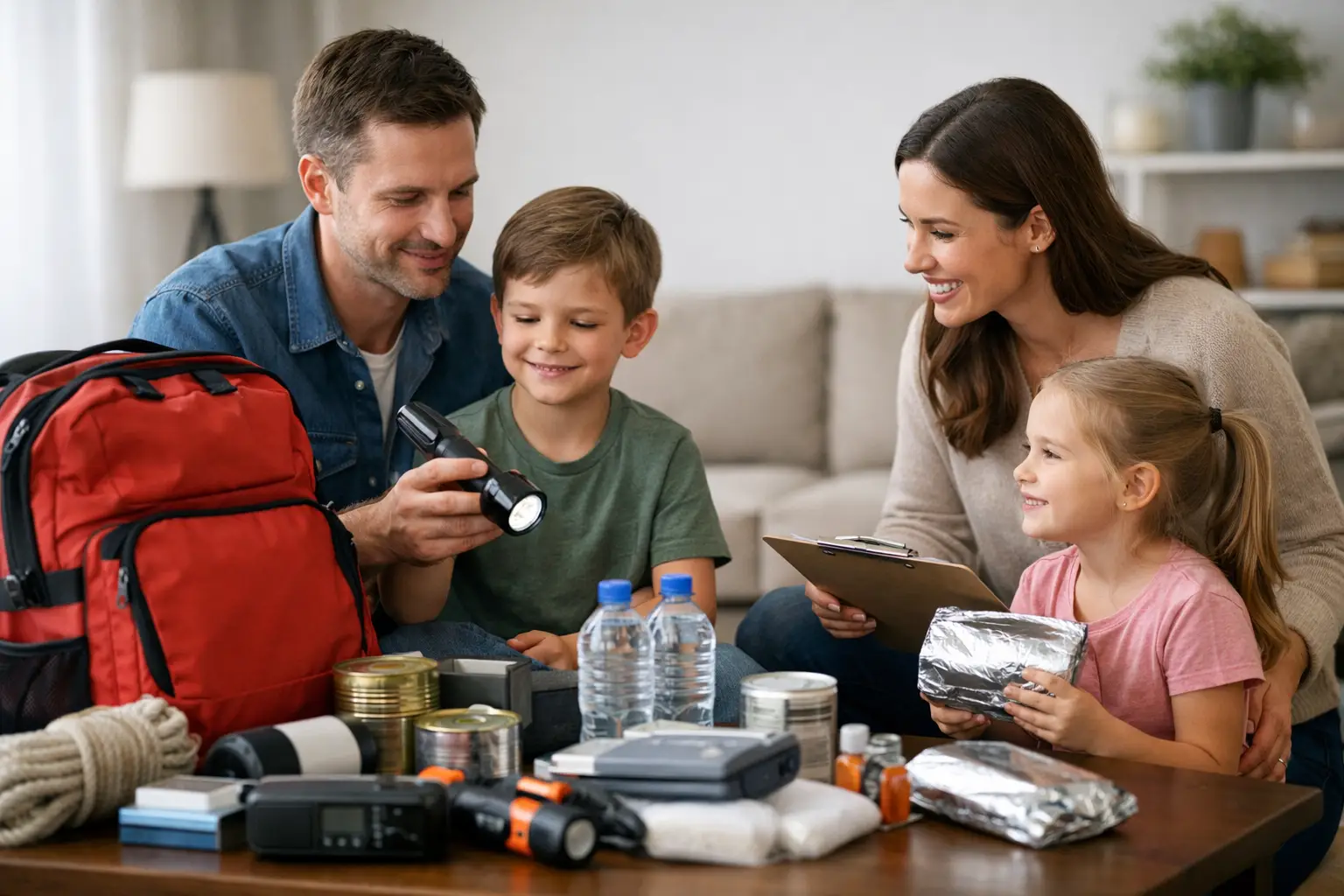
Water, nonperishable food, flashlights, extra batteries, a first aid kit, prescription medications, phone chargers, backup power banks, hygiene items, and copies of key documents cover the basics. Add season-specific items that fit your region, such as cooling supplies for extreme heat or warm layers for winter outages. If you have infants, include formula, bottles, diapers, and comfort items. If you have pets, include food, leashes, carriers, and vaccination records.
Store supplies where you can reach them quickly. A large bin in the garage is less useful if you cannot access it during a fire or if the garage is detached. Many families do better with a layered approach: a home supply kit for sheltering in place, smaller go-bags for evacuation, and a few essentials kept in the car.
Medical supplies deserve special attention. A basic first aid kit is important, but it does not replace training. Bandages and gloves help with minor injuries. They do not teach you how to respond to severe bleeding, choking, or cardiac arrest. That is where CPR and first aid training become part of preparedness, not a separate topic.
Medical readiness is part of family preparedness
Many emergencies at home are medical before they are anything else. A child chokes at dinner. A grandparent collapses in the living room. A spouse slips, hits their head, and becomes confused. In these moments, supplies matter less than skills.
Every household should know who can perform CPR, who can use an automated external defibrillator if one is available nearby, and who can provide basic first aid until EMS arrives. If you care for infants or children, pediatric-focused training matters. If a family member has a known cardiac, respiratory, or seizure condition, your plan should include what early warning signs look like and what actions to take immediately.
This is where many families overestimate readiness. They assume they will know what to do because they have seen it done. Real response is different. Under pressure, people need practiced steps. Community Responders LLC trains families and professionals with that standard in mind: preparation should hold up in real life, not just on paper.
Practice without turning your home into a drill site
A plan that is never practiced is only partially built. That said, families do not need weekly drills to be ready. They need brief, repeated practice that makes key actions familiar.
Walk through fire exits twice a year. Test how quickly everyone can get to the outside meeting point. Make sure children can identify the sound of smoke alarms and know not to hide. Review how to call 911 and what information to give. Practice finding flashlights during a nighttime outage. If your family has to evacuate quickly, time how long it takes to leave with medications, keys, phones, and pets.
Practice should stay calm and age-appropriate. The goal is confidence, not alarm. Children respond better when instructions are direct and consistent. Adults benefit from repetition too, especially when a plan includes special medical needs or multiple caregivers.
Update your family emergency preparedness guide as life changes
Preparedness is not a one-time project. It changes when your family changes. A new baby, a recent move, a new medication, an aging parent, or a child starting school all affect your plan.
Review supplies every six months. Replace expired medications, outgrown clothing, dead batteries, and stale food. Confirm emergency contacts. Update copies of insurance cards, medical information, and school pickup authorizations. If your child is old enough for a phone, make sure they know when to call, when to text, and when to conserve battery.
It also helps to review after near misses. If a severe storm exposed weak points in your plan, fix them while the memory is fresh. If you realized you did not have enough water, did not know where the first aid kit was, or could not locate pet carriers, those are useful findings. Preparedness improves through honest correction.
Keep the plan realistic
There is a difference between being prepared and trying to control every possible outcome. Families get stuck when preparedness becomes expensive, complicated, or intimidating. Start with what protects life first: escape planning, communication, medications, basic supplies, and emergency response skills.
If money is tight, build in stages. Store extra water and shelf-stable food over time. Print important contacts. Put shoes and flashlights by the bed. Restock first aid items gradually. The most valuable parts of your plan are often low-cost: clear roles, practiced communication, and training that helps you act without wasting time.
A strong family emergency preparedness guide does not promise that emergencies will go smoothly. It makes sure your household is less likely to freeze, guess, or lose critical time when something goes wrong. That is the standard to aim for - not fear, not perfection, but readiness people can actually use.