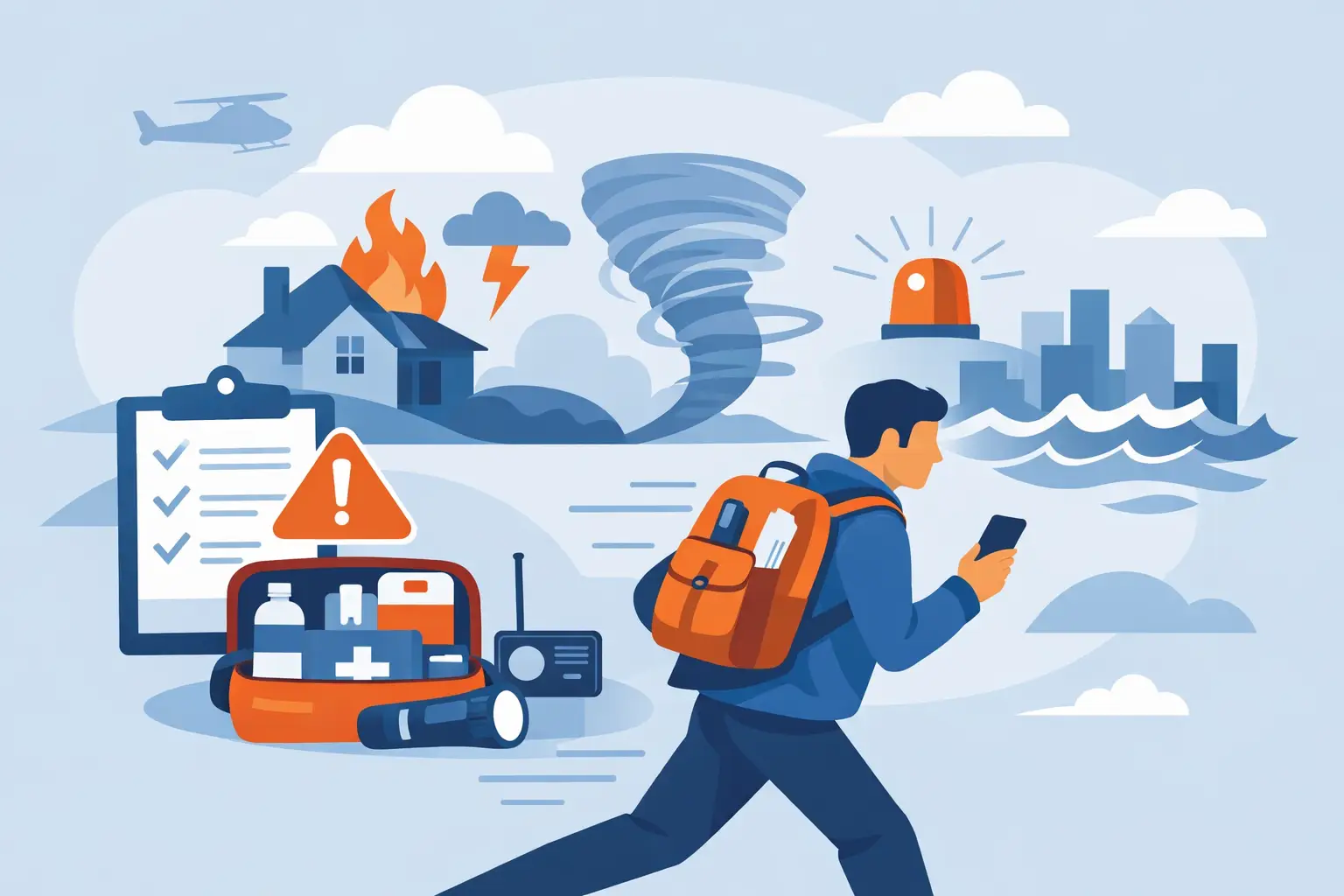
Most people think emergency preparedness starts when something goes wrong. It does not. It starts earlier - with training, planning, and the ability to stay functional when stress spikes and time disappears.
That matters because emergencies rarely arrive in a controlled setting. A child chokes at dinner. A coworker collapses in the break room. A patient deteriorates faster than expected. In those moments, hesitation is common, but it is also costly. The goal of preparedness is not perfection. It is fast, correct action when seconds count.
What emergency preparedness really means
For families, emergency preparedness means knowing what to do before EMS arrives. That may include recognizing cardiac arrest, starting CPR, using an AED, controlling bleeding, or helping someone who is choking. It also means having a plan for how to call for help, where supplies are stored, and who in the household can respond.
For workplaces, preparedness goes beyond a posted evacuation map. Teams need practical response capability for medical emergencies, injuries, and sudden illness. A written policy matters, but it does not replace hands-on instruction. Staff members should know who calls 911, who gets the AED, who starts first aid, and how to coordinate until professional responders take over.
For healthcare professionals, the standard is higher. Preparedness includes role clarity, current certification, and the ability to perform under clinical pressure. BLS, ACLS, and PALS training are not check-the-box exercises. They exist because organized, practiced response improves outcomes.
Why training changes the outcome
People often assume they will rise to the occasion. In reality, most people fall back on their level of training. That is why education matters so much in health and safety work.
Without training, even motivated people second-guess themselves. They worry about doing harm, missing a step, or freezing in front of others. With training, the situation is still serious, but the response becomes clearer. You recognize the emergency sooner, follow the right sequence, and support the person in front of you with more confidence.
This is where skill-based instruction makes the difference. Reading about CPR is not the same as practicing compressions. Watching a video about choking response is not the same as working through the sequence with an instructor. Real readiness comes from repetition, correction, and scenario-based learning.
If you are new to training, it helps to know what the commitment looks like. Our article on how long CPR training really is can help set expectations before you enroll.
Emergency preparedness at home
At home, the strongest emergency plan is usually the simplest one. Complex systems tend to fail when people are scared or rushed. Families should focus on a few essentials: common medical emergencies, emergency contacts, basic supplies, and practical training.
Parents and caregivers benefit from CPR and first aid training because children can decline quickly. Choking, allergic reactions, falls, burns, and breathing emergencies do not leave much time for uncertainty. The same applies to households with older adults or family members who have cardiac, respiratory, or seizure-related risks.
Preparedness at home also means keeping supplies accessible rather than buried in a closet. A first aid kit is useful only if people know where it is and how to use it. If you have an AED in your community, school, or building, family members should understand its location and purpose.
What workplaces often miss
Many employers take emergency preparedness seriously, but some still overestimate how ready their teams are. Having safety documents, wall posters, or stocked kits is important, but those tools depend on people who can act.
A workplace response plan should match the actual environment. An office, warehouse, school, clinic, and construction site do not face the same risks. Training should reflect that. The right approach may include CPR, AED use, first aid, bleeding control, or role-specific response drills.
There is also a compliance side to preparedness. In many settings, employers need documented training to meet safety expectations and reduce operational risk. More importantly, trained staff can stabilize a situation in the critical minutes before EMS arrival.
Preparedness for healthcare teams
In clinical settings, readiness is measured in both knowledge and performance. Healthcare professionals are expected to recognize deterioration, communicate clearly, and intervene within established protocols. That is why recurring certification matters.
BLS builds the foundation for high-quality CPR and team response. ACLS and PALS extend that readiness into complex adult and pediatric emergencies. These courses are valuable not just because they satisfy credentialing requirements, but because they sharpen decision-making under pressure.
Cost can be a factor when individuals or teams plan training. If that is part of your decision, how much CPR training costs in 2026 provides a practical overview.
The best time to prepare is before you need it
Emergency preparedness is not about expecting the worst every day. It is about accepting that critical events happen in homes, workplaces, schools, and healthcare settings, often without warning. The people who make the biggest difference are usually not the most fearless. They are the ones who prepared early, trained seriously, and know how to respond when the moment arrives.
At Community Responders LLC, that is the standard we teach toward: practical readiness that holds up in real life, when immediate action matters most.