A cardiac emergency does not wait for confidence to catch up. When someone collapses at home, at work, in a gym, or in a clinic, the value of CPR training certification becomes immediately clear. The right course does more than check a box. It prepares people to recognize an emergency, start care fast, and follow a clear process when every second affects the outcome.
For some people, certification is a job requirement. For others, it is a personal decision tied to family safety, childcare, coaching, or workplace readiness. Those goals are different, and that is exactly why not all CPR courses should be treated the same. A strong program matches the learner, the setting, and the level of responsibility they may carry when an emergency unfolds.
What CPR training certification should actually give you
A certification card matters, but the card is not the point. The point is whether you can act under pressure without freezing, guessing, or wasting time. Good training builds a sequence you can rely on - scene awareness, recognition of cardiac arrest, emergency activation, high-quality compressions, rescue breathing when appropriate, and AED use.
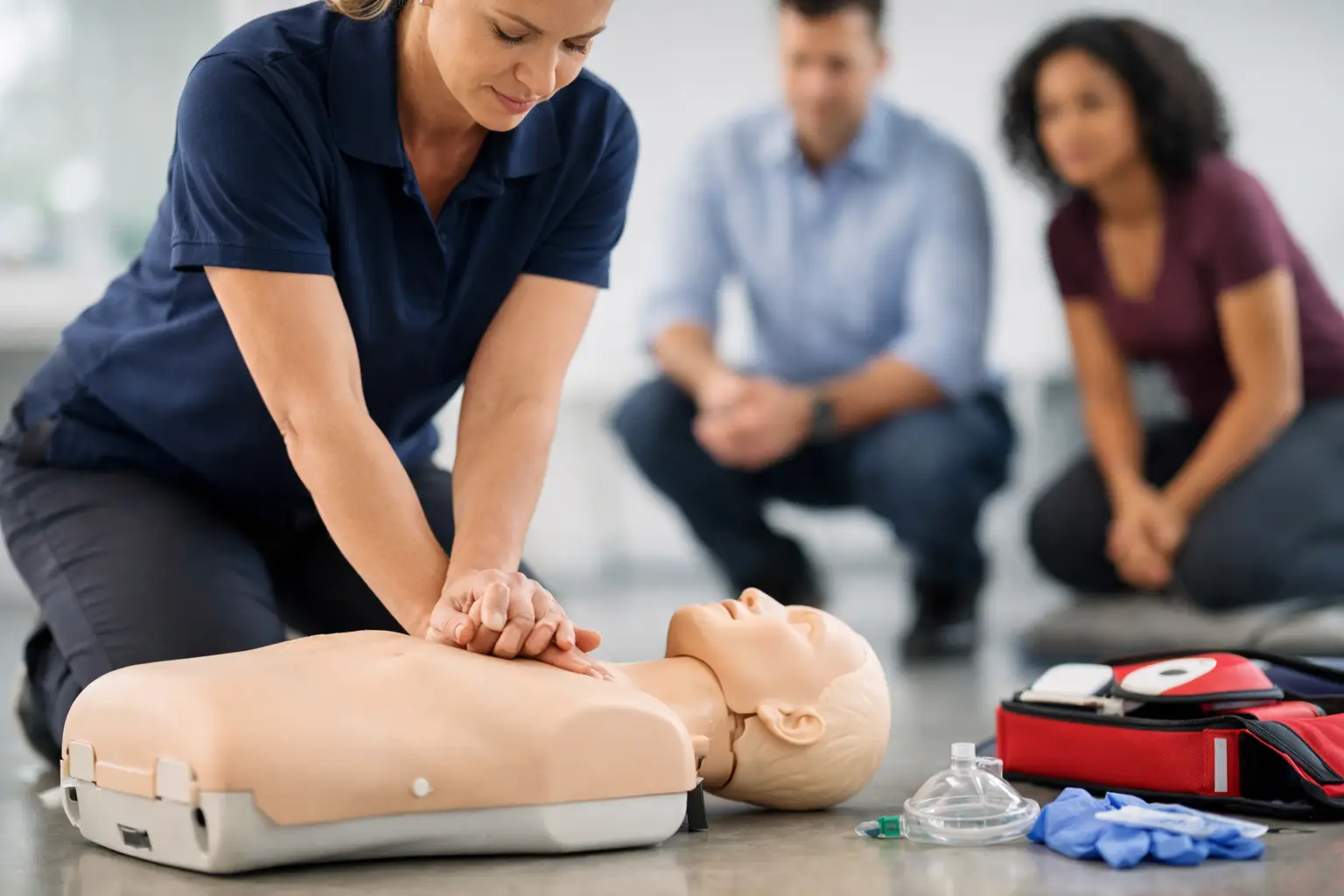
That practical focus is where real value lives. People often assume CPR is just chest compressions, or that watching a short video is close enough. It is not. Formal instruction gives you hands-on practice, correction from an experienced instructor, and repetition that helps the skill hold when stress is high.
The best courses also make the limits clear. CPR is not advanced hospital care, and certification does not turn a layperson into a clinician. What it does is close the gap between collapse and professional medical treatment. In many emergencies, that gap is the difference between a chance and no chance.
Who needs CPR training certification
The short answer is more people than most communities train. Parents, grandparents, teachers, coaches, personal trainers, security staff, construction crews, hospitality teams, and office managers all benefit from knowing how to respond. If you supervise people, care for children, work with the public, or are responsible for safety in any setting, CPR training is not extra knowledge. It is part of basic readiness.
For healthcare professionals, the standard is higher. A hospital employee, dental professional, nursing student, EMT, therapist, or outpatient clinical worker may need Basic Life Support rather than a general community CPR class. The difference is not branding. It reflects the level of response expected in professional care environments, including team dynamics, ventilation skills, and structured emergency protocols.
That is where people sometimes choose the wrong course. They sign up for the fastest class available without checking whether it meets employer, licensing, or facility standards. A course can be legitimate and still be the wrong fit. Before enrolling, it is smart to confirm what credential is accepted and whether hands-on skills testing is required.
CPR certification for the public vs. professional-level training
Not every learner needs the same depth of instruction. A community CPR class is usually designed for everyday responders. It focuses on adult, child, and infant CPR, choking response, and AED use in common settings such as homes, schools, churches, and workplaces. For many families and employees, that is the right starting point.
Professional tracks such as BLS are built for people who may respond as part of a clinical or organized care team. The expectations are tighter. Skills must be consistent, communication matters more, and the training is often tied directly to employment or credentialing.
Then there are advanced courses like ACLS and PALS, which go well beyond standard CPR. Those are intended for clinicians managing cardiac and respiratory emergencies with a much broader set of interventions. They are not substitutes for entry-level CPR classes, and they are not necessary for most nonclinical learners.
This matters because the right course should fit your real role. Taking too basic a class can leave a professional short of requirements. Taking too advanced a class can create unnecessary cost and complexity for someone who simply needs to be ready at home or in the community.
How to judge a CPR training certification course
A credible program should be easy to identify once you know what to look for. First, the course should clearly state who it is for and what certification is issued. Vague language is a warning sign. If a provider cannot explain whether the class meets workplace or healthcare requirements, that is a problem before training even starts.
Second, hands-on skills practice matters. CPR is physical. Compression depth, rate, recoil, body position, and AED familiarity improve through correction and repetition, not guesswork. Online learning can be useful in some formats, especially for knowledge review, but a skills component is often what gives people real confidence.
Third, the instruction should reflect current standards and practical scenarios. The strongest trainers do not overload students with theory they will never use. They teach recognition, action, and sequence. In a real emergency, clarity beats volume.
Finally, consider whether the class prepares you for the setting you are actually in. A parent may need infant choking and home response scenarios. A workplace team may need coordinated response planning and AED readiness. A healthcare worker may need professional-level resuscitation protocols. A course should match that reality.
Why people delay training - and why that is risky
Most people do not avoid CPR because they do not care. They delay because they assume they will do it later, or because they are uneasy about doing something wrong. That hesitation is common, but it creates a false choice between perfect performance and no action.
In actual emergencies, the bigger danger is inaction. CPR training helps reduce that hesitation by replacing panic with a process. You learn what to look for, what to do first, and how to keep going until EMS arrives or another trained responder takes over.
There is also a practical issue. Certifications expire, guidelines are updated, and skills fade when they are not practiced. Someone who trained years ago may remember the idea of CPR but not the sequence or technique well enough to respond effectively. Renewal is not paperwork. It is skill maintenance.
What to expect during CPR training certification
A solid class should feel direct, focused, and useful from the start. You should expect clear instruction, demonstration, hands-on practice, and feedback. Good instructors correct technique early, answer practical questions, and keep the course centered on what people are most likely to face.
That includes more than compressions. Learners should leave knowing how to recognize when CPR is needed, how to call for help, how to use an AED, and how to respond to choking emergencies for adults, children, and infants when the course includes those age groups.
For many learners, the biggest change is psychological. Training reduces the fear that you will stand there unsure of what to do. You may still feel adrenaline in a real event, and that is normal. The difference is that you now have a trained response to fall back on.
Community Responders LLC serves both everyday learners and professional audiences with that practical goal in mind: training that leads to action, not just attendance.
Choosing the right provider for CPR training certification
The provider matters almost as much as the curriculum. You want instructors who understand both the standards and the reality of emergency response. A course should be organized, current, and serious without being intimidating. Learners need to feel the urgency of the subject, but they also need room to ask questions and build competence.
It also helps to choose a provider that can serve different needs over time. Someone may start with a basic CPR course as a parent or employee and later need BLS for a healthcare role. An employer may need broad workplace training now and more advanced certifications for certain staff later. Working with a training partner that understands both community and professional requirements can make that progression simpler and more consistent.
If you are booking for a team, convenience matters, but it should not outrank quality. The fastest or cheapest class is not always the one that leaves people ready. In this field, readiness is the product.
CPR training certification is really about responsibility. It says you chose to be prepared instead of hoping someone else would know what to do. That choice matters in homes, schools, job sites, clinics, and every place where a medical emergency can interrupt an ordinary day without warning. The best time to build that skill is before you need it, while there is still time to practice, ask questions, and get it right.