A toddler goes silent at snack time. An infant spikes a fever after nap. A preschooler falls hard on the playground and will not put weight on one leg. In childcare, emergencies rarely arrive with warning, and the first adult to respond is usually not a paramedic. That is why childcare first aid certification matters. It gives caregivers a clear process for the minutes that matter most, before EMS arrives and before a parent can get to the scene.
For some roles, certification is a licensing or employment requirement. For others, it is a practical standard that families and employers expect. In both cases, the goal is the same: prepare adults to recognize a problem quickly, protect the child, and take the right next step under pressure.
What childcare first aid certification covers
Childcare first aid certification is training designed for adults who supervise infants, toddlers, and children in group care, home care, school readiness programs, camps, and similar settings. It typically focuses on immediate response to common pediatric emergencies rather than long-term medical care.
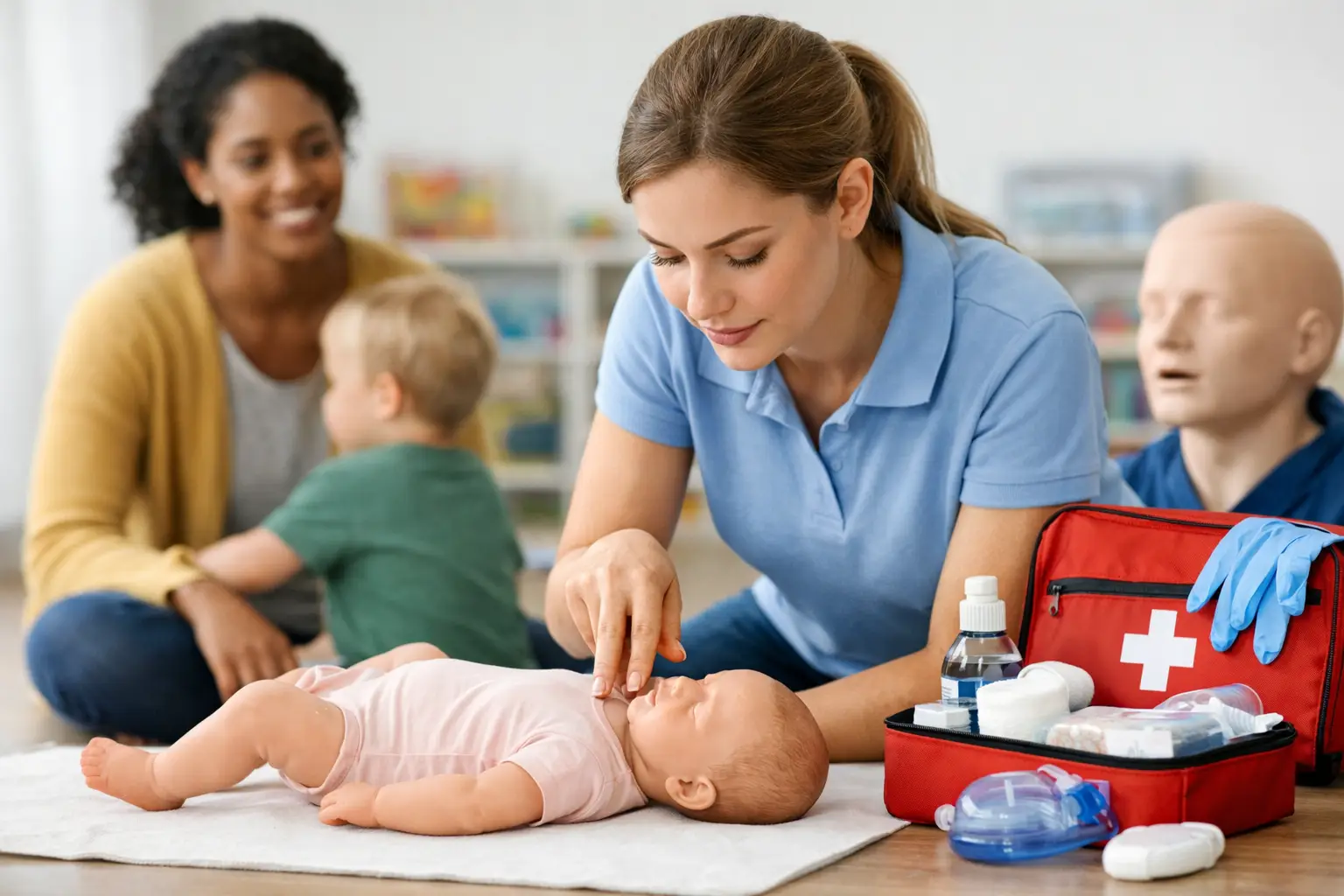
A strong course should cover injury assessment, bleeding control, burns, fractures, allergic reactions, seizures, choking, and sudden illness. It should also address pediatric CPR and AED use when those topics are bundled into the same program, which is common because real emergencies do not separate neatly into categories.
The childcare setting changes the training in important ways. Children are not small adults, and infants are a different patient population from school-age kids. The signs of distress, the response steps, and the communication approach all need to match the child’s age and developmental stage.
Who needs childcare first aid certification
The obvious audience includes daycare staff, preschool teachers, nannies, babysitters, camp staff, after-school workers, and church nursery volunteers. But the need often extends beyond those job titles. Directors, front desk staff, transportation staff, and even substitute caregivers may be expected to hold current certification depending on workplace policy or state rules.
Parents also benefit from the same training, especially in homes with infants, medically complex children, or multiple young children. The difference is that a parent may not need the credential for compliance, but the skills still matter just as much when a child stops breathing, chokes, or has a severe allergic reaction.
If you are hiring childcare staff, certification should not be viewed as a box to check only for inspections. It is part of your risk management, your emergency planning, and your duty to families.
Why certification matters beyond compliance
Licensing requirements matter, but compliance is not the strongest reason to train. The real value is decision-making under stress. In an emergency, untrained people often lose time trying to decide whether a situation is serious. They hesitate, overreact, or miss early warning signs.
Training reduces that gap. A certified caregiver is more likely to recognize respiratory distress, respond correctly to choking, control bleeding effectively, and know when to activate EMS. That does not make them a clinician. It makes them prepared.
There is also a trust component. Families place children in someone else’s care with the expectation that basic emergencies will be handled competently. Certification supports that trust because it shows the caregiver has completed formal instruction, practiced core skills, and met a recognized training standard.
What to look for in a training course
Not all first aid classes are equally useful for childcare. A general adult-focused course may leave gaps in pediatric response. When comparing options, start with relevance. The training should specifically address infants and children, not treat pediatric care as a brief add-on.
Hands-on practice is another priority. Reading about choking relief is not the same as performing it. Skills such as CPR, rescue breathing, AED use, and injury response need in-person demonstration and return practice whenever possible. Confidence comes from repetition, not just exposure.
You should also verify whether the course meets employer, licensing, or state requirements. Some agencies specify approved curricula, required topics, or renewal intervals. A low-cost class that does not satisfy those standards can create more problems than it solves.
For childcare teams, scenario-based instruction is especially valuable. The best courses teach more than technique. They help learners manage scene safety, supervise the rest of the group, communicate with parents, and document the incident appropriately after care is provided.
Childcare first aid certification and CPR
People often ask whether first aid certification is separate from CPR. Sometimes it is, but in childcare settings they are frequently paired because the same caregiver may need both skill sets during one incident.
A child with a severe allergic reaction may first need symptom recognition and emergency medication support according to policy, then rapid EMS activation, then CPR if the situation escalates. A drowning event may require rescue considerations, breathing support, and ongoing monitoring. Separating these skills too much can create blind spots.
When choosing a course, confirm exactly what is included. If your role requires pediatric CPR and AED in addition to first aid, make sure the credential reflects that. This is one area where assumptions can lead to compliance gaps.
How long certification lasts and when to renew
Most certifications are valid for a set period, often two years, though exact timelines depend on the issuing organization and the applicable regulatory standards. Renewal matters because skills fade. Even experienced caregivers can lose speed and accuracy if they have not practiced.
A renewal course is not just a repeat of old material. Guidelines change. Equipment changes. Best practices for emergencies such as choking, CPR, and bleeding control can be updated over time. If you work in a licensed childcare environment, letting a certification lapse can also affect your standing with your employer or regulator.
For centers managing multiple staff members, it helps to track expiration dates well before the deadline. Waiting until the last minute creates scheduling problems and may leave shifts uncovered by certified personnel.
Common mistakes when choosing childcare first aid certification
One common mistake is enrolling in a course that is too generic. Another is focusing only on price. Cost matters, but so do instructor quality, hands-on practice, and whether the credential is accepted where you work.
A third mistake is treating online-only training as automatically equivalent to hands-on instruction. In some cases, blended learning works well, especially when it combines self-paced coursework with an in-person skills session. In other cases, a fully online format may not meet workplace or state expectations. It depends on the requirement and the role.
Another issue is assuming one certification works everywhere. A nanny, a preschool teacher, and a hospital employee may all care for children, but their training requirements are not always identical. Pediatric first aid for childcare is different from advanced clinical courses, and confusing the two can waste time and money.
What employers and parents should ask
If you run a childcare program or hire private care, ask direct questions. Is the certification current? Does it include pediatric CPR and AED? Was there a hands-on skills assessment? Does the course align with local or state requirements?
Parents should also ask how emergencies are handled on site. Training matters, but so do staffing plans, emergency contacts, medication policies, and communication procedures. Certification is strongest when it is part of a broader safety system.
For employers in larger metro areas such as Phoenix, Las Vegas, Seattle, or Dallas, group training can make sense when onboarding new staff or preparing for licensing review. It creates consistency across the team and allows scenario practice built around the realities of your environment.
The real outcome of better training
The best result of childcare first aid certification is not the card itself. It is faster recognition, calmer action, and better protection for children when something goes wrong. Caregivers do not need to be perfect. They need to be ready.
That readiness changes the atmosphere in a childcare setting. Staff members know what to do. Supervisors can assign roles more clearly. Parents gain confidence that safety is being taken seriously. And when a real emergency happens, the response starts immediately instead of after confusion and delay.
If you care for children in any professional or family setting, training is one of the few preparations that can directly change the first minutes of a crisis. Those minutes are where outcomes begin.