If you are trying to choose between BLS vs CPR classes, the most important question is not which one sounds more advanced. It is who you need to be ready for, where you are most likely to respond, and whether your role requires a specific certification. The right course can save time, meet job requirements, and give you skills that fit the emergencies you are most likely to face.
People often use CPR as a catch-all term for lifesaving training, but that creates confusion. CPR is a skill. BLS, or Basic Life Support, is a broader level of training that includes CPR and adds a more clinical, team-based approach. For some learners, a standard CPR class is exactly what they need. For others, choosing CPR when their employer requires BLS can leave them short on both training and credentials.
BLS vs CPR classes: the core difference
The clearest way to understand BLS vs CPR classes is this: CPR classes are usually designed for the general public, while BLS classes are commonly intended for healthcare providers and professional responders.
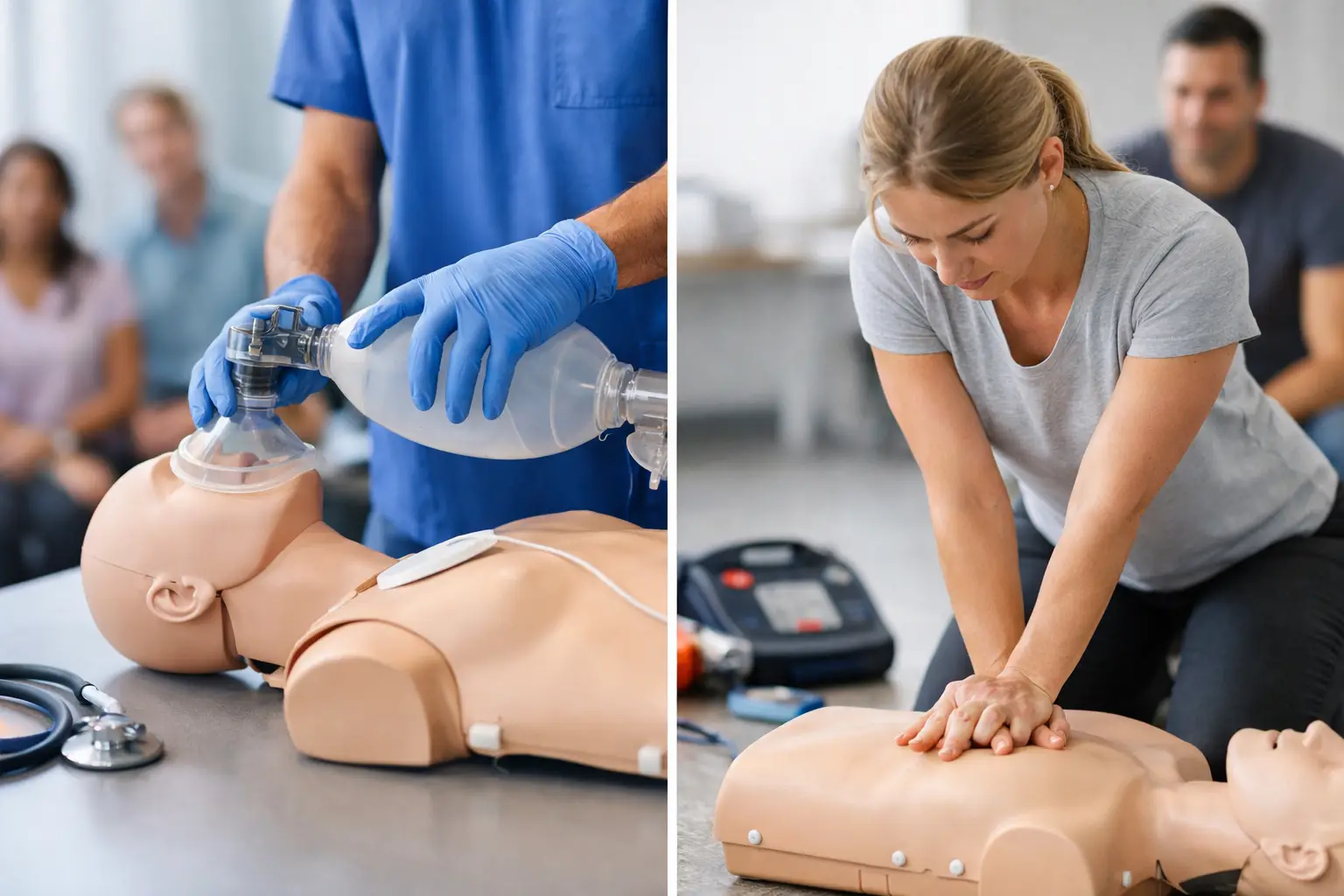
A CPR class teaches the essential actions that can keep someone alive until advanced help arrives. That usually includes recognizing cardiac arrest, calling 911, delivering chest compressions, giving rescue breaths when appropriate, and using an AED. Depending on the course, it may also cover choking relief for adults, children, and infants.
A BLS class includes those same foundations, but it goes further. BLS training is built for people who may respond in medical settings or as part of a coordinated response team. It typically covers high-quality CPR for adults, children, and infants, AED use, ventilation techniques, bag-mask skills, and team dynamics during resuscitation. The emphasis is not only on knowing what to do, but on doing it quickly, correctly, and in coordination with others.
That difference matters in real emergencies. A parent, teacher, coach, or office employee may need the confidence to step in, start compressions, and use an AED. A nurse, medical assistant, dental professional, EMT student, or other clinical worker may need to perform to a higher standard within a professional setting.
Who should take a CPR class?
A CPR class is often the right choice for people who want practical emergency response skills for home, school, community, or workplace situations. It is especially useful for parents, grandparents, babysitters, teachers, fitness staff, security personnel, and employees whose workplaces want stronger emergency readiness.
For these learners, the goal is straightforward. They need to recognize an emergency, act without freezing, and provide immediate care until EMS arrives. In many public and home emergencies, that early response is what changes outcomes.
A CPR class also makes sense when there is no healthcare-specific requirement attached to your role. Many employers ask for CPR and AED training but do not require BLS certification. If that is your situation, a standard CPR course may be the more efficient option.
There is also a comfort factor. CPR classes are usually structured for everyday learners, which can make them more approachable for people with no medical background. The instruction is still serious, but the material is centered on practical action rather than clinical workflow.
Who should take a BLS class?
BLS is usually the better fit for healthcare professionals, clinical students, and anyone whose employer, school, or licensing body specifically requires Basic Life Support certification. That often includes nurses, physicians, dental teams, EMTs, paramedics, medical assistants, respiratory therapists, and other patient-care personnel.
The reason is not status. It is function. In healthcare settings, emergencies are often managed by multiple responders who need to work from the same playbook. BLS training supports that environment by teaching a more structured response, including team roles, rapid assessment, ventilation support, and consistent resuscitation quality.
If you work around patients, even outside a hospital, BLS may still be required. Urgent care staff, outpatient clinic teams, surgery center personnel, and dental office employees often need BLS because the expectation is immediate, competent intervention before higher-level support takes over.
This is where people sometimes make the wrong choice. They assume a CPR card is enough because CPR is part of BLS. But if a job posting, supervisor, or program says BLS, then CPR alone usually will not meet the requirement.
What skills overlap and what skills do not?
There is meaningful overlap between the two. Both courses teach lifesaving response for cardiac arrest. Both address chest compressions, breathing support at an appropriate level, AED use, and choking relief. Both are built around rapid recognition and immediate action.
The difference is depth and context. CPR classes generally focus on single-rescuer response and public emergencies. BLS classes spend more time on professional-level performance, including two-rescuer CPR, team communication, scene efficiency, and airway support techniques such as bag-mask ventilation.
That added depth is one reason BLS can feel more demanding. The standards are tighter because the expectation is different. In a healthcare environment, hesitation, poor coordination, or weak compressions are not small errors. They affect patient outcomes.
Still, more training is not automatically better for every learner. If your real-world need is to respond to an emergency at home, at a school event, or in the workplace, a well-taught CPR class may be the most relevant training you can take.
BLS vs CPR classes for work requirements
If you are choosing a class because of your job, do not guess. Check the exact wording from your employer, school, licensing board, or clinical program.
If the requirement says CPR, CPR/AED, or CPR and first aid, that usually points to a community or workplace-level course. If it says BLS for Healthcare Providers or Basic Life Support, you should enroll in BLS.
This distinction matters for people changing fields as well. Someone moving from childcare into a medical assistant program may need to move from CPR certification to BLS. A workplace manager arranging training for an office staff may not need BLS at all, even if they want strong emergency preparedness.
The practical lesson is simple: match the certification to the environment where you are expected to perform.
How to choose the right course without overcomplicating it
Start with your role. If you are a healthcare provider or entering a clinical setting, choose BLS unless you have written confirmation that another course is acceptable. If you are a parent, teacher, coach, caregiver, or employee outside direct patient care, CPR is often the right place to start.
Next, think about the emergencies you are most likely to encounter. If your likely response scene is a home, gym, school, church, job site, or community event, CPR training is highly relevant. If your likely response scene is a clinic, dental office, ambulance, hospital, or patient-care facility, BLS is more appropriate.
Then consider how you will respond. Will you likely be alone with a family member until EMS arrives, or part of a trained team working with medical equipment? That answer often settles the question.
A credible training provider should make this decision easier, not harder. Community Responders LLC, like any strong safety-focused training partner, should be able to explain course differences clearly so learners do not pay for the wrong class or walk away with a certification that does not fit their needs.
A note on confidence versus compliance
Some people enroll only because they need a card for work. Others choose training because they never want to stand by helplessly in an emergency. Both reasons are valid, but the best training does more than satisfy a deadline.
A good class builds usable confidence. That means practicing the skills, understanding the sequence, and knowing how to act under pressure. It also means accepting a hard truth: no short course makes anyone perfect. Skills need refreshers. Real readiness comes from repetition, clear instruction, and taking the responsibility seriously.
That is why the best course is not always the highest level course. It is the course you actually need, taught in a way that prepares you to act.
If you are still weighing BLS vs CPR classes, let the setting decide. Train for the environment where seconds will count on you, not the one that sounds most impressive. The right class should leave you better prepared to step forward when someone else cannot wait.