A job posting says BLS required. Your child care application asks for CPR certification. A workplace safety manager wants staff trained before the next quarter. This is where people get stuck. BLS vs CPR certification is a common point of confusion because both involve lifesaving skills, both include chest compressions and rescue techniques, and both can be critical when seconds matter.
The difference is not small. The right course depends on where you may respond, who you may respond to, and whether your certification is meant for personal preparedness, workplace safety, or clinical responsibility.
BLS vs CPR certification: the short answer
CPR certification is usually designed for the general public, workplace teams, caregivers, teachers, coaches, and others who may need to respond to a cardiac or breathing emergency outside a clinical setting. It focuses on immediate action, scene response, high-quality compressions, rescue breaths when appropriate, and often AED use.
BLS certification, short for Basic Life Support, is typically intended for healthcare professionals and clinical personnel. It covers CPR, but it goes further. BLS places more emphasis on team-based response, multiple-rescuer scenarios, ventilation techniques, and a structured approach used in professional care environments.
If you are choosing between the two, the first question is simple: are you training for everyday emergency response, or for a patient care role where standardized clinical response is expected?
What CPR certification usually covers
CPR certification is built for practical action in real-world emergencies. The goal is to help a person recognize a crisis, call for help, and start care without delay. For many learners, this is the right level of training because it matches the situations they are most likely to face at home, at work, in schools, in gyms, or in public spaces.
Most CPR courses teach adult CPR, and many also include child and infant CPR. AED use is commonly part of the training because early defibrillation can significantly improve survival in cardiac arrest. Depending on the course, learners may also cover choking relief and basic first aid response.
This training is direct by design. It prepares people to step in before EMS arrives. That matters for parents, teachers, office staff, fitness professionals, babysitters, and community members who want the confidence to act instead of freezing.
What BLS certification usually adds
BLS includes CPR fundamentals, but it is built around the expectations of healthcare settings and professional responders. That means the training often goes deeper into coordinated response and clinical precision.
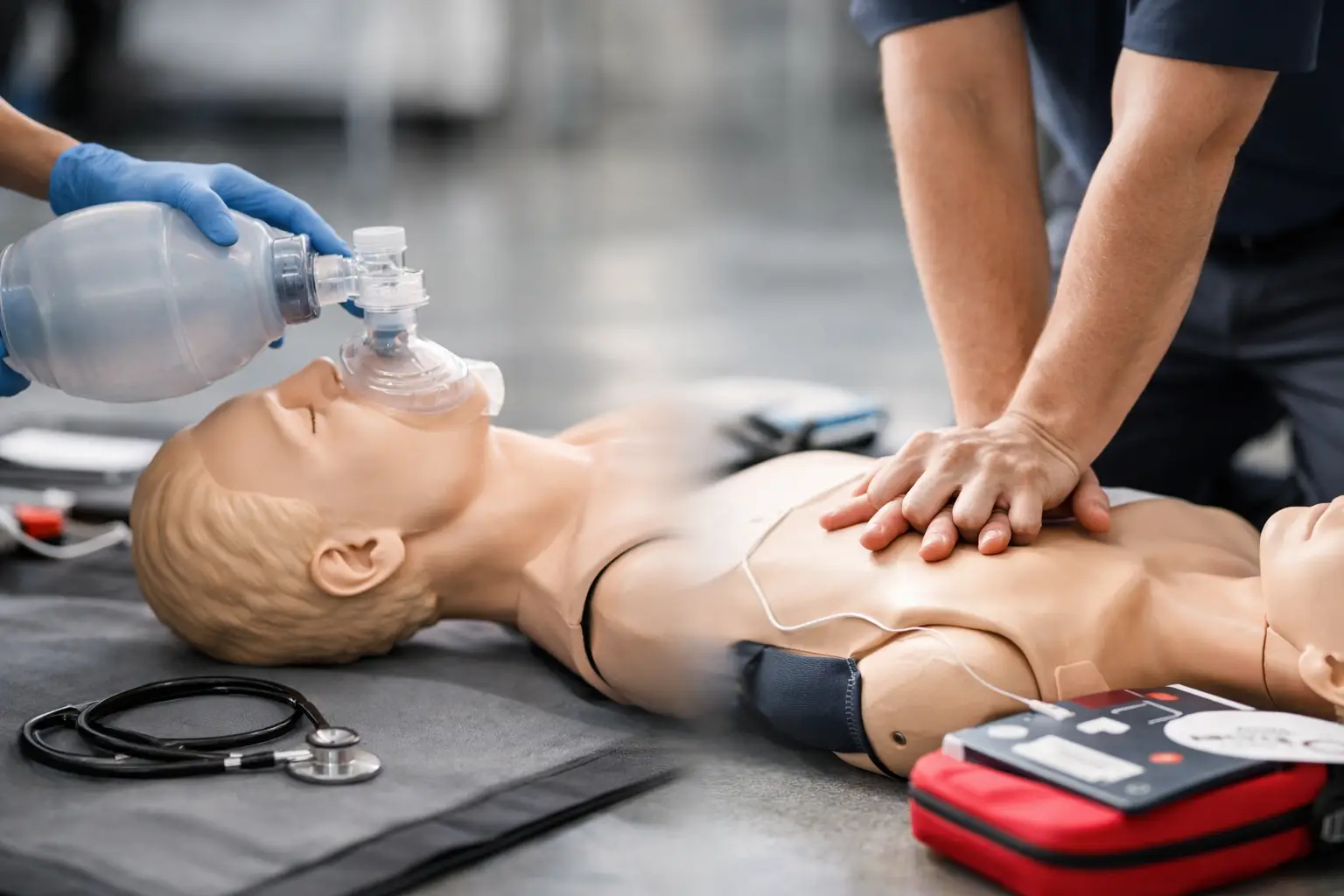
A BLS course usually covers high-quality CPR for adults, children, and infants, use of a bag-mask device, team dynamics during resuscitation, relief of choking, and response priorities for single-rescuer and multi-rescuer events. Learners are expected to perform skills at a level that supports patient care standards, not just basic public response.
That difference matters in hospitals, dental offices, outpatient clinics, surgical centers, EMS roles, and other care environments. In those settings, a provider may not be alone, may need to rotate compressions efficiently, may need to ventilate with equipment, and may be expected to function within an organized medical response.
Who should take CPR certification
CPR certification is often the right fit for people whose main goal is readiness rather than clinical credentialing. If you are responsible for children, supervising groups, managing a workplace, or simply want to be prepared at home, CPR training is usually the practical choice.
This includes parents, grandparents, teachers, school staff, personal trainers, lifeguards, security teams, construction crews, church volunteers, and office employees. Employers may also require CPR certification for designated safety personnel, especially in industries where immediate response can protect staff and visitors.
For these learners, CPR training provides a strong foundation without adding clinical procedures they are unlikely to use. It is focused, relevant, and easier to match to everyday risk.
Who should take BLS certification
BLS certification is usually required for healthcare professionals and students entering patient care roles. Nurses, physicians, EMTs, paramedics, medical assistants, dental professionals, respiratory therapists, physical therapists, and many allied health workers are commonly expected to hold a current BLS card.
It is also frequently required for nursing students, medical students, and other trainees before clinical rotations begin. Hiring managers and credentialing departments often specify BLS rather than CPR because they need a consistent standard tied to professional duties.
If your employer, licensing program, or clinical site says BLS, CPR alone is usually not enough. Even though there is overlap, the certifications are not interchangeable when a job or institution has clearly stated requirements.
Why the confusion happens
The confusion exists because people often use CPR as a catch-all term. Someone may say they need CPR certification when their employer actually requires BLS. Another person may sign up for BLS because it sounds more advanced, even though a standard CPR course would have fully met their needs.
Training providers also serve mixed audiences, which can blur the line if course descriptions are not clear. The better question is not which one sounds stronger. It is which one matches your responsibilities.
A childcare provider does not need the same course as an emergency department nurse. A warehouse supervisor does not need the same training as a dental hygienist. Good training is not about taking the highest-level class available. It is about taking the right class for the role you hold and the emergencies you are most likely to face.
Skills overlap, but the setting changes everything
Both certifications teach lifesaving response. Both can include compressions, rescue breaths, AED use, and choking relief. That overlap leads some people to assume the difference is mostly branding. It is not.
The setting changes the expectations. In a public setting, a responder may be alone, with limited equipment, trying to keep someone alive until EMS arrives. In a healthcare setting, the responder may be part of a team, working with professional equipment, and expected to follow a more structured protocol.
That is why BLS tends to emphasize coordinated performance and CPR tends to emphasize immediate lay response. Neither is better in every situation. Each is designed for a different responder.
How to choose the right certification
Start with your requirement source. If an employer, school, state board, or clinical site has named the certification, follow that instruction exactly. Do not assume one will substitute for the other.
If there is no formal requirement, think about where you are most likely to use the training. For home, school, fitness, childcare, and most non-clinical workplaces, CPR certification is often the most practical option. For hospitals, clinics, EMS, and hands-on patient care roles, BLS is usually the standard.
Also consider how you want to train. A strong course should give you more than a card. It should help you recognize an emergency quickly, perform the skill correctly under pressure, and understand what changes when the patient is an infant, child, or adult. That is where quality instruction makes a real difference.
Certification is not the finish line
Whether you choose CPR or BLS, the value is in being able to perform when the moment is real. Skills fade when they are not practiced. Confidence fades even faster if training was rushed or purely passive.
That is why hands-on learning matters. Clear instruction, realistic scenarios, and immediate feedback can make the difference between remembering the steps and actually using them. For organizations training staff across workplaces and for healthcare teams managing compliance, the best programs build competence, not just completion.
Community Responders LLC serves both sides of that need, from community-focused CPR training to professional-level BLS education. That matters because families, employers, and clinicians all need instruction that fits the realities of their environment.
The right course is the one you will be ready to use
When people compare BLS vs CPR certification, they are often really asking a more personal question: what kind of responder do I need to be? The answer depends on your role, your setting, and the level of responsibility you carry when an emergency happens.
Choose the certification that matches that reality. Then treat the training seriously enough that, if the moment comes, your response is not hesitant, improvised, or second-guessed. It is immediate, competent, and steady when someone else cannot afford delay.