When someone stops breathing, the quality of your training matters more than the convenience of the checkout page. The best CPR training online is not simply the fastest course or the cheapest certificate. It is the program that gives you clear instruction, credible standards, and the confidence to respond correctly when a real emergency unfolds.
That distinction matters because online CPR training now serves very different learners. A parent may want basic skills for home. An employer may need workforce readiness and documentation. A healthcare professional may need a credential that meets job requirements and stands up to employer review. Those are not the same use cases, and the right course depends on which one applies to you.
What the best CPR training online should actually deliver
A strong online CPR course should do three things well. First, it should teach the sequence of response in a way that is easy to remember under stress. Second, it should clearly explain what the training does and does not qualify you for. Third, it should connect instruction to real-world action, not just a quiz at the end.
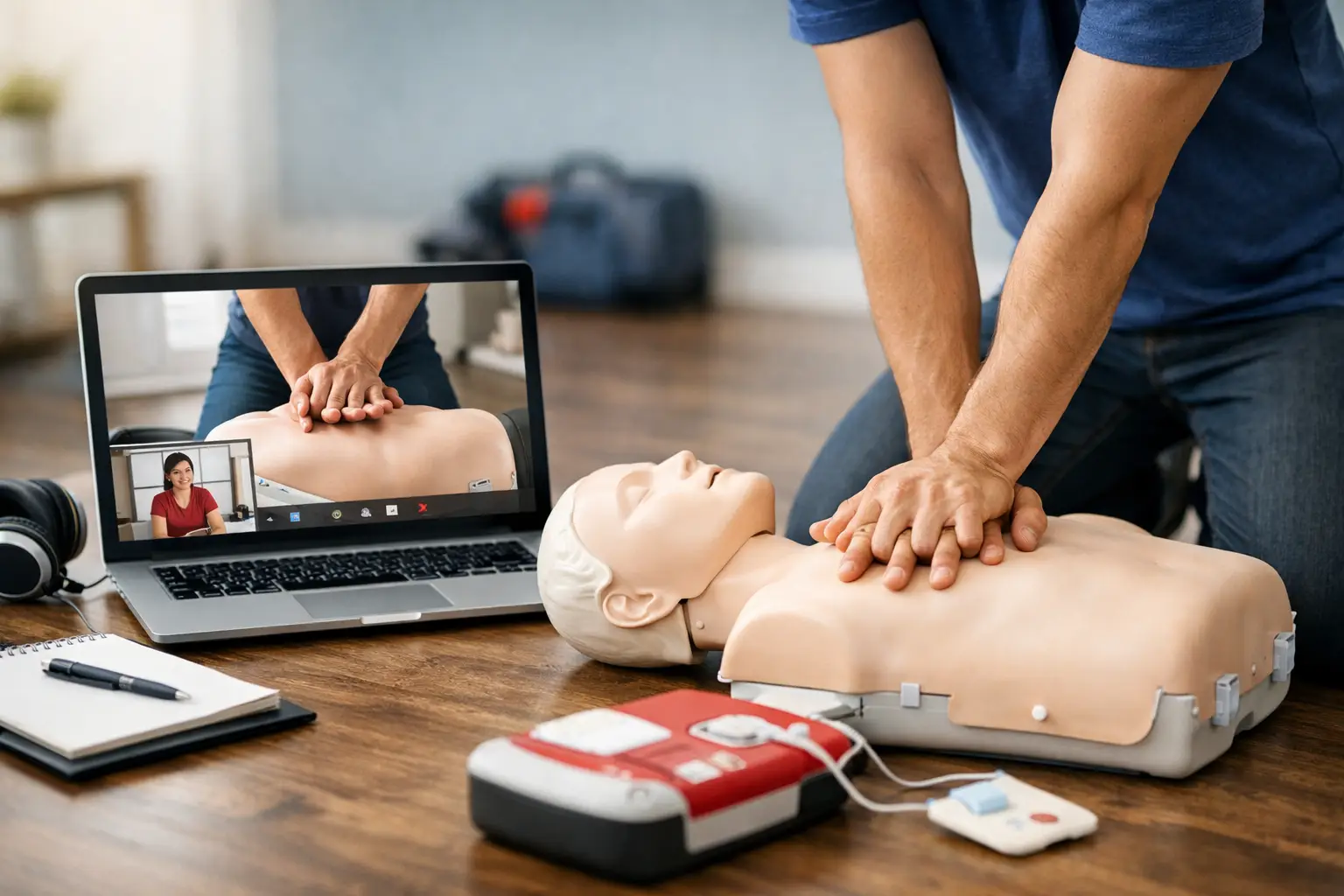
That last point is where many programs fall short. Some courses are built to issue completion cards quickly, but speed is not the same as preparedness. CPR is hands-on by nature. Even when the classroom content is delivered online, learners still need a realistic understanding of compressions, rescue breaths when appropriate, AED use, scene safety, and when to call 911. If a course treats those topics lightly, it may be convenient, but it is not strong training.
How to compare the best CPR training online
If you are evaluating options, start with the most practical question: what do you need the training for? That answer shapes everything else.
For family, childcare, and everyday readiness
If your goal is to be prepared at home, in public, or around children, an online CPR and first aid course can be a useful starting point. In this case, the best program is usually one that uses plain language, realistic scenarios, and current guidance. You want training that helps you recognize cardiac arrest, choking, and breathing emergencies quickly, because hesitation is often the biggest barrier for non-medical responders.
For this audience, a fully online format may be enough if the purpose is education and general preparedness. But it is still worth choosing a provider that treats the material seriously and explains how to practice skills after the course.
For workplaces and employers
Employers usually need more than individual completion. They need consistency, documented training, and confidence that employees can respond in a real incident. In many workplaces, that means a blended model works better than a fully online-only option. Staff can complete the knowledge portion online, then verify skills in person.
This is especially true in higher-risk settings such as construction, manufacturing, education, fitness, and childcare. A digital certificate may satisfy internal tracking in some organizations, but it may not satisfy safety expectations if no one has demonstrated hands-on ability.
For healthcare professionals
This is where people make the most costly mistake. If you work in healthcare or need BLS, ACLS, or PALS for employment, the best CPR training online is the one your employer accepts. That may sound obvious, but many learners still register first and verify later.
Before enrolling, check whether your hospital, clinic, dental office, or staffing agency accepts fully online training or requires a blended or in-person skills check. Many healthcare roles require formal alignment with recognized standards and practical skills assessment. A course that is fine for community education may not be acceptable for clinical credentialing.
Signs a CPR course is credible
A credible online CPR course is transparent. It tells you who the course is for, what standards it follows, how long it takes, whether skills testing is included, and what kind of certificate you receive. If that information is hard to find, that is a problem.
The course should also reflect current CPR guidance. Emergency response training changes over time as evidence evolves. Compression depth, compression rate, AED use, and other best practices are not static. If a provider does not clearly communicate that its material is up to date, keep looking.
Instruction quality matters too. Good training is organized, direct, and scenario-based. You should see clear demonstrations, hear specific explanations, and finish the course knowing not just what to do, but why each step matters. That is what helps people act under pressure.
Red flags to watch for
Not every online course deserves your time. Some are built around marketing claims rather than training quality.
Be cautious if a provider promises instant certification with almost no coursework, makes broad claims about universal employer acceptance, or avoids explaining whether hands-on skills are required. Those are common warning signs. CPR is a serious skill set. If the program sounds casual about standards, the training probably is.
Price can also be misleading. A very low-cost course may look attractive, especially for families or large teams, but if the content is outdated or the certificate is not accepted where you need it, you have not saved money. You have delayed getting the right training.
Online-only vs. blended CPR training
This is one of the most useful distinctions for buyers.
Online-only training is best for accessibility, scheduling, and foundational knowledge. It works well for people who need flexible learning, want to build awareness, or are beginning CPR education for personal preparedness. It can also be a good refresher for concepts if practical skills have already been learned elsewhere.
Blended training combines online coursework with an in-person skills session. For many learners, this is the better option because it addresses both knowledge and physical performance. You can learn the science and sequence online, then practice compressions, AED placement, and response flow with instructor feedback.
If your role involves responsibility for others, children, patients, coworkers, or the public, blended learning often provides the strongest balance of convenience and competence.
What makes online CPR training effective
The best online CPR training does not overwhelm learners with medical jargon, and it does not water down the content either. It respects the fact that emergency response is high stakes. That means the training should be clear, repeatable, and built around retention.
Effective courses usually include realistic scenarios, step-by-step video instruction, short knowledge checks, and straightforward explanations of when to act and when to escalate to emergency services. They also explain the limits of CPR. Training should build confidence, but it should not create false certainty. Real emergencies are stressful, messy, and unpredictable. Good instruction prepares people for that reality.
This is why disciplined providers matter. A company focused on lifesaving education should teach for action, not just completion. Community Responders LLC reflects that approach by serving both community learners and professional audiences with training designed around readiness when seconds count.
Choosing the right course for your situation
If you are a parent or caregiver, look for CPR training that includes adult, child, and infant response. If you are part of a workplace safety team, focus on documentation, consistency, and whether skills verification is part of the program. If you are a healthcare worker, verify employer acceptance before you register, and pay close attention to whether BLS or advanced-level certification requirements apply.
It also helps to think about how you learn. Some people do well with self-paced online modules. Others retain more when they can ask questions and practice with an instructor. The best option is not always the most convenient one. It is the one you will complete, remember, and be able to use when a real emergency demands immediate action.
A CPR card should never be the only goal. The real goal is being prepared to step in while help is on the way. When you choose training with that standard in mind, you are much more likely to end up with a course that is worth your time and worthy of the responsibility that comes with it.
If you are comparing providers right now, slow down long enough to verify credibility, acceptance, and skills expectations. A few extra minutes before you enroll can make the difference between checking a box and being truly ready to respond.