The moment most parents start looking for the best CPR classes for parents is usually not calm. It happens after a choking scare, a late-night fever spiral, or the first time they realize a baby can stop breathing without warning. That urgency is reasonable. The right class does more than check a box. It gives you a clear response plan for the minutes before EMS arrives.
Not every CPR course is built for that reality. Some are designed for workplace compliance. Others are too broad, too passive, or too light on infant and child emergencies. If you are choosing training for your household, the best option is the one that prepares you to act fast, stay organized, and use the right technique for a baby, child, or adult under stress.
What the best CPR classes for parents should cover
Parents do not need the same course depth as an ICU team, but they do need more than a general awareness session. A strong class should include infant CPR, child CPR, choking relief, and basic AED awareness. Those are the core skills most likely to matter at home, at the park, in the car, or during childcare.
It also helps when training addresses the scenarios parents actually fear. An infant who becomes unresponsive after choking is different from an adult collapse in a public place. A toddler who stops breathing after a pool incident creates a different sequence of decisions than a workplace emergency. Good parent-focused instruction makes those distinctions clear.
If the course includes basic first aid, that is often a practical advantage. Parents commonly face burns, falls, allergic reactions, cuts, and febrile concerns long before they ever face cardiac arrest. CPR and first aid together create better readiness than CPR in isolation.
Infant and child content matters most
This is where many classes separate themselves. Adult CPR is important, but parents usually need confidence with infant and pediatric response first. Look for a course that teaches compression depth and rate by age group, rescue breathing basics where appropriate, and choking relief methods for infants versus older children.
That age-specific training matters because the wrong technique can reduce effectiveness or cause injury. Parents should leave class knowing not just what to do, but why the response changes based on the size and age of the person in front of them.
Hands-on practice is not optional
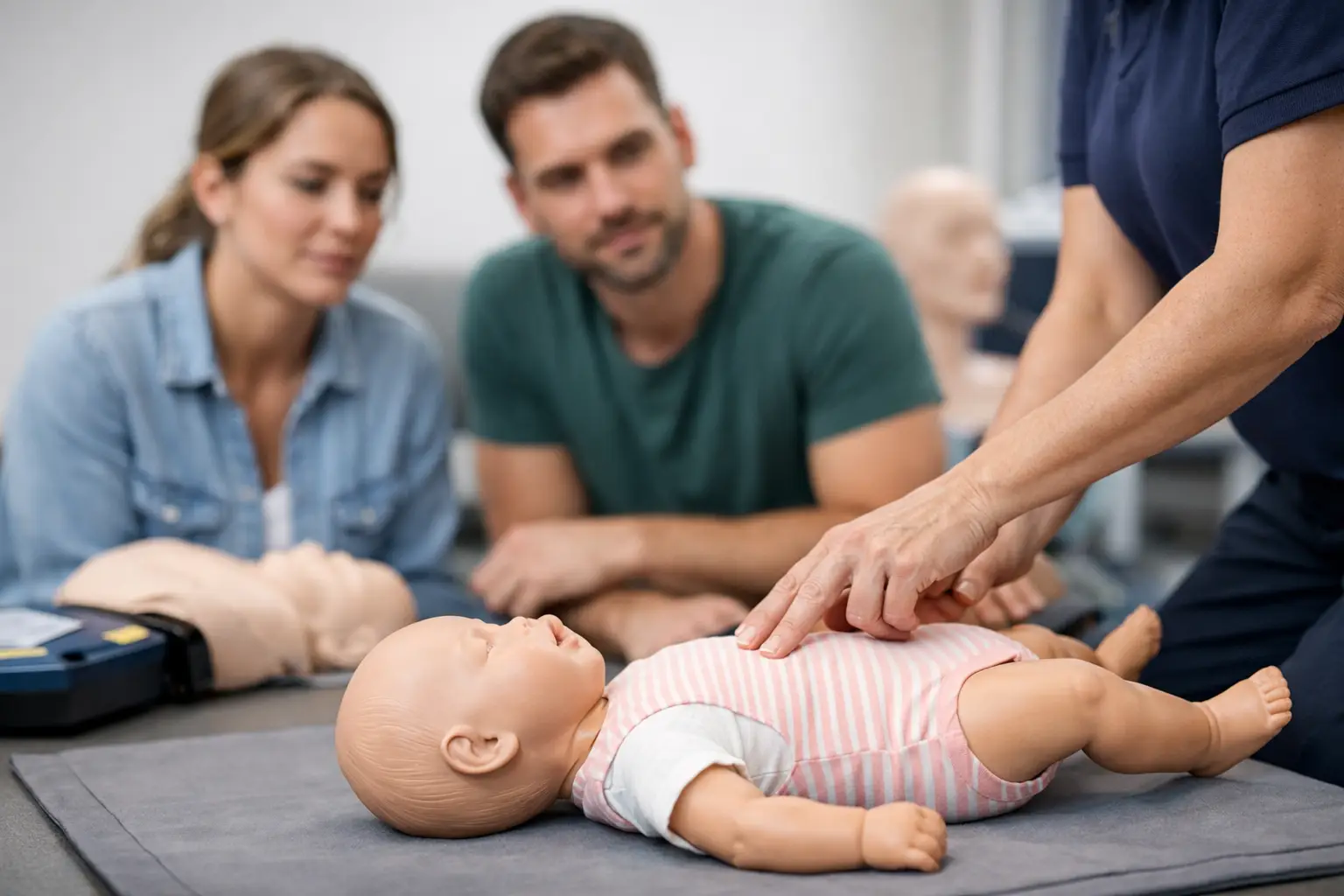
A parent can watch ten videos and still freeze during an emergency. Skill retention improves when people physically practice compressions, positioning, and choking response on training manikins. That is one reason in-person or blended classes often serve families better than fully online options.
Online learning can be useful for flexibility and review. But if a course is entirely screen-based, ask whether you will actually perform the skills before the class is complete. Reading about hand placement is not the same as feeling proper compression depth. In a high-stakes moment, muscle memory matters.
In-person, blended, or online: which format is best?
For most parents, the best format depends on schedule, budget, and how much confidence they need to build. In-person classes usually provide the strongest hands-on experience and direct instructor feedback. That makes them a strong choice for new parents, grandparents, babysitters, and anyone who has never practiced CPR before.
Blended learning can work well when time is tight. In that format, the knowledge portion is completed online and the skills session happens in person. That approach can be efficient without sacrificing practice.
Fully online CPR courses are the most convenient, but convenience comes with trade-offs. Some online courses are informational rather than skill-based. Others may not meet the expectations of employers, childcare settings, or organized youth programs. For parents who simply want exposure to the basics, online training may be better than no training at all. For parents who want realistic readiness, a hands-on component is usually the better choice.
Certification versus practical readiness
Many parents ask whether they need certification. The honest answer is that it depends.
If you are a parent hiring out childcare, volunteering in youth settings, fostering, or working in a role that requires documented training, certification may be necessary. In that case, choose a class issued by a recognized training provider and confirm that the credential will be accepted where you plan to use it.
If your only goal is family preparedness, certification is less important than competence. A non-certification community course can still be valuable if it offers strong instruction and real practice. That said, many families prefer a certified course because it signals a more structured curriculum and makes renewal easier to track.
The best CPR classes for parents do both. They provide useful credentials when needed and still keep the focus on real-world response, not just course completion.
How to judge the quality of a CPR class
A course description can sound solid and still leave gaps. Before registering, look closely at how the training is delivered.
Instructor quality matters. Parents benefit from instructors who can teach clearly under pressure, correct technique in real time, and explain how to prioritize actions when emotions are high. A polished slide deck is not enough. The class should be led by someone who understands both standards-based training and practical emergency response.
Class size matters too. If a session is too large, students may not get enough practice or feedback. Smaller groups usually allow more correction, more repetition, and more confidence-building.
The course should also state what is included. If infant CPR is buried as a minor add-on, that is a concern. If choking relief is only mentioned briefly, keep looking. Parents need direct instruction on the emergencies they are most likely to face.
Questions worth asking before you enroll
Ask whether the course includes infant, child, and adult CPR. Ask whether choking relief is practiced, not just discussed. Ask whether there is an in-person skills check. Ask how long the credential lasts if certification is offered. Ask who the course is designed for, because a class built for healthcare professionals may be more advanced than necessary, while a general awareness course may be too light.
Those questions help you avoid two common mistakes: enrolling in a class that is too clinical to be practical for your needs, or choosing one that is so basic it leaves you unprepared.
What parents often get wrong when choosing a class
One common mistake is choosing based only on speed. A 45-minute online course may sound efficient, but emergency response is physical, time-sensitive, and stressful. Fast is not always effective.
Another mistake is assuming all CPR classes are interchangeable. They are not. Some are built around occupational compliance. Some focus heavily on adults. Some are designed for healthcare providers and use terminology or pacing that may overwhelm a general audience. Parents need a class that is accessible but serious, practical but accurate.
There is also a tendency to treat training as a one-time task. Skills fade. Confidence fades too. A parent who took CPR three years ago may remember the idea of compressions but forget the sequence, depth, or how to respond to choking in an infant. Refreshers matter, especially after major life changes like a new baby, a child with medical needs, or a move into a home with a pool.
When local training adds real value
If you can attend a hands-on course near home, that usually improves follow-through. Parents are more likely to complete training when logistics are manageable, and they are more likely to return for refreshers when the provider is accessible. For families in cities such as Phoenix, Mesa, or Las Vegas, choosing a local training partner can make ongoing readiness much easier to maintain.
This is also where a focused provider can help. Community Responders LLC, for example, serves both families and professionals, which is valuable because the instruction is grounded in the same high-stakes response standards that apply when seconds count. For parents, that means training can stay practical without becoming casual.
The best class is the one that changes how you respond
A good CPR class should leave you with more than information. It should reduce hesitation. You should know how to identify unresponsiveness, when to call 911, how to start compressions, how to respond to choking, and how to keep control of the scene until help arrives.
That confidence will not make emergencies less serious. It will make you more useful in them. For parents, that is the standard that matters most.
If you are comparing options now, choose the class that gives you age-specific training, hands-on practice, and clear instruction you can carry into a real emergency. The right course will not promise perfection. It will prepare you to act when waiting is the worst option.